Irreverent humour from fantastic Mr Fox
THE new animated film, Fantastic Mr Fox, is a visual delight as a supposedly reformed chicken thief hatches one final assault.
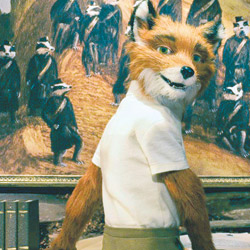
FILM REVIEW: FANTASTIC MR FOX
REVIEWED BY ADAM KAMIEN
CHILDREN’S books seem to be the new comics in Hollywood at the moment. Where The Wild Things Are, Horton Hears a Who, Coraline and The Lion, The Witch and the Wardrobe have all been released during the past few years and Tim Burton is having a crack at Alice In Wonderland, due for release later this year.
To say that Wes Anderson’s Fantastic Mr Fox is the best of the bunch is to grossly understate the matter.
While it is well known that Fantastic Mr Fox author Roald Dahl was no great friend of the Jews -— he is reported to have said “There’s a trait in the Jewish character that does provoke animosity” — his children’s novels are universally loved.
And all the elements of Dahl’s 1970 novel are present in Anderson’s lovingly re-created stop-motion feature. It is magical, irreverent, darkly funny and affecting in the same way as the book, but make no mistake, this is a wholly original work.
Anderson and co-writer Noah Baumbach (The Squid and the Whale, The Life Aquatic With Steve Zissou) have taken liberties with the story, adding characters, fleshing out plot points and changing the ending slightly. Remarkably, the story’s generous spirit is upheld.
In the past, Anderson (Bottle Rocket, The Royal Tenenbaums, The Darjeeling Limited) has opted to slather on the quirks in favour of discernible narrative —- a problem Dahl’s source material seems to have naturally corrected. It’s as though the book’s simple lucidity gives Anderson’s whimsy gravitas.
The film follows Mr Fox (George Clooney), his wife Mrs Fox (Meryl Streep) and their son Ash, voiced by Jewish actor and Anderson regular Jason Schwartzman.
Their world is turned upside down when Mr Fox, a supposedly reformed chicken thief, hatches a master plan for one epic final score. Breaking an earlier promise to his wife that he would never steal again, Fox targets three nasty local farmers and the heist is a success.
But the farmers come after him, driving the Fox family and the entire community of animals in the area underground to avoid their wrath.
Anderson updates Dahl’s unremarkable family with a palette of existential and distinctly Andersonian quirks and neuroses.
Unlike the book, the newly anthropomorphised foxes are dysfunctional, and layered, and they often meditate on the meaning of it all.
“Who am I? Why a fox?” Mr Fox muses at one stage.
“And can a fox ever be happy without a chicken in its teeth?”
But rather than detracting from the wide-eyed fantasy of the book, Anderson’s film version actually benefits from this tinkering, as though his signature quirks (for quirkiness’ sake, in this reviewer’s opinion) have finally found their place in the world.
But Anderson’s existential humour doesn’t always work and if there is a criticism of this film, it is that once or twice the auteur’s voice can be heard above the narrative.
The movie took around four years to complete because of the painstaking technical rigours associated with stop-motion capture, which, unlike other forms of animation, is totally handcrafted.
But the method gives the film’s characters a wonderfully demonstrative accessibility and their world a depth and warmth, which are often missing in other, computer-generated fare.
Visually, Fantastic Mr Fox is simply exquisite. The production design is a sight to behold and the film is photographed beautifully by stop-motion veteran Tristan Oliver (Wallace & Gromit In The Curse of the Were-Rabbit, Chicken Run).
Fantastic Mr Fox is currently screening.