Jewish cooking is a family affair
TO Ramona Koval, author of the newly-released book, Jewish Cooking: Jewish Cooks, cooking is a family affair.
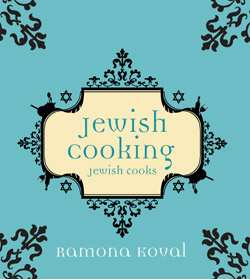
Jewish Cooking: Jewish Cooks, by Ramona Koval. New Holland, $40
TO Ramona Koval, author of the newly-released book, Jewish Cooking: Jewish Cooks, cooking is a family affair.
Koval, who is an Australian broadcaster and columnist, fondly describes memories of her own mother (who died when she was only young) telling stories of her life as she chopped, kneaded and boiled. The style of this beautifully presented, hardcover book is very much in this sentiment.
With a vast array of recipes, each one with anecdotes or tips, the book is also peppered with the author’s stories and those of the Jewish people she interviewed for the book.
Those stories stem from the origin of the food itself, how the recipe evolved and also includes a fair bit on food in the context of Jewish festivals.
As for the recipes, the spread is quite diverse —- most of them derived from the Ashkenazi food of Europe but some also influenced by the Sephardi food of the Mediterranean, the Middle East and North Africa.
For instance, Melbourne-based artist and well-known chef Mirka Mora shares her recipe for walnut cake, which has been passed down over generations.
As well as the scrumptious result (which I have personally test-tasted), the beauty of this recipe is its simplicity. You don’t need to crush the walnuts and they look great in the middle of the cake.
Mirka, being more of the adventurous type, also encourages the cook to throw in a dash of rum (and make a wish) arguing that cooking is like gambling -— a bit of hit and miss.
Professor Peter Singer, philosopher in ethics and author of Animal Liberation, shares his recipe for “ethical ponchkes” -— delicious cinnamon doughnuts with a pinch of cinnamon for flavour and the highlight: vanilla soy milk to boost flavour.
Ranka Enker, mother of television critic Debi Enker, shares her Polish recipe for cheese blintzes with secrets to make them extra tasty. The frying pan must be extra hot and suggests that dry potatoes avoid a soggy result.
She includes options for sweet or savoury fillings making for an easy recipe to whip up with minimal ingredients.
Finally, no Jewish cookbook would be complete without cholent and The ABC’s Dr Norman (Swirsky) Swan shares his recipe. Much to his mother’s disapproval, he uses the untraditional method of soaking the pulses overnight for a less flatulent effect.
Whether its entrees, soups, main meals, vegetables, desserts, cakes, breads, biscuits or confectionary, they all have their own dedicated chapter of approximately 20 pages, with some recipes accompanied by full-page colour photographs.
Easy to follow, Ramona’s book accentuates the importance of food as a way of expressing our ritual traditions and passing on stories through the generations. A valuable addition to any Jewish kitchen and an enjoyable read.
Inspired by her first cookbook, published in 2002 of the same name, this is a fresh batch of recipes personalised with beautiful stories along the way.