



Live updatesPublic hearings
Examination of response by universities continues
Hearing Block 4 continues focusing on antisemitism on university campuses. Today, the Commission will examine responses by the university sector.
Australian National University (ANU) acting provost and vice-president Professor Joan Leach on the university’s Gaza solidarity encampment – the longest running in Australia
Professor Joan Leach on safety assurances for Jewish students at ANU
Professor Joan Leach on the university’s disciplinary and complaints processes
Australian National University interim vice chancellor and president Professor Rebekah Brown on the fact that the definition of antisemitism is not incorporated into the policies governing student and staff conduct
Professor Rebekah Brown apologises to Jewish students and staff over campus failures
Monash University Vice Chancellor Professor Sharon Pickering on the pro-Palestinian encampment on her Clayton campus
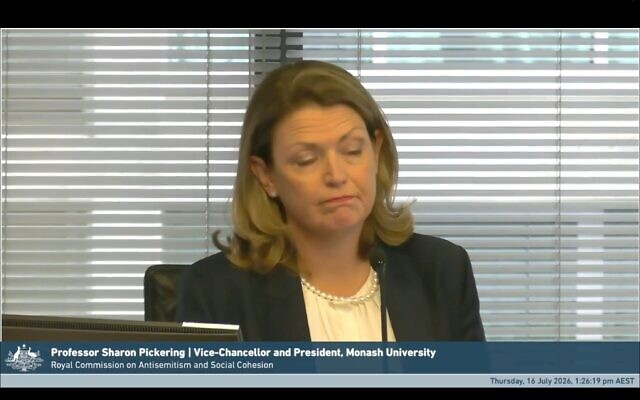
Monash University Vice Chancellor Professor Sharon Pickering has told the Royal Commission into Antisemitism that the pro-Palestinian encampment on her Clayton campus in May 2024 damaged the safety and sense of belonging of Jewish students and staff at a university where they had previously felt welcome.
Giving evidence about the 17-day encampment on the university’s lemon-scented lawns, Professor Pickering agreed that Jewish students and staff reported being abused when they went past the encampment.
She said they reported feeling targeted and vilified, and that it changed their behaviour, including what parts of campus they went to or whether they came to campus at all.
Monash, whose namesake is General Sir John Monash and whose Clayton campus sits in Melbourne’s south-east, assumes it has one of the largest Jewish student cohorts in the country, although Professor Pickering conceded the university does not collect data on that.
She said that after October 7, 2023, she was contacted by the president of the Monash Jewish Students Society, who raised concerns about student safety, public transport, culturally appropriate counselling and a rise in antisemitism.
Reflecting on what students told her, Professor Pickering said she had not appreciated “how thinly buried antisemitism was in our society, and how quickly it was unleashed”.
Jewish students, she said, described being “held individually responsible for the acts of the state of Israel”.
The Vice Chancellor said she was in transit from Singapore when she learned an encampment was planned.
“I sat in the lounge at JFK and I watched the police come onto campus at Columbia, and I watched what happened. I needed to get home.”
She described a May 4 Instagram post declaring Zionists were not welcome on campus as a turning point, saying the university had to assess when speech moved “from offence to harm”.
After taking legal and hate speech advice, Monash judged that it had, and asked Meta to remove the post. Meta complied within days, which she said surprised her.
Asked why she had called the post thinly disguised antisemitism, Professor Pickering said it was “neither accurate nor appropriate to simply equate Jewishness with Zionism”.
Monash issued seven exclusion notices to people identified as not belonging to the university community, some served by Victoria Police, and conducted ID checks at the encampment.
Eleven students faced general misconduct proceedings, all encampment-related, although Professor Pickering said the findings were largely classified as harassment and similar rather than antisemitism.
Counsel for major Jewish organisations and the Australasian Union of Jewish Students, Gabi Crafti, put to the Vice Chancellor that because most Australian Jews would identify as Zionists, telling Zionists they were unwelcome told most Jewish students they were unwelcome.
Professor Pickering agreed, and agreed that was “the real vice in that slogan”.
David Knoll, for the Australian Academic Alliance Against Antisemitism, raised the issue of academics who feared reprisals for speaking u, saying a Jewish staff member was shut down at a faculty meeting for asking whether the definition of genocide should be debated.
Professor Pickering said such treatment would breach university policy and likely the law.
Rachel Doyle, for the Australian Palestine Advocacy Network, drew attention to two counter-protests with a pro-Israel character, including one on the first night where a song played included the words “seed of Amalek”.
Professor Pickering said she regarded the incidents as “forms of intimidation and harassment”, and that they prompted additional CCTV and closer work with Victoria Police.
Jon Hartley, for the Jewish Council of Australia, secured agreement that non-Zionist and anti-Zionist Jews exist and deserve “equivalent respect and consideration”.
Dr Kristine Hanscombe, for Students for Palestine, established that the university had misattributed the encampment to a different group, Monash for Palestine.
Professor Pickering pointed to Monash’s Campus Cohesion Project, antisemitism and Islamophobia training, and its Brave Conversations programme, which nearly 1000 academics have completed.
“We’re not going to discipline or complaints process our way to social cohesion,” she said.
She said she would now recommend Monash adopt the Universities Australia definition of antisemitism.
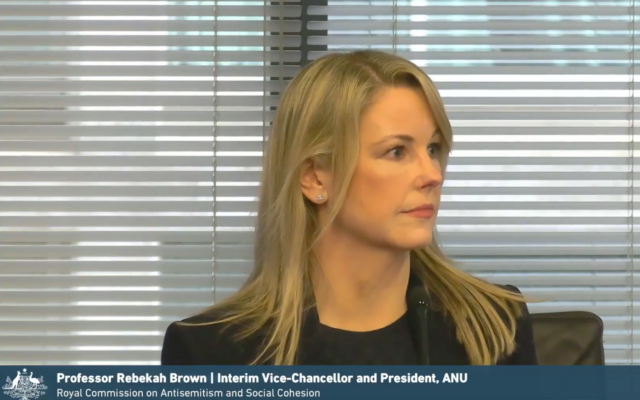
Australian National University interim vice chancellor Professor Rebekah Brown has apologised to Jewish students and staff, telling the Royal Commission on Antisemitism and Social Cohesion, “All Jewish students and staff and their colleagues and friends, in fact, all students and staff, have an absolute right to feel safe, respected, and heard on our campus, and I’m sorry that they didn’t. I’ve committed in my role, as long as I am the interim vice chancellor, to do better.”
Brown made the statement during cross-examination on July 16 after being pressed by Gabi Crafti SC, counsel for the Australasian Union of Jewish Students and Jewish communal organisations, to acknowledge the university’s failures in relation to the pro-Palestinian encampment on campus.
Crafti took Brown through evidence that psychosocial risks from the encampment had been identified as high, and asked whether there were failures attributable to ANU in its duties to Jewish staff and students. Brown initially said she had not been in the decision-making seat at the time, but when pressed, accepted there were failures. “On balance, yes,” she said.
Asked whether the university’s response had been timely, Brown said, “I wish that we had done much more and sooner.”
Brown also accepted the university still had significant work ahead, telling the commission, “We have to move our definition through our policies and our procedures, including our codes of conduct, student and staff conduct. Not everyone has been subject to our training as yet.”
David Knoll, representing the Academic Alliance Against Antisemitism, showed Brown images of stickers found on campus, including one invoking the blood libel. Brown confirmed the first was antisemitic under the university’s adopted definition but was less certain about a second, saying, “I’d want to take expert advice from my Jewish colleagues. On balance, probably yes, but I’m not certain.”
Knoll suggested this uncertainty may stem from the fact the sticker fell within the second paragraph of the Universities Australia definition, which ANU has not yet adopted. Brown conceded, “Maybe yes.”
He also highlighted that two staff members had been moved off campus due to the impact of antisemitism on their mental health. Brown accepted this approach addressed “symptom and not cause” and agreed the university’s response needed to shift toward tackling root causes. Knoll asked whether ANU would adopt an action plan to ensure Jewish staff and students feel fully included in university life.
Brown said she could not see why not, but that “this would be something that would go into a process of consultation to consider the development of such a plan”.
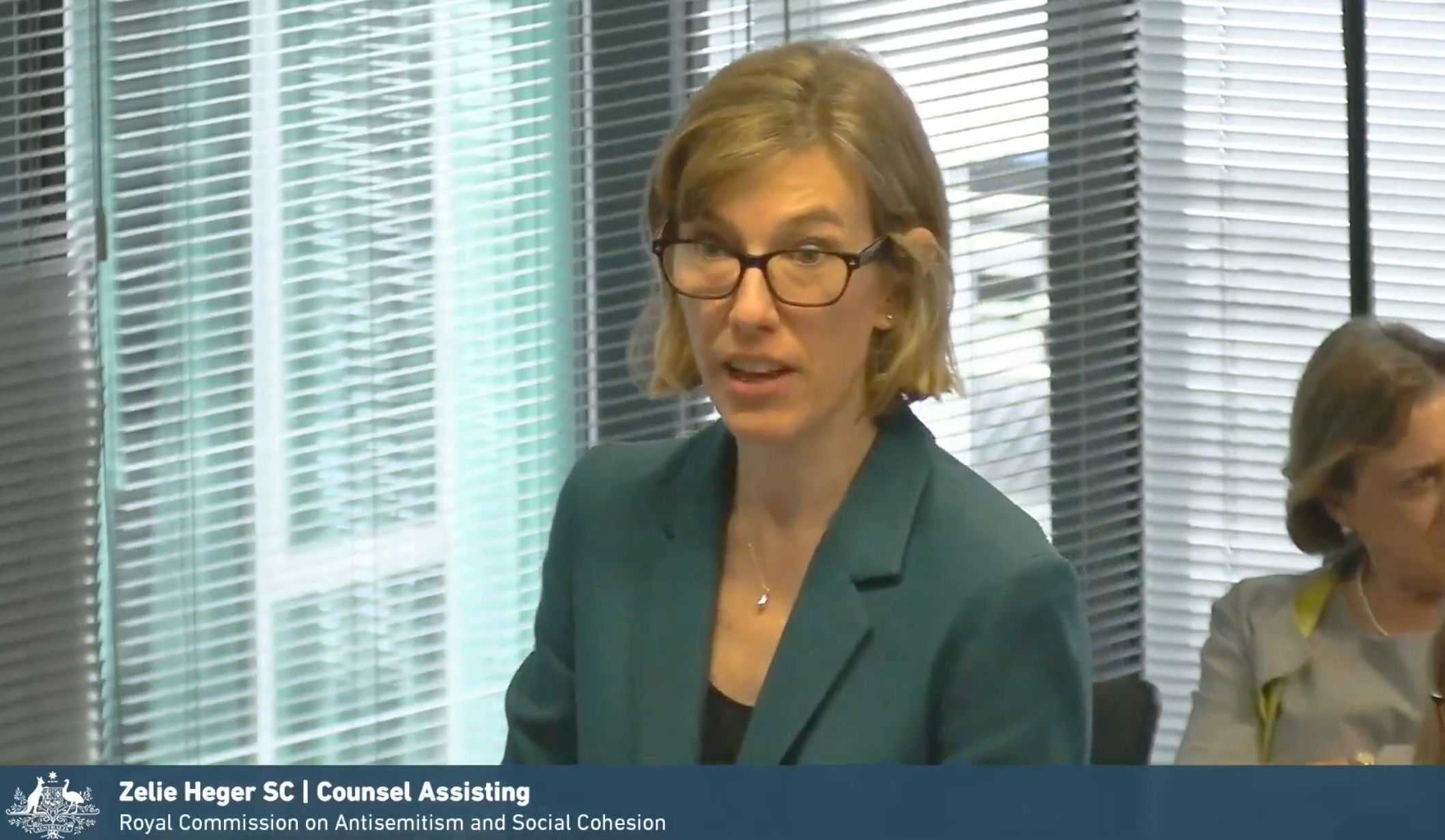
Australian National University interim vice chancellor and president Professor Rebekah Brown has told the Royal Commission on Antisemitism and Social Cohesion that the university has still not incorporated its definition of antisemitism into the policies governing student and staff conduct, more than four months after the ANU Council adopted it.
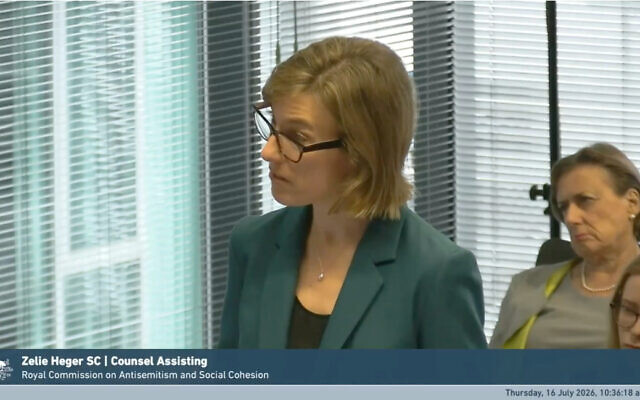
Giving evidence in Melbourne on July 16 before Counsel Assisting Zelie Heger SC, Brown outlined the university’s path toward adopting a definition and acknowledged significant gaps in its complaint-handling systems.
The ANU academic board considered the question of an antisemitism definition between February and May 2025, but opted instead for a broader definition of racism, despite the university’s involvement in Universities Australia’s adoption of a sector-wide antisemitism definition that same February.
Brown told the commission the board considered “it was more appropriate to have a more fulsome definition of racism, and that would serve the implementation of the policy that supports academic freedom”.
Heger pressed Brown on whether she agreed that you cannot address a problem you cannot name, a point raised in earlier witness testimony by ANU student Liat about the importance of a specific antisemitism definition. Brown said, “In broad terms, I agree with that argument.”
Brown said that shortly after becoming interim vice chancellor in September 2025, she recommended the ANU Council dedicate part of its annual planning day to antisemitism. On February 26, 2026, the council adopted the first paragraph of the Universities Australia definition, but not the remaining two paragraphs. Brown said some council members felt “they did not have enough time to appropriately consider the other two paragraphs” and that she expected to bring the matter back to council by September.
On complaint handling, Brown accepted there were multiple areas for improvement, including the absence of a single intake point and limited visibility across seven separate grievance processes. She said a new Office of Integrity would launch in August. Asked when complaint-handling training would be comprehensive, Brown said, “I would like it comprehensive right now or yesterday.”
But no timeline has been set for embedding the definition in policy. The newly formed combating racism special committee, whose membership is still being settled, held its first meeting only weeks ago and has 12 months to complete its work. Brown described that as “a very tight timeline in university context”.
Cross-examination of Professor Joan Leach, ANU’s Acting Provost, continued with David Knoll, counsel for the Australian Academic Alliance Against Antisemitism, probing the university’s disciplinary and complaints processes in detail.
Knoll began by confirming that Professor Leach accepted that antisemitism “is often expressed in the forms of conspiracy theories and antisemitic tropes”, and that ANU’s anti-racism policies “will need to be adjusted to take those matters into account”. She did.
He then put a hypothetical to her: Where an academic has social media posts that call Israel ‘a baby-murdering state’ and that deny sexual violence by Hamas against Israeli women on October 7, 2023, is it ANU’s current policy that, as long as the academic doesn’t name ANU in those posts, there’s nothing ANU can do about it?
Professor Leach answered, “In the social media guidelines, that is the case, yes.”
She said action could only follow if such views were then introduced into teaching, triggering a complaints process — though she could not say how quickly this would occur, only that it would happen “as quickly as possible”.
Knoll turned to ANU’s Harmful Behaviours Disclosure Tool, noting its drop-down menus for “discrimination and harassment” and “race” contained no reference to antisemitism.
Professor Leach confirmed: “That is true.”
Asked when this would be fixed, she said the university was “working through” resistance from some who object to drop-down categorisation of identity, but expected change “rather swiftly”.
She further conceded that ANU had “no systemic restorative practices” arising from the encampment protests, describing this as “a gap” the university was working to address.
Pressed on whether the university would require offending students to apologise to affected Jewish students or staff, Professor Leach said personally she believed this was “trauma-informed good practice”, and that she was “prepared to make that recommendation” to the relevant committee.
Knoll also established that ANU has no “immediate action” fast-track mechanism for urgent complaints, unlike another university the Commission had heard from, with Professor Leach saying only that this was “something that we could discuss”.
For the remainder of the session, counsels for APAN, the Jewish Council of Australia, and ANU raised further matters.
Professor Leach confirmed reports of neo-Nazi stickers on campus, including references to the “National Socialist Network” and “Australia for white men”, which led to criminal charges; she said these were not linked to ANU community members and were removed within 24 to 48 hours.
She agreed such conduct posed a risk to Jewish, Palestinian and Muslim students alike.
On disciplinary outcomes, Professor Leach confirmed seven of eight students investigated over the 2024 encampment at the university were cleared of misconduct.
Questioning also covered ANU’s 2023 decision, on advice from its Academic Freedom Reference Group, not to adopt the IHRA definition of antisemitism due to concerns it could conflate legitimate criticism of Israel with antisemitism, and training materials that reference both the IHRA and Jerusalem Declaration definitions.
In re-examination, the ANU counsel clarified the disclosure tool had in fact included an antisemitism category since April 2025.
Gabi Crafti, Counsel for AUJS and Jewish communal groups, put to Professor Leach that ANU “has been a locus of trauma for Jewish students”, and asked what had changed in the university’s policies and procedures and their enforcement – which Professor Leach had said have been revised – that would make it a place where Jewish students could feel safe again.
Professor Leach responded that it was her hope and expectation that staff and students “will recognise the new policies” would ensure that “encampment-style protest is not a new norm, and where respectful protest can still happen, but in a way that acknowledges the hurt that others may feel.
“That empathy is something that we can inculate through our education offerings, as well as critical analysis of the events of the world,” she said.
Crafti pushed back, noting this was “a recurring theme” of the Commission — university witnesses dwelling on Jewish people’s hurt, rather than addressing safety obligations owed to all students and staff.
She pressed Professor Leach directly on what assurance she could give that Jewish students would be safe.
Professor Leach answered that ANU had made “quite a few policy changes” and that the university had reflected on recent years’ events, including what she described as “quite powerful, articulate and I would say courageous testimony from Jewish students”, which she said had made a real impact.
She said her expectation was that students and staff would follow the new policies, and that this would help ensure Jewish students, along with the wider student body, were safe going forward.
The exchange followed earlier questioning about the composition of an ANU advisory committee on the matter, with Crafti disputing Professor Leach’s claim that Jewish students had been included in it from the outset.
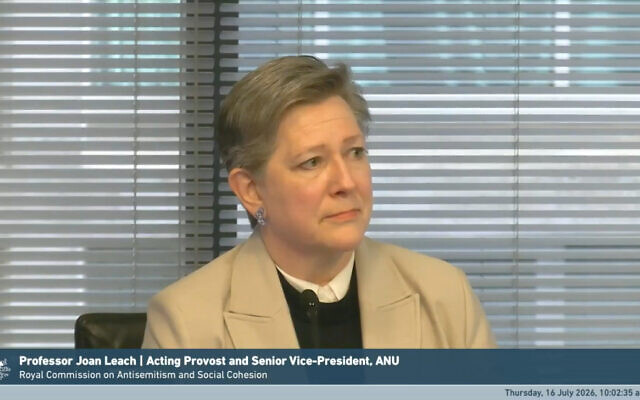
Australian National University (ANU) acting provost and vice-president Joan Leach has told the Royal Commission that the university’s Gaza solidarity encampment — the longest-running in Australia — made Jewish students feel unsafe and unable to participate fully in campus life, and conceded a series of shortcomings in how the university responded.
Leach, ANU’s chief academic officer who has held the acting provost role only since May, gave evidence on Thursday about the encampment established on April 29, 2024 and disbanded in mid-August that year. She noted she had not been present for many of the events, drawing on documentation, having left the university’s academic board at the start of 2024 after being unwell.
The encampment was first established in the university’s Cambridge precinct, which Leach agreed was “the epicentre of campus” — home to shops, the university pub, the student association offices, gyms, the Chifley Library and study spaces — making it difficult to avoid.
Four students were directed to vacate on May 16 for reasons of health, safety and good order, but refused, and no attempt was made to remove them. On May 27, a safety notice ordered the whole encampment to vacate after it was found to encroach on evacuation routes; when students refused, the Australian Federal Police issued a move-on notice and the encampment relocated to another central location near University Avenue. Safety concerns continued, and after staff were twice denied access for safety inspections, the university disconnected power on July 23.
Asked whether ANU had “essentially lost control” of a central campus location, Leach said she could not characterise it that way as she had not been present, but acknowledged serious risks that could not be verified, both physical and psychosocial.
On the impact on Jewish staff and students, Leach accepted an annexure to her statement recorded numerous complaints of people feeling unsafe, some over chants they considered antisemitic, and one student who reported hiding their identity near the encampment. Asked about the evidence of the witness Liat, who described being called a “baby killer” and “genocide supporter” as she walked past, Leach said both comments were antisemitic — the latter because it demanded a member of the Jewish community take responsibility for something “very many miles away” and was shouted in a harassing tone. She agreed no student should have to choose whether to display their Jewish identity on campus.
Counsel Assisting Zelie Heger took Leach to an external desktop review commissioned in July 2024, which rated both the inherent and residual psychosocial risk as “high” and warned of exposure that could lead to serious injury, with 29 psychosocial issues reported and a high likelihood of under-reporting. Leach could not say why the review was not commissioned until July, nor why it was delivered in October, after the encampment ended. Commissioner Virginia Bell asked whether it had been commissioned to comply with Commonwealth workplace psychosocial-health regulations rather than to assess risks to students; Leach said she could not say, though the timing was suggestive.
Leach acknowledged further shortcomings. A “Student Encampment Protest FAQs” page was not published until August 13, shortly before the encampment ended, which she agreed was unsatisfactory as guidance. She said the university had held off shutting the encampment down, amid global attention on violent scenes at US campuses, hoping to end it peacefully — an approach she conceded might appear “naive or inadequate” in hindsight.
The encampment ended on August 17 through a combination of the power disconnection, the ANU Council tightening its investment screens on weapons manufacturers, and a new policy that effectively banned encampments. That policy, introduced on August 14 but backdated to August 3, prohibited sleeping on campus and the construction of tents; Leach could not explain the backdating.
On a complaint by the Australasian Union of Jewish Students (AUJS) alleging a Nazi salute and a gesture mimicking a Nazi moustache at a May 2024 student meeting, Leach said both were investigated and neither resulted in a finding of misconduct — the moustache found to be a habitual gesture, the salute only partially captured on video and impossible to discern. The outcomes were not reported back to AUJS, which Leach said, on reflection, “was not a trauma-informed approach”.
The result was made public only when a university representative appeared before a parliamentary inquiry — something she agreed should have been communicated sooner.
Leach said all new staff now completed a compulsory module referencing definitions of antisemitism, though it was being rolled out incrementally, and that students in residences completed mandatory bystander training, with an antisemitism scenario being developed with AUJS.
The AJN is providing rolling coverage on the Royal Commission on Antisemitism and Social Cohesion.
For full coverage of the Hearing Blocks, visit the Royal Commission section of The AJN website.
Australian National University (ANU) acting provost and vice-president Joan Leach has told the Royal Commission that the university’s Gaza solidarity encampment — the longest-running in Australia — made Jewish students feel unsafe and unable to participate fully in campus life, and conceded a series of shortcomings in how the university responded.
Leach, ANU’s chief academic officer who has held the acting provost role only since May, gave evidence on Thursday about the encampment established on April 29, 2024 and disbanded in mid-August that year. She noted she had not been present for many of the events, drawing on documentation, having left the university’s academic board at the start of 2024 after being unwell.
The encampment was first established in the university’s Cambridge precinct, which Leach agreed was “the epicentre of campus” — home to shops, the university pub, the student association offices, gyms, the Chifley Library and study spaces — making it difficult to avoid.
Four students were directed to vacate on May 16 for reasons of health, safety and good order, but refused, and no attempt was made to remove them. On May 27, a safety notice ordered the whole encampment to vacate after it was found to encroach on evacuation routes; when students refused, the Australian Federal Police issued a move-on notice and the encampment relocated to another central location near University Avenue. Safety concerns continued, and after staff were twice denied access for safety inspections, the university disconnected power on July 23.
Asked whether ANU had “essentially lost control” of a central campus location, Leach said she could not characterise it that way as she had not been present, but acknowledged serious risks that could not be verified, both physical and psychosocial.
On the impact on Jewish staff and students, Leach accepted an annexure to her statement recorded numerous complaints of people feeling unsafe, some over chants they considered antisemitic, and one student who reported hiding their identity near the encampment. Asked about the evidence of the witness Liat, who described being called a “baby killer” and “genocide supporter” as she walked past, Leach said both comments were antisemitic — the latter because it demanded a member of the Jewish community take responsibility for something “very many miles away” and was shouted in a harassing tone. She agreed no student should have to choose whether to display their Jewish identity on campus.
Counsel Assisting Zelie Heger took Leach to an external desktop review commissioned in July 2024, which rated both the inherent and residual psychosocial risk as “high” and warned of exposure that could lead to serious injury, with 29 psychosocial issues reported and a high likelihood of under-reporting. Leach could not say why the review was not commissioned until July, nor why it was delivered in October, after the encampment ended. Commissioner Virginia Bell asked whether it had been commissioned to comply with Commonwealth workplace psychosocial-health regulations rather than to assess risks to students; Leach said she could not say, though the timing was suggestive.
Leach acknowledged further shortcomings. A “Student Encampment Protest FAQs” page was not published until August 13, shortly before the encampment ended, which she agreed was unsatisfactory as guidance. She said the university had held off shutting the encampment down, amid global attention on violent scenes at US campuses, hoping to end it peacefully — an approach she conceded might appear “naive or inadequate” in hindsight.
The encampment ended on August 17 through a combination of the power disconnection, the ANU Council tightening its investment screens on weapons manufacturers, and a new policy that effectively banned encampments. That policy, introduced on August 14 but backdated to August 3, prohibited sleeping on campus and the construction of tents; Leach could not explain the backdating.
On a complaint by the Australasian Union of Jewish Students (AUJS) alleging a Nazi salute and a gesture mimicking a Nazi moustache at a May 2024 student meeting, Leach said both were investigated and neither resulted in a finding of misconduct — the moustache found to be a habitual gesture, the salute only partially captured on video and impossible to discern. The outcomes were not reported back to AUJS, which Leach said, on reflection, “was not a trauma-informed approach”.
The result was made public only when a university representative appeared before a parliamentary inquiry — something she agreed should have been communicated sooner.
Leach said all new staff now completed a compulsory module referencing definitions of antisemitism, though it was being rolled out incrementally, and that students in residences completed mandatory bystander training, with an antisemitism scenario being developed with AUJS.
comments