Snap unable to explain its own duty of care position
Snap has been unable to tell the Royal Commission what the company has asked of the federal government on the proposed digital duty of care, its Australian policy chief repeatedly saying it had been “a little while” since he refreshed his memory on the subject.
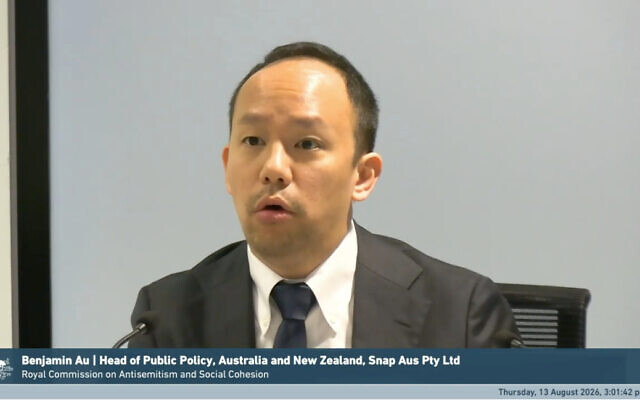
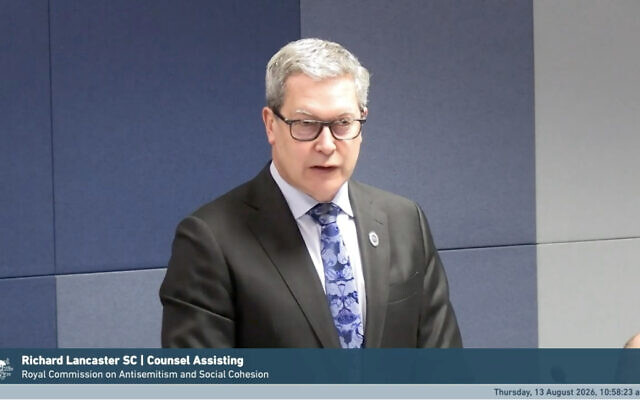
Snap Inc head of public policy for Australia and New Zealand Benjamin Au was asked by counsel assisting Richard Lancaster SC whether Snap had been consulted extensively.
“I wouldn’t necessarily say extensively. We are at an early stage. The government is at a relatively early stage of the development of the digital duty of care,” Au said. “I would say we have been part of conversations that have happened over the last couple of years.”
Au agreed he had been personally involved in stakeholder meetings for the Rickard review into the Online Safety Act 2021, which considered a duty of care. He said he believed he or Snap Australia had made submissions on the topic, and that the local team would have been responsible for drafting those positions.
Asked whether Snap had initially been resistant to models based on the UK Online Safety Act or the European Union’s Digital Services Act, Au said he did not recall. His recollection was that Snap’s long-standing position had been supportive of a duty of care.
Pressed on whether Snap had indicated that implementation should align generally with the UK model, Au said he believed that was the case, adding that if Lancaster was referring to a public submission indicating as much, “then that would then be true”.
On the safe harbours Snap has sought in its submissions, Au said his recollection was that it may have been a reference to a duty of care setting out requirements and obligations, with greater certainty provided to platforms that met them.
Lancaster took him to a consultation briefing recording a May meeting at which Au was the stakeholder. Au said he recalled a very short meeting that was primarily a high-level status update from the government, and that he was seeing the document for the first time.
Asked whether a recorded request for safe harbours through clear harbours or legislative guidance was a fair summary, Au said he recalled the topic being raised but believed the other Snap representative present, a legal colleague, had led that item.
Nazi salute video would go undetected, Snap executive agrees
High school students could share a video of a Hitler salute on Snapchat today without the company knowing or moderating it, the Royal Commission on Antisemitism and Social Cohesion has heard.
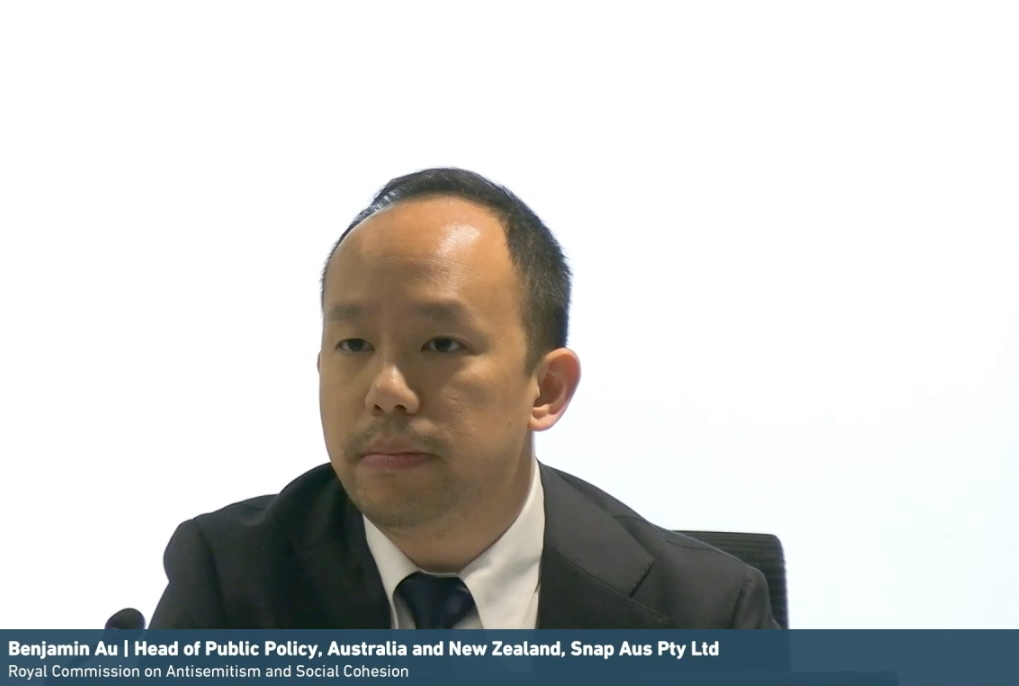
Counsel assisting Richard Lancaster SC put a series of incidents to Snap Inc head of public policy for Australia and New Zealand Benjamin Au, beginning with an August 2024 case in which students from a Sydney high school posted a video performing a Nazi salute. Au said he had become aware of it in preparing for his evidence.
Asked whether Snapchat had a practice at that time of automated moderation checks on videos sent, Au said: “Not as far as I’m aware.” He agreed that was because it was a private messaging context.
Asked whether students could share such a video today without any moderation, Au said it “would be difficult for an automated process to be able to kind of identify that content proactively”. He agreed automated processes were not applied to private messaging to even look for such content.
Au said he did not recall a criminal prosecution concluded in March 2025 over antisemitic voice memoranda sent on Snapchat in August 2023, and did not recall the incident after being shown an article about it.
He was also asked about evidence given on May 6 by a witness known by the pseudonym AAG, who described students at her school sending her Snapchats using a so-called Jew filter that superimposed images on her face. Au initially said he was not aware of it, then recalled it once given context, and agreed it may have been a lens, an augmented reality feature.
He said moderation processes governed which lenses are available, but a lens applied by a user produced content treated the same as any other, which he agreed meant Snapchat did not proactively monitor it if shared privately.
Asked whether there was scope for vast improvement of Snapchat’s moderation tools in private and small group contexts, Au said: “I wouldn’t agree with that.”
He said Snap took its responsibilities seriously, citing friending requirements, reporting tools, a Sydney-based team, pre-moderation of content that may reach large audiences, and Family Centre.
Put to him that a whole high school year group could communicate practically unregulated, Au said there was always a risk of harm wherever young people gathered, and that Snap would take seriously anything arising from the inquiry.
Snap has no measure of hate speech in private chats, commission hears
Snap has told the Royal Commission it does not read private messages between Snapchat users unless content is reported, and acknowledged that its most recent risk report to European regulators makes no assessment of hate speech on its private surfaces.
Snap Inc head of public policy for Australia and New Zealand Benjamin Au told counsel assisting Richard Lancaster SC that the only usage figure he could recall was one Snap made public in the second half of last year: that around 75 per cent of all time spent on Snapchat by Australian users was on messaging and calling.
Au said human moderators worked “hand in hand” with proactive tools, which could pick up potentially violative content and pass it on for human judgement. On Spotlight, content is pre-moderated automatically, and once it crosses viewership thresholds a moderator reviews it before it can reach a wider audience.
Asked whether end-to-end encryption is applied on the platform, Au said: “I don’t know the answer to that.”
He said that after the Bondi Chanukah attack, Snap’s trust and safety teams had proactively monitored for content circulating in other online spaces and hashed it, mainly to prevent it being posted on Snapchat. That was “certainly the case” for the more public surfaces, but he was unsure whether it extended to private ones, and could not say whether it applied to group chats.
Au said immediate hash-matching related primarily to public services, but that proactive tools and hashing were sometimes applied to private services as well. He gave the example of “Rapid Rules”, developed after the October 7 attack to monitor for potential violent extremist content.
“My understanding is that those tools were also active in the private spaces of Snapchat, but I don’t have any further information beyond that,” he said.
Lancaster took Au to a Digital Services Act report from August 2025, which records that hate speech is rarely found on Snapchat’s public surfaces and accounted for an extremely low percentage of total views of snaps in public stories. Au agreed it contained no statement to the same effect about the private components.
Asked whether Snap therefore had no real understanding of the prevalence of hate speech in private messaging, Au said the company did not read private messages unless content had been reported by users.
Snap executive concedes no proactive scanning for antisemitic content in private chats
Snap Inc’s Head of Public Policy for Australia and New Zealand, Benjamin Au, told the Royal Commission this afternoon that the company has no automated system for detecting hateful or antisemitic content in Snapchat’s private messaging, even as it uses such tools to catch terrorism and violent extremism material in the same spaces.
Mr Au, who has led Snap’s Australian policy function since September 2023, could not say how many Australians currently use Snapchat, telling the Commission the most recent figure he could recall — about 8 million monthly active users — was “one or two years old now.”
He said the local user base was “about 50-50 above and below the age of 24,” pointing to Gen Z and millennials as Snapchat’s core demographic.
When asked by the counsel assisting about content moderation, Mr Au explained that Discover and Spotlight – Snapchat’s public-facing features – are “pre-moderated” using proactive tools to detect harmful signals before content goes live.
And that private messaging — one-on-one chats and group chats of up to 201 people — is treated differently.
He confirmed that hash-matching technology – used to identify known illegal images and videos – is applied in private chats “particularly to combat child sexual exploitation and abuse imagery,” and said he understood hash-matching was “also used in other contexts.”
Pressed on whether Snapchat proactively moderates private video content for hate speech, Mr Au initially said: “I wouldn’t agree with that,” then acknowledged proactive tools exist in private areas “to deal with the harm type of violent extremism and terrorism.”
He agreed there was no process for detecting antisemitic content or other categories of online hate in private chats “without a user complaint or a user comment,” stating: “That’s correct.”

On Snap’s commercial incentives, Mr Au did not dispute that “the promotion of content that generates high numbers of views” is “a financially rewarding outcome for Snap,” responding: “I wouldn’t disagree with that.” However, he rejected the suggestion that this creates an incentive to promote divisive or extreme content.
He also disputed the proposition that divisive or controversial content increases views, telling the Commission: “I wouldn’t agree with that, and what I would say is that… I have never been part of a kind of a conversation where that view was expressed” during his three years at Snap Aus.
In the session’s closing evidence, Mr Au confirmed Snapchat’s terms of service and community guidelines apply globally, with no distinct version for Australian users, and that guidelines developed by Snap Inc are not shaped by staff in the Australian office, who “may be consulted” but do not lead the process.
He said Snap’s community guidelines apply a “very broad definition of hate speech” covering antisemitism “in really any of its forms,” despite no explicit reference to antisemitism in the guidelines themselves, and that a three-strikes system generally applies before an account is disabled for conduct falling short of “severe harm.”
Asked whether content from an ephemeral chat is lost forever once a message’s set disappearance period passes — even where a user later reports a pattern of antisemitic abuse — Mr Au could not say. Pressed directly on the point, his final answer to the Commission was: “I don’t know the answer to that.”
Antisemitism the ‘connective tissue’ across extremist ideologies, de-radicalisation expert tells commission
Antisemitism is the “connective tissue across extremist ideologies”, with 70 per cent of cases handled by a leading US counter-extremism organisation showing some form of antisemitic influence, the Royal Commission on Antisemitism and Social Cohesion has heard, with Mubinoddin Shaikh giving evidence about the role antisemitism plays across the spectrum of violent extremism and the practical work of de-radicalising individuals.
Shaikh told the commission that Parents for Peace had recently established a dedicated antisemitism and intervention recovery program, triggered by the volume of cases in which antisemitic beliefs featured prominently.
“Of course, if it’s like a straight neo-Nazi, it’s not … of course, they hate Muslims too, and coloured people, black people, brown people, but the antisemitism is front and centre when it comes to that,” Shaikh said. “In other cases, the antisemitism is just one of a number of hateful ideas that they may have.”
Parents for Peace operates a helpline and takes referrals from families, teachers, lawyers and the FBI. Shaikh said cases spanned the “pre-criminal space”, where family members or bystanders notice warning signs, and the “post-criminal space”, where individuals have already been charged. Shaikh said the organisation had recently received funding from the US Department of Homeland Security.
Shaikh described how interventions are tailored to individual needs, drawing on motivational interviewing, psychoeducation, peer support, and his own experience as a “former”, the term used for individuals who were once part of violent extremist movements. He works alongside a former neo-Nazi and trained social workers and psychologists.
“The most effective component is to be genuine,” Shaikh said, recounting a case in which a young man initially refused to speak with him because of his past undercover work. “I basically explained to him that I used to be that, and I know how they work and how they operate, and I’m here because I wish that I had somebody to talk to when I was your age.”
He described another case involving a 14-year-old with autism spectrum disorder who had adopted a rigid extremist ideology after being marginalised by peers. “At the end of the day, he just needed friends that accepted him for who he was,” Shaikh said.
Asked by Nicholas Bender SC, counsel for Australia’s mainstream Jewish communal organisations, about the importance of changing an individual’s private beliefs rather than simply preventing violent behaviour, Shaikh said belief change was “very, very important” and “foundational”.
“Thoughts precede actions, and beliefs are part of thoughts. And if you believe that it is legitimate to do X, then for them to not do X, you need to change the belief that underpins the intention towards that action,” Shaikh said.
He acknowledged that government agencies may not be able to undertake that work, but said the NGO model was well suited to it. “This is why I think the NGO model works particularly well, because we can do that, and we do do that,” he said.
Former jihadist tells Royal Commission how house party triggered path to extremism
A former Canadian jihadist has told the Royal Commission on Antisemitism and Social Cohesion that a house party at age 18 set him on a path to radicalisation that would see him travel to a Taliban stronghold in Pakistan and spend years immersed in extremist ideology.
Mubinoddin Shaikh, who now works as an interventionist with US-based counter-extremism organisation Parents for Peace, gave evidence about his personal journey from a secular upbringing in Toronto to jihadism and eventual de-radicalisation.
Shaikh told the commission that growing up in a conservative Indian Muslim household, he attended Quran school in the evenings while going to secular public school during the day. He described himself as “a very quiet, introverted young man” until high school, where he became part of a social group and participated in army cadets and martial arts.
The turning point, he said, came when his uncle discovered a house party he had thrown while his parents were away. “People pray in this house. They read Quran, and you brought these kufar here,” Shaikh recalled his uncle saying, using a derogatory term for non-Muslims.
He described the incident as a “cognitive opening”, a term used in radicalisation theory for an acute personal experience that makes someone receptive to views they would not normally consider.
In his panic, Shaikh said he turned to the Tablighi Jamaat, an apolitical Islamic missionary movement he compared to the Jewish Chabad movement in that it encourages existing believers to be more observant rather than seeking to convert non-Muslims. He undertook a four-month trip to India and Pakistan through the group.
While in Quetta, a Taliban stronghold in Pakistan, he encountered armed Taliban members who told him success lay not in following religious commandments but in the weapon one of them picked up.
“For a young Muslim guy like me, with exposure to the army cadets and some familiarisation with military weaponry, and really looking for this sense of belonging and identity, especially something that resonated with my sacred values, I became enamoured by them,” Shaikh said.
After returning to Canada, he left the Tablighi Jamaat and joined an extreme Salafist group. “We were jihadists. I mean, that’s what we called ourselves,” he said.
Shaikh told the commission that his disengagement began gradually after he married a former high school friend, a Polish Catholic who had converted to Islam. “The abstract conversations around theology and geopolitics yielded to the very tangible reality of ‘I have a wife in front of me, and that I could have a family, I could have a future’,” he said.
The September 11 attacks in 2001 deepened that shift. While some of his extremist peers celebrated, Shaikh said the attacks cracked his understanding of what was permissible under the Islamic war tradition, prompting him to pursue formal study of Arabic and Islamic studies in Syria.
There, studying under scholars in the Orthodox Sufi tradition, his worldview transformed. His teacher told him, “If you are not starting with mercy and grace, then you’re not doing it right.”
Shaikh subsequently spent a period working undercover with the Canadian Security Intelligence Service and the Royal Canadian Mounted Police, infiltrating jihadist cells.
NSW designed grants program to avoid pitfalls of UK’s Prevent
The NSW Government deliberately designed its Compact Program to avoid the failures of the United Kingdom’s Prevent counter-extremism framework.
Dr Malcolm Haddon told the commission that when the program was being designed in 2015, the UK’s Prevent strategy served as a cautionary example.
“I’ll be honest that the Prevent program was something we looked at at what not to do,” Haddon said.
He said Prevent had “generated significant levels of distrust within communities, disengagement of communities from the program”, and raised concerns that some approaches to countering violent extremism could “have the effect of securitising relationships with communities”.
Haddon said Australia had experienced similar policy failures. He pointed to the federal government’s first national response to domestic terrorism after the July 2005 London bombings, the National Action Plan for Social Cohesion, Harmony, and Security, which he said funded education and employment programs directed at the Muslim community under a national security banner.
“Education and employment outcomes are not the reason people become terrorists,” Haddon said. “If there are education or employment needs within a particular community, you treat that as an employment and education policy issue. You don’t treat it as a security issue.”
He said placing social policy under a counter-terrorism framework automatically put “a whole demographic under the banner of being at risk of becoming a terrorist”, breeding suspicion and distrust.
“That’s where sometimes CVE frameworks and policies can have a perverse outcome, and actually enhancing division in the community instead of bringing people together,” Haddon said.
In response, the Compact Program shifted from a risk-based or prevention-based model to what Haddon described as a “whole of society resilience” approach, reframing extremism as a collective threat to community harmony rather than a problem associated with any particular community.
“Extremists want to inflict fear and hate and division on society. A terrorist attack is a tactic the terrorists use to inflict fear, hate, division, and discord in society, and it’s not the only tactic they use,” Haddon said.
He said this reframing had practical results, with community organisations that had previously boycotted federal CVE grant funding in 2014 and 2015 choosing to participate in the Compact Program.
“To reframe the problem as a threat to community harmony that we all need to stand united against, to make that a whole of society problem, that then overcomes this problem of stigmatising and securitising your relationship,” Haddon said. “It suddenly makes us all allies. We’re all on the same side here.”
Haddon said an effective countering violent extremism framework required at least two components: programs to prevent individuals from becoming or remaining violent extremists, and efforts to address the broader social impacts of extremism on community cohesion.
He deferred questions about best practice for managing individuals at risk of radicalisation to other NSW Government colleagues with direct expertise in that area.
NSW interfaith schools program expanded to include Jewish students
A NSW Government-funded program that brings together young people across religious and cultural lines has been expanded to include Jewish schools, the Royal Commission on Antisemitism and Social Cohesion has heard.
Multicultural NSW acting director of community and policy Dr Malcolm Haddon told the commission that the Compact Program’s interfaith encounters initiative, which had previously partnered Catholic and Islamic schools, is now working with the organisation Together for Humanity, led by Rabbi Zalman Kastel, to bring Jewish schools into the program.
“We have Catholic, Islamic, and Jewish schools in the mix, and since the tragedy of the 14th of December, with the antisemitic attack in Bondi, there’s actually been an increased interest from Jewish schools in participating in that interfaith program as well,” Haddon said.
The Compact Program, first delivered in 2016, operates on what Haddon described as a “whole of society resilience model”, using grant-funded partnerships to build social connections among young people as a long-term strategy against the divisive impacts of extremism.
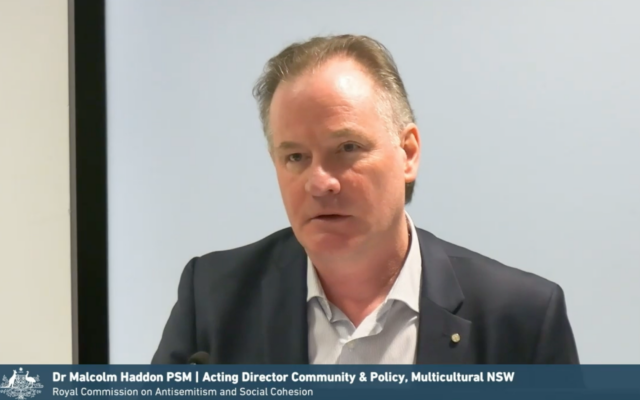
An independent evaluation completed in late 2024 confirmed the program’s effectiveness. Haddon told the commission the review found that Compact had reached an estimated 23,000 young people between 2021 and 2024, though he acknowledged a qualification about the consistency of reach data across the program’s diverse activities. Since 2016, the program estimates it has engaged more than 80,000 young people.
“The evaluation confirmed that the Compact Program is a highly credible and sought-after grants program that is empowering people as champions for community harmony across metropolitan and regional New South Wales,” Haddon said.
He said 80 per cent of young participants reported they had learned about different perspectives and ways of life, a finding he described as “really critical to the logic underpinning the whole program”.
“How do we put ourselves in someone else’s shoes, understand someone else’s perspective on things, which was a really, really important finding,” Haddon said.
The program also runs several strategic communications initiatives. One, originally launched in 2017 as “Remove Hate from the Debate”, has been refreshed under the theme of “making the internet more human again” and is developing resources for community-based social media moderators who may encounter hateful content on their channels.
Another initiative, the Continuum Project, is a digital storytelling platform featuring Australian and New Zealand survivors of terrorism who have chosen to share their experiences. Haddon said the project had recently partnered with the newly established Victims of Terrorism Australia, a relationship formed before the Bondi attack.
Haddon described the project as “a great privilege” to work on, and pointed to the story of Louisa Hope, a survivor of the Martin Place Lindt Cafe siege whose account is published on the Continuum website.
“Don’t use my experience to promote fear and hate and division. I’m directly impacted by what’s happened, and I’m instead using my voice to promote hope, unity, and love,” Haddon said, recounting the message of the project’s participants.
He said that when the time is right, the project would look to include survivors of the Bondi attack as well.
“Those who have worked with a small community so far of survivors are concerned about the impact that terrorism has had on social cohesion and on society at large,” Haddon said.
The Compact Program’s approach has attracted international recognition, with Haddon invited to present at the United Nations General Assembly in 2018 and to the Global Counterterrorism Forum in Abu Dhabi.
Compact program to receive $14.5 million to 2028, commission hears
A NSW youth social cohesion program funded under the state’s countering violent extremism program will receive $14.5 million between 2024 and 2028, with $3 million a year allocated after 2028, the Royal Commission heard on Thursday.
Multicultural NSW acting director of community and policy Malcolm Haddon told counsel assisting Richard Lancaster SC that Compact — the Community Partnership Action Program — has five broad components, including a special grants round opened recently to support whole-of-community recovery from the antisemitic attack at Bondi.
The others are multi-year partnership projects delivering youth-led solutions for social cohesion, a statewide network of partnerships known as the Compact Alliance, strategic partnerships, and strategic communication initiatives.
Haddon said Compact was the first program in NSW to receive state government funding under a countering violent extremism program.
“A lot of work in this space is funded by the federal government, so we’re fortunate in New South Wales to have a dedicated New South Wales program,” he said.
He said research conducted when the program was designed in 2015 had shown short-term grant funding of around 12 months could not achieve the intended impact, so it was built around multi-year projects.
The program is in its third four-year cycle. Haddon said 20 partnership projects were awarded funding in 2024 for up to four years to 2028, with a further seven funded through the special grants round. There were some 107 applications in the round that closed in August 2024.
He said the program favoured applications that brought partners on board, facilitating cross-cultural and cross-sector collaboration. All partnership projects are youth engagement projects.
“Importantly, for the Compact program, we look to young people as part of the solution for social cohesion, not part of the problem,” Haddon said.
“We actually believe that young people are as concerned about increasing levels of hate and polarisation in society as everyone here is. They want to do something constructive in response.”
Agency, one of two projects Haddon described, was led by anti-racism charity All Together Now with youth mental health organisation Headspace and trained young people, mostly in schools, to identify online conspiracy theories, misinformation and fake news.
Reconnecting East and West, funded in the 2021 to 2024 cycle and led by the Arab Council of Australia, brought young people from eastern and western Sydney together after the Delta wave of COVID-19, responding to a perceived inequality in how the two areas had been treated.
Extremists ‘hate Australia’, Royal Commission told
Violent extremists are increasingly seeking to divide Australians along lines of gender and sexuality as well as race and religion, the Royal Commission on Antisemitism and Social Cohesion has heard.
Multicultural NSW acting director of community and policy Malcolm Haddon, who has worked in countering violent extremism policy and program development for some 15 years, told counsel assisting Richard Lancaster SC the threat environment had grown more complicated since he entered the field.
“It’s a constantly evolving landscape, the violent extremism landscape … I think that the threats from violent extremism and the threats from hate and extremism more broadly are proliferating,” he said.
“My concern, from where I sit at Multicultural NSW, is particularly around the threat posed by extremism to social cohesion itself. Increasingly, we’ve seen for a long time that extremists are seeking to incite divisions between communities on racial and religious lines, but more recently, we’re seeing increasingly that those threats are seeking to incite divisions along the lines of gender and sexuality as well.”
Haddon said he had been hearing of “very disturbing trends” through the Avert Network — the Addressing Violent Extremism and Radicalisation to Terrorism Research Network — concerning nihilistic violence, gore and extreme violence. Asked by Commissioner Virginia Bell to explain nihilistic extremism, he said it was not his area of expertise, but that his understanding was it involved engaging young people online in graphic violence without a clear ideological motivation behind it.
He told the commission Multicultural NSW does not itself administer programs for early intervention or disengagement from extremist views, and that its role complemented the work of other NSW government witnesses the commission has heard from.
Haddon said extremists “hate Australia”.
“Whether you’re a neo-Nazi white nationalist or an ISIS sympathiser or whatever it might be, you hate Australia. A white nationalist actually hates Australia because they hate the fact that Australia is multicultural,” he said.
“Extremists also hate diversity. For extremists, it’s my way or the highway … and extremists hate democracy, which is what the multicultural principles are founded on”.
Haddon said the agency’s flagship program, Compact — the Community Partnership Action Program — is funded under the NSW Countering Violent Extremism Program and takes a whole-of-society, community resilience approach that borrows its thinking from the field of disaster resilience.
He said a 2024 grant round awarded funding to 20 partnership projects, involving 65 organisations across the state, because the program requires applicants to form cross-cultural and cross-sector partnerships and consortia rather than apply individually.
Haddon also gave evidence on the Stronger Together Grants program and the Safe Places for Faith Communities program, a $15 million Labor government election commitment that Multicultural NSW was tasked to deliver, which provided grant funding to religious institutions for safety and security at places of worship and other places where people of faith gather regularly.
The AJN is providing rolling coverage on the Royal Commission on Antisemitism and Social Cohesion.
For full coverage of the Hearing Blocks, visit the Royal Commission section of The AJN website.

comments