



Live updatesPublic hearings
A focus on sport, the arts and community inclusion
Hearing Block 9 continues today focusing on strengthening social cohesion, including how it is understood and measured.
Social cohesion should not mean asking people who experience racism to stay silent for the sake of harmony, the Royal Commission on Antisemitism and Social Cohesion has heard.
Reflect Forward founder Jamal Elsheikh, a Sudanese Australian who migrated after living in Sudan, Kenya, Tanzania, Oman, Turkey and the United Kingdom, is undertaking a PhD in sociology at the University of Melbourne examining how anti-racism interventions are operationalised across Australian sport.
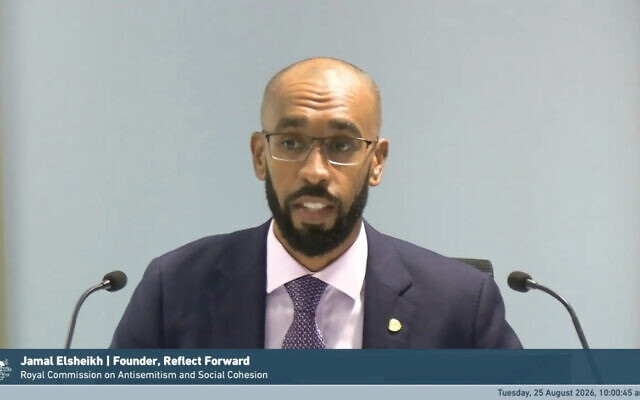
Asked how he would approach social cohesion, Elsheikh noted that March 21 is observed internationally as the Day for the Elimination of Racial Discrimination, but is marked in Australia as Harmony Day, now Harmony Week.
He said he was not against harmony, but that more was needed. “If we can’t talk about racism, I think harmony can conceal maybe what’s going on. We don’t even know what’s happening,” he said. “Acknowledging racism does not create division. No, it’s the opposite. It actually creates social cohesion by rejecting racism, but acknowledging that it’s not a statement, it’s not a window dressing, it’s an everyday action.”
Elsheikh told the commission his belief in the potential of sport was grounded in experience rather than an assumption that sport is automatically inclusive. “Sports is a microcosm of society, so whatever happens in society happens in sports,” he said, adding that this created a dual responsibility, because sport was a social fabric connecting Australians from the local level to the elite.
He described watching the 2023 FIFA Women’s World Cup semi-final between Australia and England in Sydney, at a time when he was himself becoming Australian. “For those 90 minutes, no one really kind of questioned who’s Australian and who’s not. Everyone belonged,” he said. “I’ve never witnessed anything like that in Australia, and it’s one of those unteachable lessons.”
Elsheikh founded One Love Australia after consulting more than 2500 Australians in 2019 about how racism was understood and experienced. He said the main insight was that the organisation should be mission-led on anti-racism rather than focused on any single community.
Reflect Forward grew out of that work as a racial literacy program using sport and elite athletes to engage bystanders and first responders. Elsheikh said the emphasis was on early, practical intervention. “Ultimately it’s about what can you do in the moment,” he said.
He said Reflect Forward expected to train more than 150 clubs and 3000 leaders over the next six to eight months, and described a Victorian government-funded initiative run with Professional Footballers Australia and the state’s two A-League clubs, Melbourne City and Melbourne Victory, which he said had leveraged their rivalry to communicate that opposition on the field does not justify racial hostility.
He also described a Courageous Conversations for Change series, built on the finding that bystanders most often failed to intervene because they lacked comfort or confidence.
Asked what else was needed beyond campaigns and shared events, Elsheikh said the key question was what problem an intervention assumed. “If you assume the anti-racism intervention is education, probably the assumption here it’s an ignorance problem. If it’s compliance, we assume it’s a policy regulation,” he said. “I think we need a bit of all.”
At a macro level, he said, independence was needed. “Sports is great. Sports can do a lot of things, but sports alone cannot do that.”
A man who played Australian rules football alongside Israelis and Palestinians in a team assembled by the Peres Centre for Peace has told the Royal Commission on Antisemitism and Social Cohesion the model could be adapted for Australia.
Kevin Nafte, who grew up in South Africa, moved to Australia at 16 and moved to Israel in 2007, returning to Australia in 2024, heard about AFL tryouts near Jerusalem in 2008. He said he had missed playing the game, and only later discovered the project used AFL to build trust between Israelis and Palestinians who had never played it.
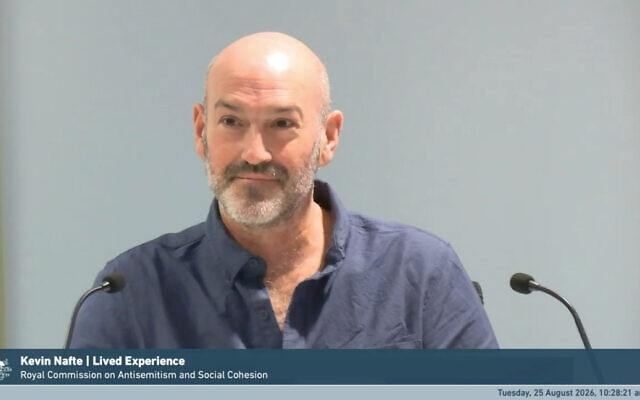
“I remember that first tryout very well. It was quite tense. Most of the players, Israelis sitting on one side, Palestinians on the other,” Nafte said.
The team trained for six or seven months, and Nafte said football’s physicality helped.
“There was a lot of animosity probably at the beginning between players who didn’t really trust each other, but when you’re on the field and someone comes and gives you a bump or shepherds you … you automatically start to develop that trust,” he said. “Sports is like a universal language.”
A formal dialogue component began halfway through, facilitated by an Israeli and a Palestinian. Israeli players spoke about military service, while Palestinians described growing up in the West Bank and East Jerusalem. “It was a real eye opener just to hear the other side face to face and from a human perspective, very different to what you hear on the news,” Nafte said.
The team travelled to Melbourne for the 2008 AFL International Cup. Because the visit fell during Ramadan, players broke the fast together at iftars with Muslim groups and visited a mosque, and also attended Shabbat dinners with Jewish families.
Nafte, who is Jewish and describes himself as a Zionist, said he had never met a Palestinian before joining the team. He later attended a teammate’s wedding in the West Bank, and invited the Palestinian players to his own wedding in Israel in 2013, obtaining special permission for them to enter.
He returned as head coach for the 2011 International Cup alongside former Hawthorn champion Robert DiPierdomenico, with about half the squad returning.
Nafte told the commission the Palestinian captain, who played in both teams, was later ostracised by his community after his father-in-law accused him of normalising with Israelis, and was forced to divorce his wife.”I think for myself and for a lot of people, we kind of lost a lot of hope after that,” he said.
Nafte said grassroots initiatives were essential because politics alone would not change everything, and that Australia was well suited to such programs, with clubs in most places including remote communities, along with schools and professional athletes. “There is a lot that can be done with social cohesion and allowing different communities, minority communities, to learn more about other communities,” he said.
Commissioner Virginia Bell has asked a witness before the Royal Commission on Antisemitism and Social Cohesion whether Zionism, as he understands it, is consistent with a settlement in which Israel and Palestine each enjoy self-determination.
Kevin Nafte, who played and later coached an Israeli-Palestinian Australian rules football team assembled by the Peres Centre for Peace, told Bell it was. “I would love to see that. I think nothing would bring me greater joy and happiness than seeing a two-state solution with Israel and Palestine,” Nafte said.
“And yes, I am a Zionist, and I think as a Zionist, you can believe in that two-state solution. And Israel exists as a secure and safe country for Jewish people, not only Jewish people, but all its inhabitants … there is a Palestinian state alongside, and they both are living free next to each other.”
Bell then asked whether, from the Palestinian players he came to know, he believed it would be possible for Palestinians to live alongside Israel while accepting the legitimacy of the Israeli state. “I did. I saw glimpses of that, but it felt like for them it was harder. There were more obstacles to go through,” Nafte said.
He said the players faced not only a physical wall but institutional ones, along with community pressure that left them wary of how their actions would be perceived in their villages. “But there was definitely a will there. I think it just needs more sustained programs and efforts from both sides,” he said.
Asked whether Israeli players had been criticised by family or friends for taking part, Nafte said some from more religious, right-wing backgrounds were given a hard time, and a number withdrew because they did not believe in what they were doing.
Earlier, counsel assisting turned briefly from sport to education, asking Nafte about an early learning centre he chose for his son on his return to Australia because of its educational philosophy and the diversity of its teaching staff. He said he discovered only after his son started that it incorporated a Jewish curriculum.
“A few days after the school started, our son came home singing Hebrew, and only then we discovered that there was a big Jewish part of the curriculum,” he said, adding that more than half the students were not Jewish.
He said the curriculum connected Jewish values to Australian ones, giving the example of the festival of the trees being linked to environmental protection. Children aged three and four learnt Hebrew songs and sang them at home to parents who knew nothing about Judaism.
“Given what has happened over the last few years here, I think that kind of inclusive model is an amazing concept to roll out in Australia,” Nafte said.
He said it was open to anybody, and there could be equivalent models built around a Muslim curriculum. “Really, just giving people and kids at an early age an understanding of different cultures and incorporating into song and food and environment, I think it’s a really powerful model.”
A witness giving evidence under the pseudonym AEB told the Royal Commission this morning how a sporting camp he helped design brought together Jewish, Muslim and Christian primary school children in an effort to rebuild trust between communities strained since 7 October 2023 and, more recently, the Bondi Beach terror attack.
AEB, whose identity and address are protected and whose image was withheld from the Commission’s live stream, has a professional background running sport-based youth development programs.
He told Counsel Assisting, Tamara Phillips, that Sydney property developer Harry Triguboff sought him out in January this year after becoming concerned about “a growing division between the Muslim and Jewish communities” and wanting to explore whether sport could help close it.
That conversation became Connection Camp – a two-day event at the West Tigers Centre of Excellence during the April school holidays, involving roughly 120 children in years 3 to 6. Participants include 50 Muslim, 50 Jewish and 20 Christian kids.
West Tigers and Western Sydney Wanderers players attended both days, and the camp was free, with transport provided from across Sydney.
AEB said the planning deliberately avoided pitting one community against another.
“Having a Jewish team versus a Muslim team might have the opposite effect that he was trying to create,” he told the Commission, describing how organisers instead mixed children of different faiths onto the same teams.
Off-field “icebreaker” sessions, run by one Muslim and one Jewish facilitator, focused on what the children had in common rather than their differences.
Catering was both kosher and halal, prepared with rabbinic and Islamic advice, so no child needed to eat separately, and children were given matching “One Team” T-shirts to wear on the second day.
The camp was marketed publicly as a sports camp rather than an interfaith one — a deliberate choice, AEB explained, though the interfaith character was made clear in the program detail, including references to kosher and halal catering.
AEB gave a vivid account of what he witnessed on the ground. Children arrived on day one in two distinct groups that were not mixing; by the end of that day, he said, “that barrier had been broken,” recalling a Jewish girl and a Muslim girl playing a hand game together.
He also described a child who clung to her mother’s leg on arrival, and who by the end of camp, was “hugging a girl from the other community… crying, saying, ‘I don’t want to say goodbye to you.'”
Parent survey feedback cited from AEB’s witness statement showed 22 of 24 respondents rated their child’s experience as very good or excellent, with all 22 saying they would recommend the camp and 21 saying their child would attend again.
Letters tendered to the Commission — one signed by Mr Triguboff and other community figures, another from a Muslim schools’ representative — praised the camp for fostering “friendship, confidence, and a strong sense of belonging.”
AEB told the Commission that a second Connection Camp is planned for October, with an intention to run roughly three a year, funded by Mr Triguboff, and eventually to expand beyond NSW. He cautioned, however, against relying indefinitely on individual philanthropy.
His central recommendation was that the model be embedded within the school curriculum rather than remain a “self-selecting” activity for families already open to it.
He proposed mixing children from different schools onto shared sporting teams, starting in primary school, so the experience reaches beyond those who volunteer to attend.
“Building this program… would have a material impact on young people’s outlook on people that are different to them within Australia,” he said.
The Royal Commission heard evidence today from Nicola Skinner, the National Rugby League’s General Manager of Participation, Community and Business Operations, who detailed the sport’s flagship social cohesion programs and their measurable impact on young people.
A key initiative discussed was the In League in Harmony program, run in partnership with the Institute for Economics and Peace since 2025.
Skinner told the Commission the six-week program targets Year 9 and 10 students identified by their schools as disengaged, at risk of dropping out, or likely to benefit, with a deliberate focus on culturally diverse areas “where we’re finding a higher prevalence of either disengagement or isolation.”
Each term, six schools send 35 students who combine classroom learning on inclusion and peacebuilding with league tag on the field, culminating in a “Harmony Gala Day.”
A central feature is the “Harmony Walk,” – created by Holocaust survivor Ernie Freelander from Moving Forward Together and B’nai B’rith NSW – in which students from different schools complete a lap of the field together before competing.
“It’s a very simple concept, but very powerful,” Skinner said.
The program also identifies “peace advocates” — six student leaders per school — who develop and pitch “peace projects” for up to $1,000 in funding, resulting in initiatives such as new school songs, murals over graffiti, and podcasts.
Skinner revealed that since 2014 the program has reached 13,000 participants across 61 Harmony Gala Days and produced 1,200 peace advocates.
She cited survey data showing 90 per cent of participants reported feeling more connected to their school community, and 94 per cent felt confident to lead on harmony issues.
A social return on investment analysis found the program returns $5.30 in value for every dollar invested.
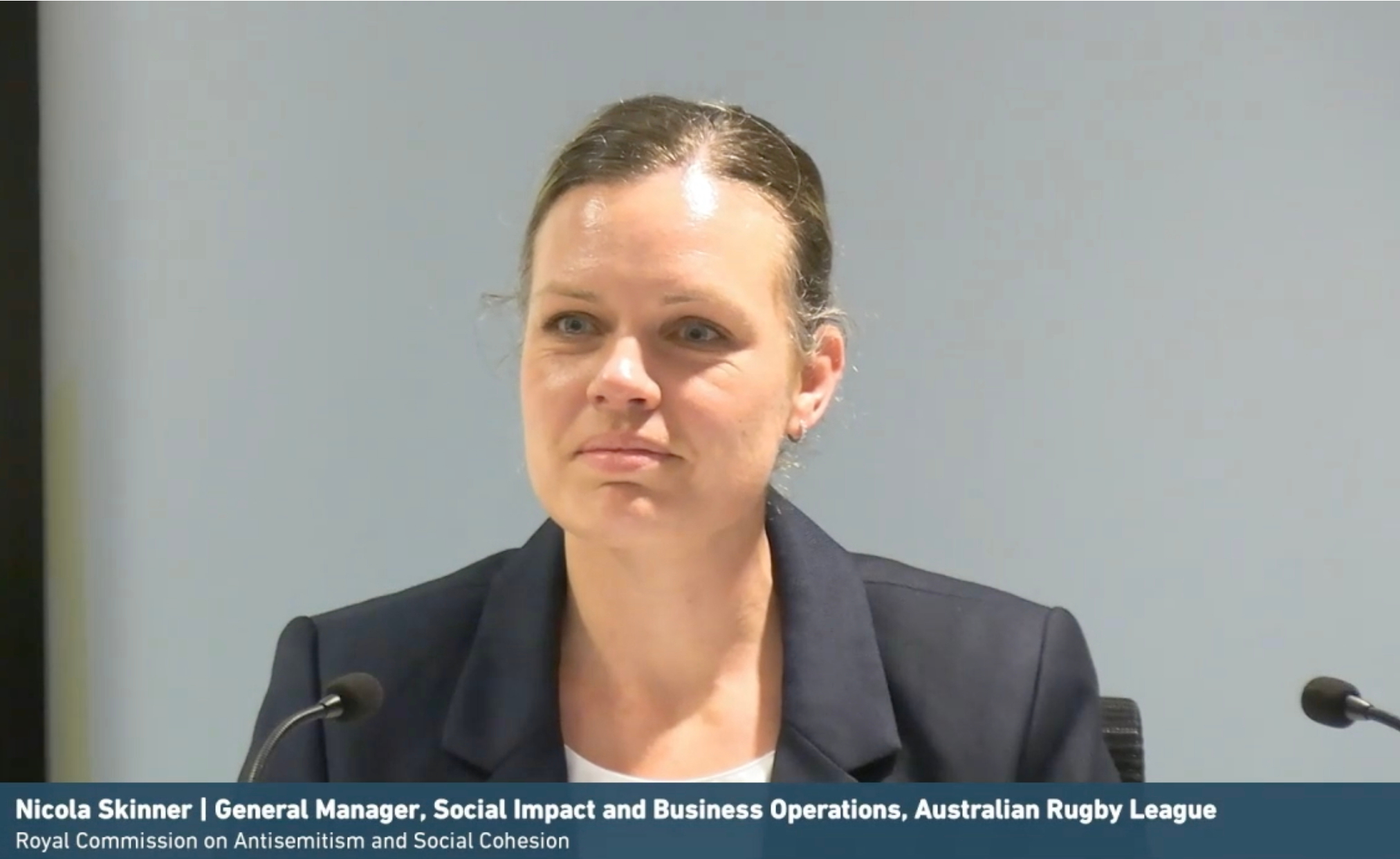
Earlier, Skinner outlined how the ARLC enforces behavioural standards at community level. Using a hypothetical racial slur during a weekend match, she explained the conduct falls under the member protection policy, which prohibits discrimination based on race, ethnicity and religious belief, “although antisemitism isn’t called out as a specific characteristic.”
She described NSW Rugby League’s vilification reporting process, whereby a match official pauses play, records details from both parties, and lodges a formal complaint that can proceed via mediation or a tribunal, with sanctions ranging “from a written apology to a written warning to actual termination.”
Skinner also acknowledged a recent survey of roughly 2,000 volunteers found that “responding to difficult situations” was the area of lowest confidence, prompting the NRL to build cross-role core competencies rather than relying solely on lengthy written policies.
Skinner also described three cohesion-focused events: the Multicultural Round (established 2022), celebrating the game’s cultural diversity through traditional dance and cultural displays; the Indigenous Round (since 2015, expanded to two weeks in 2025 after clubs requested more home games), elevating Aboriginal and Torres Strait Islander culture and history; and the community-level Harmony Cup, where players represent their heritage nations.
Closing her evidence, Skinner addressed a recommendation in her statement to strengthen ties between clubs and local schools, community organisations and specialist services.
She said the aim was ensuring “no one group of volunteers is alone,” with the ARLC helping clubs connect to local supports rather than volunteers “carrying the full weight of that responsibility” alone.
The Royal Commission has heard a proposal to require businesses bidding for government work to demonstrate what they will contribute to social cohesion, with a mandated percentage of contract value directed back into local communities.
Glenys Beauchamp, a former secretary of the federal health and industry departments, gave evidence on behalf of Independent Advocates for Community Sport, a Canberra-based group that has made a submission to the Commission.
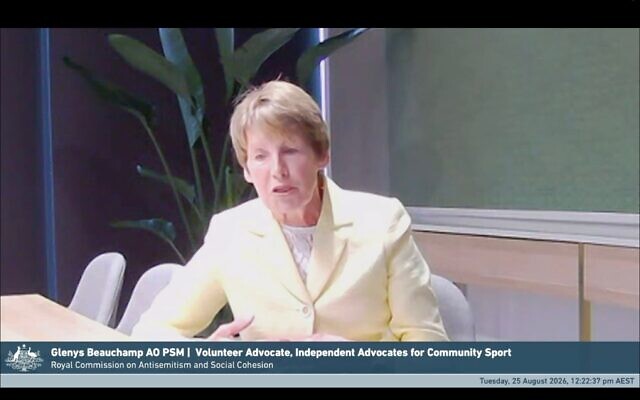
The group’s submission puts the number of contracts awarded by the federal government in 2025 at around 65,000, with a combined value of approximately $98 billion, and estimates that some 250,000 contracts are let annually across all levels of government. Beauchamp told the Commission that procurement was the lever her group wanted to see used.
“I think the social cohesion investment model is how do we mobilise really government, business, and community together, rather than individually, and that can happen at the regional and local level,” she said.
The model has three parts: a nationally coordinated social cohesion framework setting agreed outcomes, an investment model built around those outcomes, and procurement as the mechanism to deliver it.
The proposal draws on the United Kingdom’s Social Value Act, passed in 2012 and made a mandatory assessment requirement in 2020. Beauchamp said the group had looked in particular at Manchester City Council, which applies a 20 per cent social value weighting to its contracts plus a further 10 per cent for zero emissions. She said the council had told the group it would retain that 30 per cent requirement despite changes at the UK national level.
A mandated weighting in Australia could begin at 10 per cent and increase once piloted, she said.
Beauchamp said Australian procurement was inconsistent across jurisdictions and burdensome for community organisations, describing it as a “tick and flick” process with minimal follow-up. She said grant applications running to hundreds of pages fell to volunteers who were not professionals at writing them, and that the Productivity Commission had reached similar findings.
Her evidence was grounded in community sport. A 2023 Australian Sports Foundation report found 24 per cent of clubs were at risk, with pressures on participation costs, a volunteer base shrinking as the population ages, and diminishing access to facilities.
“Sport brings a lot of those differences and diversity together to talk about commonality of being in a team and that sense of belonging,” she said.
Peter Ivany has told the Royal Commission on Antisemitism and Social Cohesion that the arts sector experienced a “profound and deeply unsettling shift” after October 7.
Ivany, a director and board member across institutions including the Museum of Contemporary Art, the Art Gallery of New South Wales, NIDA, the Australian Film, Television and Radio School and the Sydney Film Festival, said the first 40 years of his career in the sector were largely free of geopolitical tensions.
“There was really never any issues,” he said. “It just wasn’t topics that just didn’t come up because pretty well all voices were heard.”
That changed after October 7, he told the commission. While acknowledging the problem was global and not confined to Australia, Ivany said a minority of institutions had been “captured by people whose ideology runs the institution”.
“Once people take over an institution for their own purposes and not the mission of what that institution is set up to do, it becomes highly problematical because people get alienated,” he said, adding that attendances tend to decline as a result.
Ivany also pointed to the influence of performers and public figures weighing in on complex geopolitical issues.
“You’ve got a whole range of influencers and actors that all of a sudden become experts on 5000 years of warfare in the Middle East,” he said.
He told the commission that foreign money from “terrorist states” had flowed into the arts sector to help shape public opinion, compounding the challenge for institutions trying to maintain their mission.
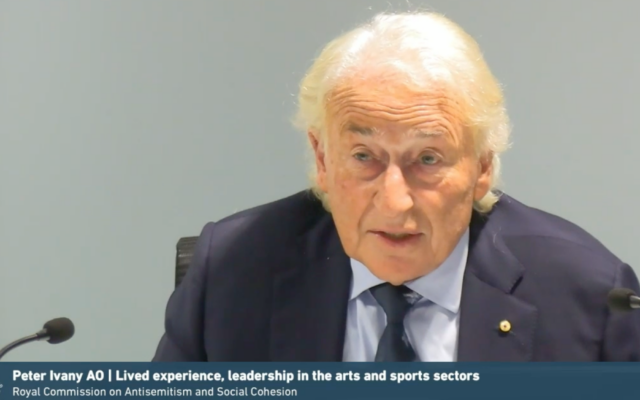
Asked by counsel assisting Zelie Heger SC what good leadership looks like in the sector, Ivany said it begins at board level with diverse skill sets and perspectives, and flows through to management and day-to-day execution. He stressed that diversity policies must translate into action, citing his own experience increasing Indigenous scholarships tenfold at one institution over 15 years and ensuring LGBTQ inclusion across programs.
He pointed to the Sydney Film Festival as a model of genuine inclusivity, screening 240 films from 81 countries this year.
“You include everyone, you allow them to come in, you make them comfortable, and the place prospers,” he said.
On responding to antisemitism, Ivany said organisations must act with speed and decisiveness. “You have to have zero tolerance. You have to deal with it then, because otherwise it’s then accepted behaviour, and then it becomes part of a norm, and then people invent this amazing language to justify what’s happened.”
He noted that even some of the institutions he had criticised were beginning to change.
“I can see in the last few months … there’s big changes in behaviour already,” he said. “So all this is having a positive impact.”
Ivany recommended that government arts funding be conditional on organisations not undermining social cohesion by inciting hatred or division, and that due diligence be conducted on senior appointments to publicly funded institutions.
“Their social media hasn’t been checked. Their previous history hasn’t been checked,” he said. “In any job, when you go for any job, all that has to be checked before you go in. And government jobs shouldn’t be any different than any other jobs.”
Peter Ivany told the Royal Commission on Antisemitism and Social Cohesion that the Bondi Beach atrocity was “a blight on our history”.
Ivany, the son of two Holocaust survivors whose father was among the roughly five per cent who survived the May 1944 intake at Auschwitz, said the Bondi attack represented a turning point for Australia.
“It shows the society in a way at a crossroads when it gets to that far,” he said. “We have to put in place something that we remember it, and it doesn’t reoccur.”
He also expressed hope that the AFL would support the Swans holding a memorial match in the opening round each year, as it did in 2026.
Ivany, who has served on the Swans board since 2021 and chaired the Swans Foundation since 2005, addressed the recent allegations against Sydney Swans players, reiterating an apology first made by Swans chairman Andrew Pridham.
“As a board member, I too apologise to the community and to everyone that it has affected, and it’s a very wide group,” he said. “The Swans will continue to deal with all the issues transparently, in accordance with our values and standards.”
He told the commission the club’s broader response to antisemitism since the Bondi attack had been exemplary, citing vigil attendance, wreath-laying at the memorial, education sessions with the ECAJ, and match-day recognition of affected families.
“I don’t think there’s any club, and including the AFL, [that] has been better than the way we’ve been in terms of antisemitism,” Ivany said. He described the club’s memorial for the Bondi victims in March this year as one of the proudest moments of his life.
Ivany also recounted the 2008 AFL International Peace Team, a joint Israeli-Palestinian squad assembled for the AFL International Cup in partnership with the Peres Center for Peace. He described hosting the team’s first gathering at his home, where players shared Muslim and Jewish prayers together.
“They form bonds for life,” he said.
Ivany said that while he had not witnessed antisemitism at senior level, the picture at junior level was different.
“Clearly, at junior level, in the Victorian competition, there’s significant antisemitism,” he said, also referencing a netball incident in New South Wales.
He said the top-down effect of leadership was critical. “You’ve got to get the junior leagues right because that’s where the behaviour forms.”
He noted, however, that the situation was improving, saying “people are jumping on it quicker.”
He also reflected on his personal intervention with then AFL chief executive Gillon McLachlan over the treatment of Sydney Swans player Adam Goodes, saying the league was “a bit slow” to act at the time. He explained to the commission that he approached McLaclan on his own accord, with the Swans’ support, telling him that the must be zero tolerance, “because once you let it go, there’s not one positive about vilifying a footballer because of their race”. He credited the AFL with having since improved significantly.
Despite the challenges, Ivany expressed optimism about Australia’s future.
“We’ve got a lot to save here,” he said. “We have to take this as a break in time in our society and sort it out, because there’s a lot to fight for and it’s just critical for the future of this country.
“I have a lot of faith in this country, and that we’ll come back. And there’s a lot of terrific things in this country that we have to fight to keep. But sometimes to keep your system, you got to fight. It just doesn’t automatically happen if you don’t fight for it.”
Almost half of respondents to a national survey conducted by Maccabi Australia reported witnessing or experiencing antisemitism in a sporting setting, with the majority of incidents going unreported, the Royal Commission on Antisemitism and Social Cohesion has heard.
Maccabi Australia general manager David Goldman, a seventh-generation Australian Jew and former competitive swimmer who said he first experienced antisemitism as a young athlete, told the commission the organisation surveyed its national database of approximately 17,000 members earlier this year, receiving 669 valid responses.
“47.7 per cent, just under one in two people, had either witnessed or experienced antisemitism,” Goldman said. “The more telling statistic that came out of the survey was, of those people that had witnessed or experienced antisemitism, only 30 per cent had reported it, so we believe there’s a massive underrepresentation and underreporting of antisemitic incidents in sport.”
Goldman said a deeper analysis of qualitative responses revealed “a sharp rise in incidents post October 7”.
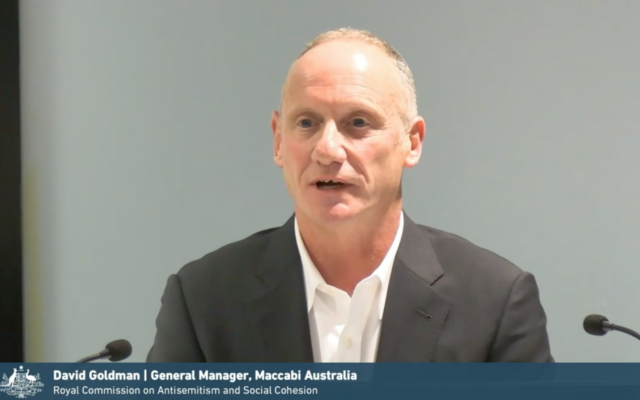
He described incidents including slurs directed at players as young as 10, as well as intimidatory behaviour from spectators making political gestures on sidelines.
“We do hear slurs around ‘Hitler should have finished the job’. We’ve heard slurs like that from children as young as 10 years old,” Goldman said. “I don’t know where that comes from.”
Goldman told the commission that many sporting codes lacked fit-for-purpose discrimination policies, leaving match officials — some as young as 14 — without clear guidance on how to identify or respond to antisemitic incidents on the field.
“Without being able to articulate what antisemitism in sport looks like … we won’t be able to call it out,” he said. “We’re putting too much pressure on our 14-year-old referees and umpires to call it out when they hear a 10-year-old be as disgusting and vile as I’ve already mentioned.”
He said the absence of specific discrimination policies at club, state and national level meant that when incidents were not identified on the field, evidence was often lost, making it difficult for judicial and tribunal mechanisms to act, perpetuating “a cycle of both antisemitism and discriminatory behaviour”.
Goldman emphasised that while he was giving evidence specifically about antisemitism, solutions should not be developed in isolation.
“The solution lies in all community groups coming together in identifying what discriminatory behaviour is and how we should deal with it, and at many different levels and at many different layers,” he said.
Maccabi Australia is the national roof body for Jewish sport, with more than 50 affiliated clubs across four states and more than 10,000 participants and members. Goldman noted positive responses from the broader sporting community, including elite codes holding minutes of silence and wearing black armbands following the Bondi attack, and a grassroots initiative in which netball players, spectators and families wore purple ribbons in solidarity following a reported antisemitic incident on court in Sydney earlier this year.
Maccabi Australia general manager David Goldman has told the Royal Commission into Antisemitism and Social Cohesion that antisemitism education should be mandated across all sporting codes, citing widespread ignorance among referees and umpires.
Goldman said officials often failed to recognise antisemitic incidents, dismissing them as rudeness rather than discriminatory behaviour.
“I don’t believe that our referees and umpires actually can identify what an antisemitic incident is,” he said. “It often gets passed off as just a rudeness or a snide remark … but not recognised as discriminatory behaviour.”
He said the United Kingdom was “two to three years ahead” of Australia in addressing the issue.
Goldman told the commission that antisemitic remarks could cause harm even when no Jewish person was present, warning that failing to call out such comments led to them becoming normalised “as part of the vernacular of what you hear on the sporting field.”
He called for accredited training for referees and match officials, arguing that without it, incidents were “left on the field” with no pathway for evidence-gathering or policy change.
Goldman also backed standardised disciplinary frameworks with graduated sanctions applying to players, parents, spectators, coaches and officials, noting that consequences should account for the age of the offender. He pointed to Sport Integrity Australia’s minimum standards as a potential benchmark.
Among Maccabi Australia’s recommendations, Goldman proposed a centralised, app-based reporting mechanism allowing witnesses to log discriminatory incidents and route them to the appropriate level of response, including police where necessary.
He said unclear guidelines around police involvement had left serious threats unresolved, citing examples of “aggressive verbal abuse and threats … to the effect of ‘I’m going to come find your family and kill you.'”
Goldman said sustained government funding for security at Jewish sporting events was needed to address both financial and psychological costs.
“There’s the psychological cost and the cost that kids and parents are having in the anxieties, the fears, the trepidation of turning up to sporting events,” he said, adding that some members feared wearing club uniforms bearing the Magen David for fear of being identified as Jewish.
He also proposed targeted funding for multi-faith community engagement in sport, pointing to gestures such as the English Premier League’s players taking a knee as examples of visible commitments to inclusion.
Netball Australia chief executive officer Mark Falvo has told the Royal Commission into Antisemitism and Social Cohesion that nationally consistent guidelines are needed to help sporting organisations identify and respond to antisemitism, with a particular focus on community and junior levels.
Falvo, who took on the role in an interim capacity in April before being appointed permanently in August, said community and junior settings should be prioritised because that is where most participation and public engagement with the sport occurs.
“It’s very difficult, or it could perhaps be problematic, to just allow policy to evolve at a local level,” he said. “It is quite important that there be sort of nationally consistent guidelines or a policy framework.”
Falvo said the issue was not limited to netball. “It’s a common thread across other sports in Australia,” he said, adding he did not believe individual sports should be left to “form their own views” without national standards.
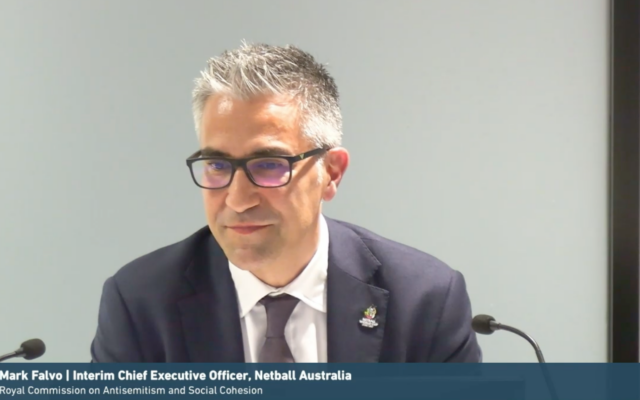
Falvo confirmed Netball Australia’s current policies do not contain a standalone reference to antisemitism, but said the organisation was considering including such references in its policies, procedures and education materials, drawing on lessons from the commission’s proceedings and recent policy revisions by Sport Integrity Australia.
He said education for umpires currently focused mainly on technical application of the rules, with little specific training on recognising racism, including antisemitism. Falvo said this extended to club administrators, officials and volunteers, and said there was scope for more investment and greater consistency in how such education was delivered.
“It can sometimes be difficult to go that extra yard,” he said, noting many grassroots clubs relied on “time poor volunteers”.
Netball Australia, the national governing body for a sport played by more than one million Australians each year, operates under a federated model and has a ten-year plan to double participation to two million. Falvo said diversity was central to that goal, noting the organisation wanted “every single Australian, no matter what their gender, or faith, or culture” to take up the sport.
He also highlighted the Spirit series, delivered with the Department of Foreign Affairs and Trade, and the 2027 Netball World Cup in Sydney, which he said would offer opportunities to engage diaspora communities and foster social cohesion.
Australia’s largest refugee settlement agency has told the Royal Commission on Antisemitism and Social Cohesion that the Commonwealth should establish a national community safety fund to pay for security at places of worship and community facilities, allocated by risk rather than restricted to a handful of groups.
Settlement Services International chief executive Violet Roumeliotis and general manager of newcomers, settlement and integration Yamamah Agha gave evidence to the commission, tendering a witness statement dated 24 August 2026.
The safety fund sits within a five-pillar framework SSI has put to the commission, spanning national leadership, trust, cultural responsiveness, community safety and participation, and a whole-of-society prevention-led response.
Roumeliotis said the proposed fund would target communities facing heightened hate-related risks. Eligible funding would cover physical security upgrades, cyber and digital security, volunteer training in emergency preparedness and incident response, crisis communications, and security coordination for major events.
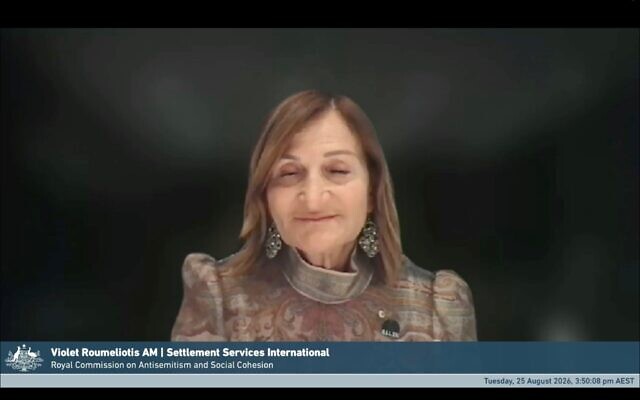
“We hear stories every day of people who don’t feel confident to leave their home,” she said. “They feel unsafe.”
She said the fear had intensified “following what happened in Bondi”, and was affecting particularly young people and young women.
Eligibility, she said, should not be narrowly drawn. The allocation “should be risk-based and available to all communities experiencing credible threats, rather than just limited to a small number of groups”.
SSI also wants a companion community participation fund. “Most social cohesion is built close to home in sporting clubs, in schools and community centres, libraries, places of worship,” Roumeliotis said, adding that libraries in particular mattered to the communities SSI works with. Those settings, she said, “create everyday opportunities for connection that national campaigns cannot replicate”.
Roumeliotis, who has led SSI for 14 years and has four decades in human services, said the commission was an opportunity to define what social cohesion means in Australia.
“It’s not simply whether different communities peacefully coexist; it’s whether people can participate fully in economic, social, civic, cultural life,” she said. “Social cohesion is the outcome, collective belonging is the goal, and equality and inclusion are the pathway.”
She said racism was the key barrier to cohesion, and that SSI’s approach was to address the conditions that allowed it to take hold rather than treat it as a standalone issue.
Among the trust-building measures SSI proposes are locally led listening roundtables with diaspora, faith and community groups, run as an ongoing process rather than one-off consultations, and a social cohesion advisory council to the prime minister.
Roumeliotis said SSI had convened similar roundtables during the COVID-19 pandemic, passing what it heard to state and local government and carrying information back on vaccination, food relief and mental health support.
She was critical of government practice. “We find that government of all levels, in particular Commonwealth and state, design programs in isolation. They do not consult. Well, if they do consult, it is when material decisions have been made about program design and approach.”
Agha, who has worked at SSI for 15 years and supported new arrivals for close to two decades, said the agency’s ability to reach communities others cannot reach rested on its workforce and its physical presence.
“Our workforce is very diverse, and many of our workforce are connected to the communities,” she said. “Our offices, our staff and our programs are place based.”
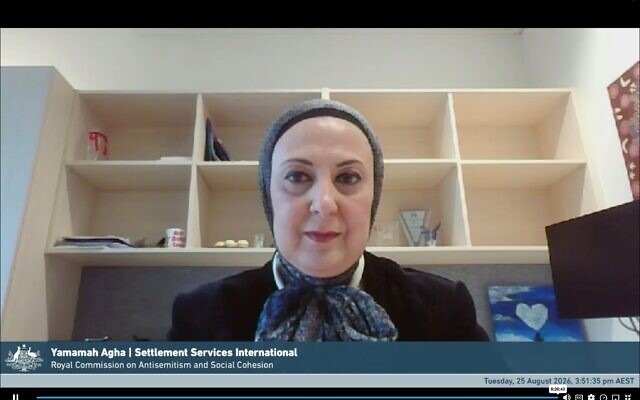
Roumeliotis added: “I think the key element for this is trust.”
Agha said SSI’s experience across its settlement, welcome and community hub programs pointed to two lessons: that relationships are built through repeated positive interactions, and that place matters. Schools, sporting clubs and similar venues let people connect informally, she said, and participation “is more likely to feel real” when people have genuine opportunities to contribute socially, culturally, civically and economically.
SSI, a national not-for-profit established in 2000, now employs more than 1200 people, works with about 20,000 refugees a year, and says it has supported more than 53,000 people through almost 60 programs.
On the final pillar, Roumeliotis urged full implementation of the Multicultural Framework Review and the National Anti-Racism Framework, both of which followed extensive consultation.
“Social cohesion cannot be built through crisis response alone,” she said. “Tackling racism and strengthening social cohesion is a whole society effort.”
She warned against assuming cohesion looks after itself. “We became complacent,” she said, adding that people and organisations were actively working to create division and hatred, and needed to be countered.
The AJN is providing rolling coverage on the Royal Commission on Antisemitism and Social Cohesion.
For full coverage of the Hearing Blocks, visit the Royal Commission section of The AJN website.
Social cohesion should not mean asking people who experience racism to stay silent for the sake of harmony, the Royal Commission on Antisemitism and Social Cohesion has heard.
Reflect Forward founder Jamal Elsheikh, a Sudanese Australian who migrated after living in Sudan, Kenya, Tanzania, Oman, Turkey and the United Kingdom, is undertaking a PhD in sociology at the University of Melbourne examining how anti-racism interventions are operationalised across Australian sport.
Asked how he would approach social cohesion, Elsheikh noted that March 21 is observed internationally as the Day for the Elimination of Racial Discrimination, but is marked in Australia as Harmony Day, now Harmony Week.
He said he was not against harmony, but that more was needed. “If we can’t talk about racism, I think harmony can conceal maybe what’s going on. We don’t even know what’s happening,” he said. “Acknowledging racism does not create division. No, it’s the opposite. It actually creates social cohesion by rejecting racism, but acknowledging that it’s not a statement, it’s not a window dressing, it’s an everyday action.”
Elsheikh told the commission his belief in the potential of sport was grounded in experience rather than an assumption that sport is automatically inclusive. “Sports is a microcosm of society, so whatever happens in society happens in sports,” he said, adding that this created a dual responsibility, because sport was a social fabric connecting Australians from the local level to the elite.
He described watching the 2023 FIFA Women’s World Cup semi-final between Australia and England in Sydney, at a time when he was himself becoming Australian. “For those 90 minutes, no one really kind of questioned who’s Australian and who’s not. Everyone belonged,” he said. “I’ve never witnessed anything like that in Australia, and it’s one of those unteachable lessons.”
Elsheikh founded One Love Australia after consulting more than 2500 Australians in 2019 about how racism was understood and experienced. He said the main insight was that the organisation should be mission-led on anti-racism rather than focused on any single community.
Reflect Forward grew out of that work as a racial literacy program using sport and elite athletes to engage bystanders and first responders. Elsheikh said the emphasis was on early, practical intervention. “Ultimately it’s about what can you do in the moment,” he said.
He said Reflect Forward expected to train more than 150 clubs and 3000 leaders over the next six to eight months, and described a Victorian government-funded initiative run with Professional Footballers Australia and the state’s two A-League clubs, Melbourne City and Melbourne Victory, which he said had leveraged their rivalry to communicate that opposition on the field does not justify racial hostility.
He also described a Courageous Conversations for Change series, built on the finding that bystanders most often failed to intervene because they lacked comfort or confidence.
Asked what else was needed beyond campaigns and shared events, Elsheikh said the key question was what problem an intervention assumed. “If you assume the anti-racism intervention is education, probably the assumption here it’s an ignorance problem. If it’s compliance, we assume it’s a policy regulation,” he said. “I think we need a bit of all.”
At a macro level, he said, independence was needed. “Sports is great. Sports can do a lot of things, but sports alone cannot do that.”
comments