



Live updatesPublic hearings
Final day of Royal Commission hearings
Hearing Block 9 concludes today focusing on strengthening social cohesion, including how it is understood and measured.
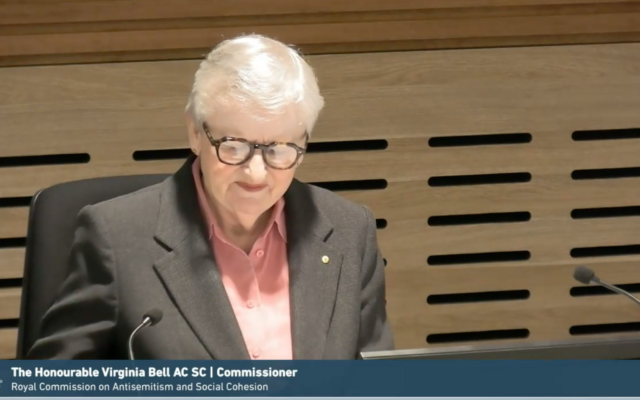
The final day of Royal Commission on Antisemitism and Social Cohesion hearings has begun with a statement from Commissioner Bell that the commission will seek a short extension to it’s reporting deadline to December 18, so its final report is not delivered on the anniversary of the Bondi Chanukah attack.
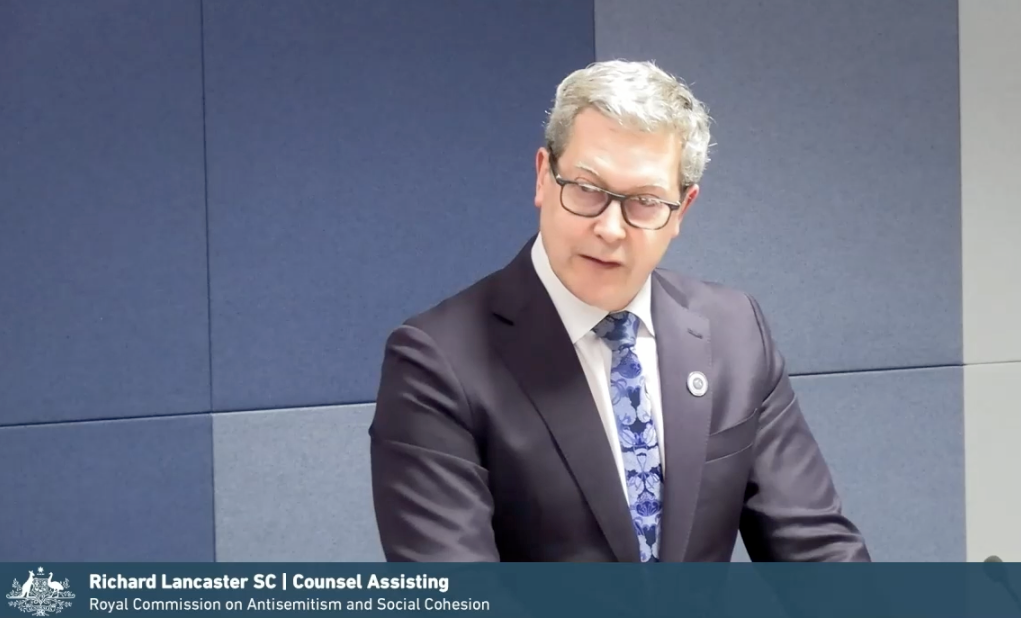
Counsel assisting the Commission, Richard Lancaster, told the hearing that a large body of public submissions—ranging from short email accounts to sophisticated expert reports—had helped identify many of the witnesses called to give oral evidence.
He noted procedural fairness would be maintained throughout the coming months, with parties at risk of adverse findings given the opportunity to be heard before any such findings are made.
Addressing the hearing, the Commissioner said the inquiry had “had to take care to conduct its inquiry in a way that does not occasion prejudice to pending criminal proceedings,” which had required the third term of reference—relating to the attack itself—to be examined in closed hearings.
The outcome of those hearings will form a confidential volume of the Commission’s final report, with substantial parts to be made public after the conclusion of criminal proceedings.
The Commissioner addressed public reports concerning a person known as Marcus, who has offered to give evidence about information he provided to ASIO in 2019 relevant to the attack. Marcus, who is overseas, has reportedly been refused a visa to return to Australia.
The Commissioner said arrangements had been made for Marcus to give evidence via a secure line at an overseas venue, but “Marcus has not taken up the offer,” with his solicitors citing concerns the option “doesn’t engage certain legal protections.”
Calling Marcus publicly “would occasion that prejudice, and for that reason, it will not occur,” the Commissioner said, adding the ASIO officers who assessed Marcus’s original information had already been examined on the contemporaneous documents at closed hearings.
The Commissioner said the Commission had heard directly from more than 14,000 of Australia’s fewer than 120,000 Jewish community members, through hearings, submissions and 150 community engagement events.
The final day of hearings will return to a focus on the Bondi attack and hear from Jewish community leaders, social cohesion advocates and lived-experience witnesses. A statement from Rabbi Ullman, of Chabad of Bondi, will close the day’s hearings.
Eradicate Hate co-founder and co-chair Laura Ellsworth told the Royal Commission into Antisemitism and Social Cohesion that the organisation grew out of Pittsburgh’s response to the 2018 Tree of Life Synagogue attack.
Ellsworth, who is not herself Jewish, described October 27, 2018, as the day “the United States experienced the largest loss of life in an antisemitic crime on US soil in US history,” when eleven worshippers from three congregations were killed and six others, including four police officers, critically injured. “I knew people who were in the synagogue,” she said. “I felt so helpless to do anything.”
Within days of the attack, Ellsworth said she approached Mark Nordenburg, then Chancellor Emeritus of the University of Pittsburgh, to found what became Eradicate Hate, focused on “solutions to identity-based hate.”
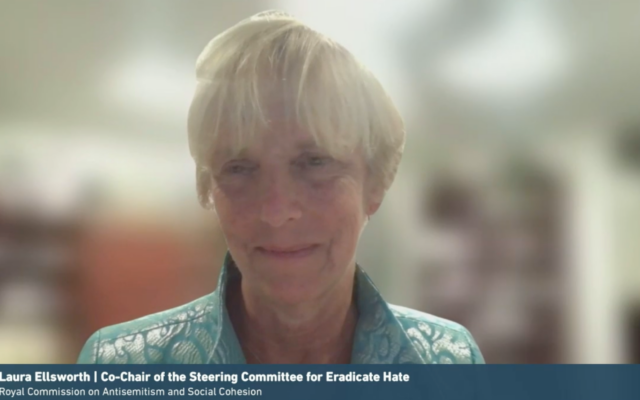
Ellsworth outlined three foundational principles: addressing all forms of identity-based hate, not only antisemitism; drawing on multiple disciplines including “business, law enforcement, behavioural science, education, medicine, law, technology, academia, government, policy, arts, sports, and civil society”; and centring survivor voices, since “the survivors of all different kinds of hate-fuelled violence have a wisdom and an insight about their own experience that informs our response.”
She described several of the organisation’s programs, including the Prevention Practitioners Network, a group of more than 1200 clinicians and frontline workers trained on extremism-related warning signs; the Reach initiative, which trains survivors to share their stories without re-traumatisation; and student summits that have prompted school students to establish their own “eradicate hate” clubs.
Ellsworth also addressed the Screen Hate Initiative, now being adapted to combat “nihilistic violence” — what she called “a relatively new post-COVID form of online targeting of vulnerable children” in which perpetrators coerce victims into self-harm, sometimes leading to school shootings or suicide.
Asked about the model’s relevance to Australia, Ellsworth said bringing people together “across borders, across differences, across professions builds social cohesion with each step of that journey,” adding she believed Australian practitioners could adapt the approach to local needs.
She described the model’s durability as a key strength: “Governments move on to the next issue because they have to,” she said, but an ongoing institution could “bring the latest issues every year to the fore” and connect Australian practitioners with experts internationally.
The granddaughter of Holocaust survivor Eddie Jaku has told the Royal Commission on Antisemitism and Social Cohesion that if he were alive to see Australia now, he would no longer be the happiest man on earth.
Danielle Jaku, a Sydney mediator, family dispute resolution practitioner and law lecturer, gave evidence in the commission’s final block of hearings.
Asked what her grandfather would be thinking, she said she was asked the question often.
“I tell people who ask me that he would not be the happiest man on earth, but he would be the most haunted man on earth,” she said.
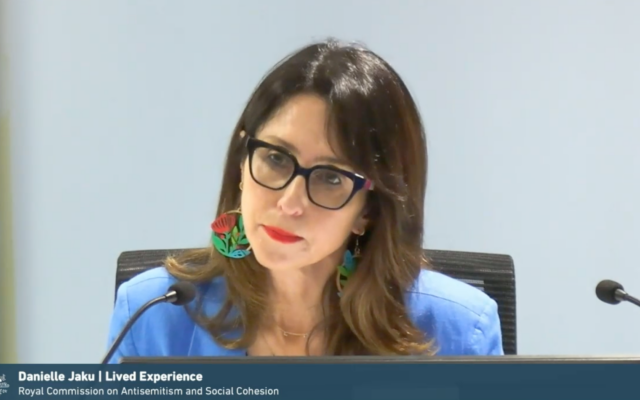
“I think he’d be thinking that the echoes of his life in 1930s Germany are so strong, and after surviving all of that, to come to Australia and become the happiest man on earth. I say that he would be devastated.”
“He’d be reminded of the exclusion, the tropes, extermination of Jews from society, and he would have seen here in Australia that hate speech had been left unchecked.”
She said he would also have watched the response of the authorities, and would have taken in the toll of the Bondi Beach attack, in which 15 people were killed and more than 40 wounded.
“I think he’d be shocked to see the level of polarisation in Australia, in his beloved Australia, the loss of connectedness between people, and the lack of leadership at many levels to swiftly address and repair it,” she said.
Eddie Jaku was born in Leipzig in 1920. Ms Jaku told the commission he had been “a proud German. He was German first, German second, and Jewish at home.”
He survived four periods of incarceration in concentration camps and escaped from the Nazis several times. At the end of the war he escaped a death march from Auschwitz and hid in a cave in a forest, where he fell ill.
“When he thought he heard something like the rumblings of a tank, he crawled to a highway, where he was rescued by American soldiers in June 1945, weighing 28 kilograms, and by that time most of his family had been murdered,” she said.
He met his wife Flore in Brussels, where French was their common language. They married in 1946, their son was born in 1948, and the family left Europe by boat for Australia in 1950, arriving as stateless refugees.
Both were founding members of the Sydney Jewish Museum, where Eddie Jaku became one of its best-known volunteer guides. He delivered a TED talk in Sydney in 2019 to a standing ovation, and published his memoir, The Happiest Man on Earth, in 2020, the year he turned 100. It has been translated into more than 40 languages. He died in October 2021.
Ms Jaku said the family had been sceptical about the memoir at first.
“Initially we didn’t understand why people would be interested in another Holocaust story,” she said.
She told the commission the title referred to his life in Australia rather than his survival.
“He would say that he was the happiest man on earth to have been able to come so far away to Australia to escape wars and hatred, and he was able to work and start afresh,” she said.
For several years after arriving, she said, her grandparents chose not to live as Jews, and her father did not know the family was Jewish until he was in his teens.
Ms Jaku said her grandfather had lived and breathed interfaith and cross-cultural connection long before the Sydney Jewish Museum opened in 1992, and that his messages had shaped her.
“He modelled the appreciation of difference, and made it clear that difference is to be celebrated and not feared,” she said.
She recited several of his sayings to the commission, including that it is never too late to be a kind, polite and loving human being, and that “your efforts today will affect people you will never know”.
“Hate is the beginning of a disease, like cancer. It may kill your enemy, but it will destroy you in the process. As long as I live, I’ll teach not to hate,” she quoted him as saying.
Ms Jaku told the commission she had found some hope in a negotiation workshop she taught to about 20 law students earlier this year, in which a “loud and proud” Jewish student and a religious Muslim student worked together on role plays.
“To see how respectful they were to each other and how well they worked together in negotiation role plays as advocates restored some of my optimism about the state of social cohesion in Australia,” she said.
She ended her evidence by describing the theatrical adaptation of her grandfather’s memoir staged at the Sydney Opera House in May, which she attended on opening night with her family and which was seen by students from a number of schools.
“It was a very healing experience to see my grandfather’s story and messages staged in our iconic opera house after the deplorable scenes that took place on the ninth of October, 2023,” she said.
“I hope that his story will continue to be told and taught to students as an example of what one person can do in the face of hatred.”
Danielle Jaku has told the Royal Commission on Antisemitism and Social Cohesion she texted a prominent journalist after the Bondi Beach attack to say the Jewish community had not been exaggerating its fears.
Ms Jaku, the granddaughter of Holocaust survivor Eddie Jaku, told the commission she had reluctantly agreed to be interviewed for a major news program in early 2025 about the rise of antisemitism in Australia.
She said she was normally a private person, but decided the interview was worth doing.
“I decided that if that well-regarded journalist thought that talking about my grandfather’s legacy could make a small course correction to the way Australia was heading, or somehow improve our social cohesion and connectedness, then it would be worth it,” she said.
The interview covered her grandfather’s story, the increased security at her daughter’s Jewish school, and the fears she and others in the community were experiencing. A discussion of about two hours was cut to a few minutes for broadcast.
Ms Jaku told the commission she did not believe the journalist had acted with any ill intent, but that she had been conscious of how she might appear.
“I was very mindful that I might have been portrayed or sounded like a dramatic and histrionic Jewish mother who was paranoid and overreacting,” she said.
She said the community had repeatedly been depicted in the media as overreacting to the prospect of an attack, and that this was in her mind during the interview even though her fear was real.
Fifteen people were killed and more than 40 wounded at Bondi Beach in December.
“When the Bondi attack happened, I couldn’t help texting the journalist to say, I told you we weren’t exaggerating. The Jewish community is terrified. It was just a matter of time,” she said.
She told the commission the pattern went well beyond a single interview.
“We have been made to feel like we’re overreacting. We’ve been portrayed as precious and hysterical and finger pointing and too willing to encroach on free speech, and we’ve been accused of unjustifiably labelling people as antisemitic,” she said.
“And yet, while our fears have been ignored, insidious Jew hatred has been allowed to become mainstream, and heightened security has become normalised.”
Ms Jaku said her concerns had begun on the night of 9 October 2023, when she watched footage of protesters at the Sydney Opera House.
She contrasted those scenes with the 1938 delegation led by William Cooper, who took a group of Aboriginal Australians to the German consulate in Melbourne to protest against the treatment of Jews during Kristallnacht. The delegation was refused entry.
Ms Jaku said she could not imagine Cooper’s group chanting for the death of Germans or burning German flags.
“I would imagine that they were able to protest and find a way to do it without using hateful, dehumanising language that put fear in other Australians,” she said.
She told the commission that agreeing to give evidence had followed from the same reasoning as the interview.
“It’s also one of the reasons that I’ve agreed to give evidence to the Royal Commission,” she said.
The man who organised last December’s Bondi Beach paddle out has used the closing day of the Royal Commission on Antisemitism and Social Cohesion to announce a plan to take the memorial national -several months earlier than he had intended.
David Solsky, a Bondi resident of more than 30 years, told the commission on Wednesday that he and the community groups he worked with had been quietly developing a project called Ripples, built around the idea that what happened at Bondi on 19 December could be repeated in communities across the country.
“We talk about how do we create Australia’s next tradition,” he said, describing a vision in which Australians gather on the Friday morning before the anniversary of the 14 December attack — on beaches where there are beaches, and in parks and open ground where there are not.
Solsky said the plan had not been due for public airing until talks with Waverley Council and government began in September.
“I guess today has sort of been formally announced,” he told the commission. “Given the events in the commission, I guess we are putting it out there now.”
He said the aim was to give people something “away from politics, away from giant events”, on the basis that “strong individual communities will ultimately create a much stronger and much more cohesive Australia”.
Solsky said organisers also wanted to hold the Bondi paddle out again, “ideally with a view to making it an annual event”, subject to approval from council and police. He acknowledged the first anniversary in December would carry a heavy program of official commemorations from Chabad, the broader Jewish community, the council and government.
The original paddle out was assembled in less than 48 hours. Solsky said he was approached three days after the attack by Rabbi Yosef Eichenblatt of Central Synagogue, who had his details through the local surfing community.
“I said I felt that it needed to be more than just a Jewish paddle out,” Solsky said. “It needed to be whole of Bondi.”
He approached the North Bondi Surf Life Saving Club, the surf school Let’s Go Surfing, the 4:40 Run Club, the Bondi Salties swim group and the Bondi Board Riders. All had been considering a paddle out of their own. All, he said, were emphatic that it should be Jewish-led and carry a Jewish theme, given the attack had occurred at a Chanukah event.
Organisers planned for between 500 and 700 participants. On the morning of 19 December, Solsky walked away from media commitments ahead of the 7am start and looked down over the sand.
“There was three, three and a half thousand people, you know, in their rashies with their surfboards, standing on the beach, looking up at many hundreds more on the promenade,” he said. Between 1500 and 2000 went into the water, forming a circle beyond the break for a minute’s silence.
The ceremony closed the traditional way, with the paddlers splashing the water. “You could hear the screams from the water coming back onto the beach,” Solsky said. “People came out of the water with these huge smiles on their faces.”
Four first responders spoke on the beach, among them two young people living opposite the beach who had tended to Rabbi Eli Schlanger in his final moments. Rabbi Eichenblatt recited a memorial prayer and a blessing.
As participants came out of the water they were handed bottles of water, Chanukah donuts and a small cloth bag containing two tea light candles and a message: light and love will always prevail over darkness and hate. Participants were asked to light one at home and give the other to a friend.
Solsky said a local baker had produced 700 donuts on a few hours’ notice.
Asked about the state of the suburb eight months on, he said Bondi’s usual edge had softened.
“Everybody seems to be in a little bit less of a rush,” he said. “It definitely feels like a better and stronger community than at any time in the 30 years that I’ve been living there.”
A Bondi community initiative held in the aftermath of the December 14 Bondi Beach attack could become an annual event and inspire similar gatherings across Australia, the Royal Commission has heard.
The Paddle Out brought an estimated 1500 to 2000 people into the water at Bondi Beach, with participants arriving from across Sydney. Witnesses described the event as a powerful display of solidarity, with participants forming a large circle off North Bondi Rocks.
“It was truly extraordinary,” said David Solsky, who organised the event. “We had somewhere between 1500 [and] 2000 people who within about three or four minutes had taken to the water.”
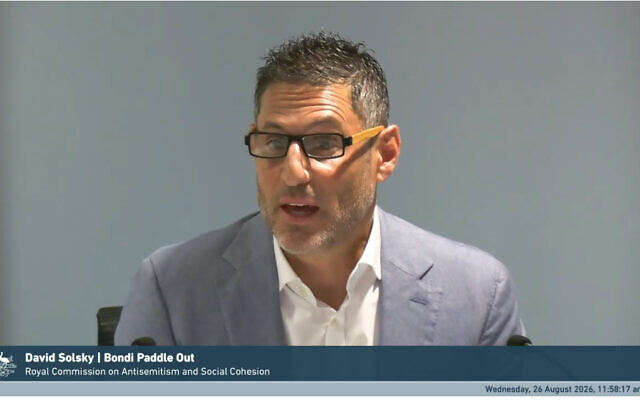
The solemnity of the event gave way to celebration after a minute’s silence, with participants splashing water, embracing and talking on the beach. “I think it was just that huge moment of a release for everybody,” Solsky told Jane Taylor, counsel assisting. “I think that feeling that, oh, we still have Bondi, we still have the beach, we have our community.”
The event also included Chanukah symbolism, including donuts, which he said helped create “a really nice interfaith, intercultural moment”.
Solsky said the paddle out’s strength came from allowing people to participate rather than simply observe. “It was about the community coming together at a grassroots level,” he said.
Organisers are now hoping to hold another Paddle Out, potentially making it an annual event, subject to discussions with council, police and other authorities.
Solsky also revealed plans for a broader initiative called “Ripples”, aimed at encouraging communities across Australia to hold similar gatherings. “We want to be able to take Bondi Ripples as a moment,” he said, describing a vision for an Australian tradition that could bring people together “away from politics, away from current events”.
He said the goal was to strengthen individual communities and ultimately create “a much stronger and much more cohesive Australia”.
Solsky witness also said Bondi itself had become calmer and more connected since the attack, with people appearing “friendlier, and more engaging” and more willing to talk to neighbours.
A Sydney rabbi has told the Royal Commission into Antisemitism and Social Cohesion that sustained dialogue between Jewish, Arab, Muslim and Palestinian Australians can help combat racism and build a more resilient society.
Rabbi George Mordecai, who works within the Sydney Jewish community and co-founded the intercultural group Coming Together after October 7, 2023, said the initiative was established after relationships between communities had deteriorated following the Hamas attack and the subsequent war in Gaza.
“There was a sense that the relationships that had been cultivated over the decades had just fallen apart,” Rabbi Mordecai told the commission.
Responding to Tamara Phillips, counsel assisting, he said he and co-founder Jackie Parker decided they needed to use their networks to create opportunities for people from different communities to meet and talk. “My sense of it was that after October 7, antisemitism was going to increase as [would] Islamophobia and also anti-Arab hatred,” he said. “So I felt that we should make alliances across difference, even in this most tumultuous of times.”
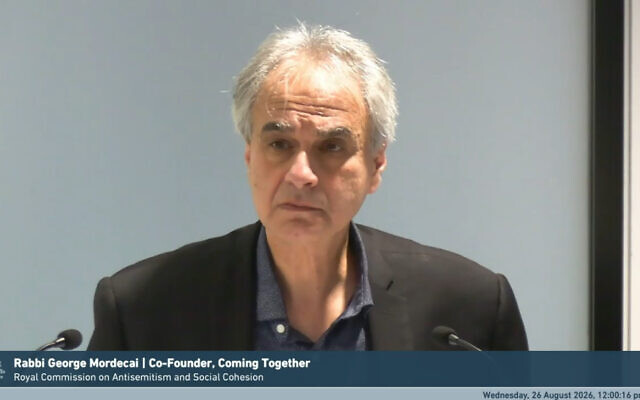
Coming Together meets every six to eight weeks, with organisers seeking to maintain roughly equal representation between Jewish and Arab, Palestinian and Muslim participants.
Rabbi Mordecai said meetings often began with a shared meal before moving into discussion or a “listening circle”, where participants could speak without interruption. “We have to really listen to that person speak their truth, even if it hurts us, even if it’s hard to hear,” he said.
The approach had enabled participants to develop trust and empathy despite deeply held differences over the Middle East conflict. “We have very, very difficult discussions,” Rabbi Mordecai said. “But the fact that we’ve committed to come together regularly, we have developed trust and friendship too.”
He said participants had not necessarily changed their views, but had learned to remain engaged despite their differences. “To stay present to difference is really important,” he said. “It’s a really important first step to any kind of social cohesion or conflict resolution.”
Rabbi Mordecai also described the solidarity he experienced from Muslim, Arab and Palestinian friends following the Bondi tragedy, including members of the group accompanying him to Bondi, where Muslim participants read passages from the Koran and laid a wreath.
He told the commission that combating antisemitism could not be left solely to Jewish Australians, just as other forms of racism could not be confronted by individual communities in isolation. “I am convinced, through my experience mainly in Coming Together, that we will really only be able to fight racism and hatred together, and not in siloed communities,” he said.
Rabbi Mordecai said multiculturalism should encourage Australians to build bridges rather than retreat into ethnic communities. “The purpose of multiculturalism was never to retreat into ethnic silos. That was not the point,” he said.
He urged governments and communities to invest in dialogue initiatives, arguing they could turn social cohesion from an aspiration into a practical activity. “If we don’t support dialogue, if we don’t support communities like Coming Together to build trust, and if we don’t invest in that, I don’t think any of it can work,” he said.
Rabbi Mordecai said Coming Together was considering how its model could eventually be extended beyond its existing participants and into the broader Australian community. He concluded by thanking members of the group, saying their courage and humanity had given him hope.
“You, in Coming Together, have again given me courage,” he said. “You’ve given me hope in these most tempestuous of times that we can build a better tomorrow here in Australia for everyone.”
The founder of Turbans for Australia has told the Royal Commission examining the Bondi attack that the community response to the tragedy demonstrated the strength of social cohesion, with volunteers from different faiths and backgrounds coming together to support grieving residents.
Amar Preet Singh, who founded the Sikh-led charity in 2015 and serves as its president, said he was deeply affected by the December 14 attack and travelled to Bondi with his wife and a team member to lay flowers.
“Bondi is my beach as well, and I was so upset that somebody would, you know, take the liberty of other human beings, fellow Australians, away for being at the beach and celebrating what their faith tells them to do,” Singh told Jane Taylor, counsel assisting.
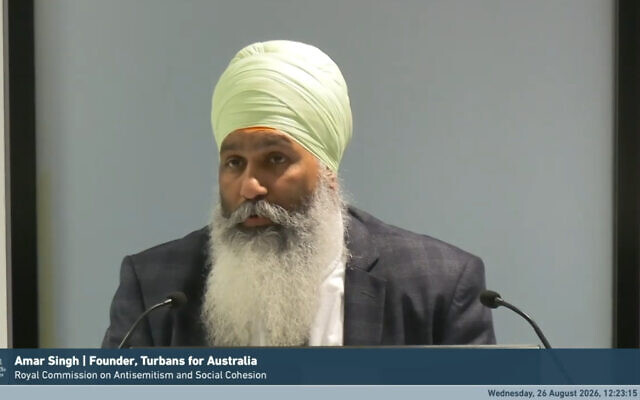
He said the attack felt particularly personal because of his organisation’s commitment to multiculturalism and community service. “I thought it could have been one of us or our team,” he said.
Following discussions with Waverley Council, Turbans for Australia established a food and support operation near the memorial, providing vegetarian Indian rice and curry, fruit and water to people paying their respects.
Singh said some grieving residents told volunteers the food was the only meal they had eaten that day. “That sort of made it worthwhile for us to put in the 14, 15 hours we were back and forth to make sure we’re there for our fellow Australians,” he said.
The operation continued for about five or six days and concluded with a barbecue featuring vegan sausages.
The response attracted volunteers from across Sydney and from a range of cultural and religious backgrounds. One volunteer travelled from Penrith, taking about an hour and 20 minutes to reach Bondi, while members of the Lions Club of Carlingford and local residents also joined the effort.
Asked about the backgrounds of those involved, Singh said: “Well, firstly, I would say they were all humans.”
He said local businesses also donated food, drinks, bread and other supplies, while two young Jewish girls gave the charity an envelope containing a donation after handing out chocolates carrying messages of hope and gratitude.
Singh said the girls’ actions were “very brave and beautiful” and reflected the importance of encouraging young Australians to participate in their communities.
He told the Commission that Turbans for Australia had developed its community service work in response to a range of crises, including drought, the Black Summer bushfires, COVID-19 and floods.
The organisation was established partly to encourage Sikhs to volunteer, but also in response to Singh’s own experiences of discrimination following the September 11 attacks in the United States.
He said Sikhs had repeatedly been subjected to hate because of their appearance and expressed concern about the experiences future generations could face. “I don’t want the same experiences for my next generation who are born here, but they’re going to look like me,” he said.
Singh said Australia faced a growing challenge over social cohesion, warning that people could be judged by their appearance or religious identity before they were known as individuals. “For me personally, social cohesion is something that we need to work on all levels,” he said, calling for Australians from “all walks of life” to come together.
He said the response to the Bondi attack offered a powerful example of what could be achieved when communities supported one another. “I think through our joint efforts, we can bring back to the Australia that we all belong to that we all have a right to be happy, safe, and excel in life,” Singh said.
A Muslim doctor and a Jewish trauma-informed educator have told the Royal Commission how a children’s book inspired by the Bondi Chanukah attack is being has been used to promote healing, belonging and social cohesion.
Dr Naba Masad Alfayadh, a medical doctor and chief executive of public health charity Rama Health, appeared alongside a fellow witness, Sarah. Dr Alfayadh, who came to Australia as a refugee from Iraq in 2003, told the commission she had experienced racism and Islamophobia after arriving in Australia but was also “overwhelmed by the love that exists in Australia”.
She said that experience shaped her response to the 2025 Bondi attack, which she described as “one of the greatest tragedies in Australian history”.
“As a Muslim who’s experienced the Christchurch trauma, I could only imagine the fear, the alarm, the palpitations, the sense of disconnection that the Jewish community must have been experiencing,” Dr Alfayadh said.
She said that, after Christchurch, government regulations and police provided important protections, but it was “love and connection” that ultimately made her feel safe. “I wanted to use that knowledge and that experience to extend love towards the Jewish community,” she said.
Dr Alfayadh and her young daughter subsequently created the children’s book Kookaburra Kindness, designed to help children understand the Bondi attack in a developmentally appropriate way. The book acknowledges the Jewish victims and the people who responded to the attack, while using the Chanukah symbol of a small candle shining against darkness to promote kindness and connection.
“I wanted people to see that the light of love on that day was really bright and was brighter than the darkness of violence that day,” Dr Alfayadh told the commission. She said she wanted Australians to understand that “every single candle counts”, with individual acts of kindness helping build a better society.
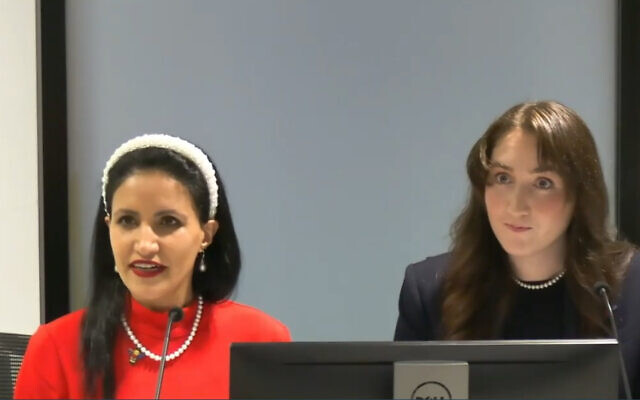
The concurrent witness in the session, a Jewish mother and trauma-informed education specialist, told the commission she had been looking for a social story to help children process what she described as a “collective cultural trauma event”.
She discovered Kookaburra Kindness in April this year and contacted Dr Alfayadh. “I was so relieved and amazed by her kindness, love, and healing language,” the witness said. “To me, the book was perfect.”
Sarah said the book’s inclusion of Jewish and First Nations voices made it particularly meaningful and she subsequently worked with Dr Alfayadh to develop a classroom resource known as the Kookaburra Kindness Box.
The resource is designed for lower-primary classrooms and incorporates trauma-informed education, cultural responsiveness and community-building activities.
Sarah said it would include a reading circle, colourful battery-operated tea lights referring to the Chanukah message of bringing light, and a collective art activity.
The initiative has received support from Jewish organisation Stand Up and Monash University, with a pilot program planned for government schools in Term Four and evaluation by Monash’s Faculty of Education.
She told the commission her own husband had left a government school after feeling unsafe in the workplace, despite wanting to become part of the school community. “If we want to keep our choice of sending our child to a government school, then I need to utilise my knowledge and experience to support teachers to create classrooms in which my child and other children from culturally diverse backgrounds will be safe,” she said.
Dr Alfayadh also warned that discrimination could have lasting psychological consequences for children. “When children encounter discrimination, antisemitism, Islamophobia, we’re teaching them that a part of them is unwanted,” she said.
She said Australia needed a “sustained, forever commitment to social cohesion” to protect children.
In an emotional closing message, Dr Alfayadh told Jewish children: “You are loved because you exist.”
“You are Australian. You are Australia. You belong,” she said. “Every child — Jewish children, Muslim children, Palestinian children, Israeli children, First Nations children — I want every child to know that they are unconditionally loved.”
She said the work was ultimately about creating “a better country and a better society together” by encouraging Australians to shine their “little candles” wherever they could.
The Royal Commission on Antisemitism and Social Cohesion has heard how the New South Wales government established a coordinated support model to ensure the Jewish community felt “supported and embraced” in the aftermath of the Bondi attack.
New South Wales Department of Planning, Housing and Infrastructure deputy secretary Joseph La Posta, who was appointed co-coordinator general for the Bondi community response in January 2026 alongside NSW Jewish Board of Deputies CEO Michelle Goldman, told the Commission his role was “focused on providing care, compassion, and support to a grieving eastern suburbs and particularly Jewish Australian community”.
La Posta said the response was guided by principles supporting psychological recovery, promoting safety, fostering calm, strengthening connectedness, and sustaining hope.
“Government is a big and unwieldy beast, and for many people involved in the attack directly, they have very little interface with government,” he said. “So it was necessary to be able to help support them and concierge through the government services.”
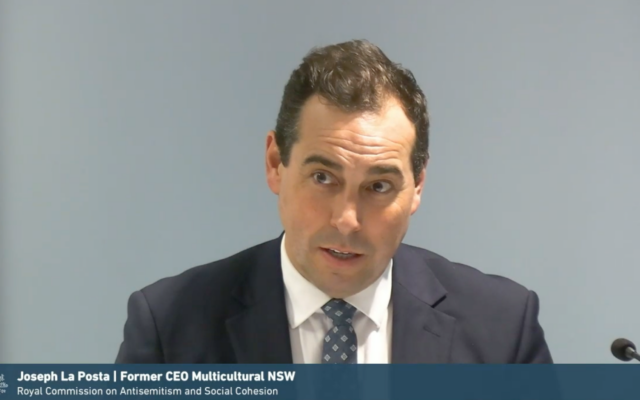
He described a “no wrong door” service model designed to ensure individuals could access help regardless of which government agency they needed.
La Posta told the Commission that in the immediate aftermath of the attack, a sense of isolation within the Jewish community became “pretty apparent very quickly”.
“The first initiative that we wanted to prioritise was to reassure our Jewish Australian community that they were not alone,” he said.
On December 17, 2025, the NSW government called on faith and community leaders to sign a pledge against antisemitism, racism and hate, titled “We Are Stronger Together”. La Posta said more than 3000 signatories signed the pledge within days, and the Minister for Multiculturalism presented it as a bound booklet to the Jewish Board of Deputies approximately one week after the attack.
On the same day, an interfaith ceremony was held at St Mary’s Cathedral, led by the Archbishop of Sydney. La Posta said approximately 7000 people attended, along with 300 officials and representatives from 20 to 30 faith groups.
The Commission also heard how a community hub was established, initially at the North Bondi RSL and later at Bondi Pavilion in partnership with Waverley Council, operating as a one-stop shop for government services.
La Posta said it became apparent the space needed to feel accessible to the Jewish community, so organisers worked with rabbinical leadership to install a mezuzah, ensure kosher catering, and set up a rabbinical table as a touchpoint.
“Pretty quickly, we made that space effectively a safe drop-in centre for anyone, but particularly those members of the Jewish community,” he said.
“It was also a constant reminder of the fact that we should never become numb or immune to these things, and that suffering cannot be in vain.”
The One Mitzvah for Bondi campaign gave everyday Australians a way to walk alongside the Jewish community in the aftermath of the Bondi attack, the Royal Commission on Antisemitism and Social Cohesion has heard.
Continuing his testimony, La Posta, who served as co-coordinator general for the Bondi community response, told the Commission the campaign grew from conversations with Jewish community leaders who wanted solidarity to be expressed through action.
“There was a sense from the Jewish community that while those sentiments were welcomed, there should be a way to turn it into actions,” La Posta said. “The Jewish community wanted the wider community to walk with them.”
La Posta said the concept emerged at an emergency meeting of the NSW Faith Affairs Council on December 15, 2025, convened by the NSW Minister for Multiculturalism. He told the Commission that Chabad House North Shore Rabbi Nochum Shapiro made two requests of the faith communities. First, to stand with the Jewish community and demonstrate unambiguous support, which led to the pledge, and second to undertake one mitzvah to “bring light to the world”.
The campaign was launched on December 19, 2025, with support from Multicultural NSW and the NSW government.
La Posta said the campaign’s strength was its simplicity and accessibility, with no sign-up requirement and no barriers to participation.
“It just captured an act of kindness of any type aimed at making Australia a better place,” he said. “The campaign used a simple, symbolic Hebrew word, the mitzvah, for people doing tangible things to make a difference.”
Approximately 3000 people registered their acts of kindness via the campaign website, though La Posta said the true reach was far greater.
“The measurement was never how many registered on the website,” he said. “It was more around inspiring a movement of people to do good.”
He told the Commission that media company NBC Universal also created an advertisement supporting the campaign, which ran on major commercial television stations.
La Posta said the campaign had led to the establishment of Mitzvah House, a community hub at Bondi Beach where Jewish community members come to pray and members of the public visit “just to sit with those feelings and reinforce to the community they’re not alone”.
Concluding his evidence, La Posta stressed the importance of sustained investment in social cohesion, citing advice that it is “very much like a bank account, where one needs to regularly make deposits before it makes withdrawals”.
“Our Jewish people are Australians. They belong here,” he said. “Now is the time for us to act, and create a society of people who are kind, curious, and understanding.”
The late Rabbi Eli Schlanger believed that prompting people to remember their shared humanity was one of the most powerful ways to combat antisemitism, the Royal Commission on Antisemitism and Social Cohesion has heard.
Witness AEC, who worked as Schlanger’s personal assistant at Chabad of Bondi for two years before his death in the Bondi Chanukah attack, told the Commission the rabbi created Project Noah in August 2025 as a way to build bridges between Jewish and non-Jewish communities.
The witness, who now manages the program, said the name stood for Nations of All Humanity, and was also a reference to the seven Noahide laws, which the witness described as “the ancient Jewish framework that outlines basic moral and ethical responsibilities shared by all humanity, which form the foundation of a peaceful and just society”.
The witness said the principles covered “unity in diversity, the sanctity of human life, empathy and social responsibility, and systems of justice”.
“Eli believed that prompting people to remember our shared humanity was actually one of the best ways to combat antisemitism,” the witness said. “He was someone that worked with people in prisons and hospitals. Through his pastoral care as a rabbi, he knew that meeting people face to face and making these human connections was one of the most powerful and profound ways to change hearts and minds.”
The witness told the Commission that Schlanger used the Noahide laws as “a conversation starter, a way to build bridges and to open dialog”, noting the laws “transcend religion and provide a common, universal language between people of different faiths, cultures, and backgrounds”.
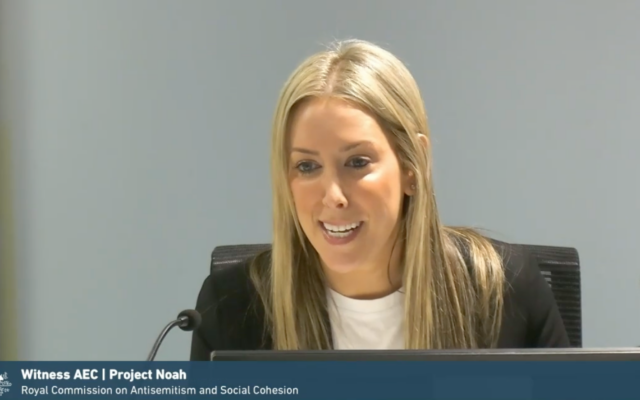
Project Noah was designed to put that philosophy into practice through immersive, hands-on learning experiences.
“At the heart of his work was always that human connection element, knowing that the world can change through a single conversation and a single interaction at any given time,” the witness said.
The witness said the approach was grounded in research showing that meaningful in-person contact between groups with shared activities and goals was “the most effective and enduring way to reduce prejudice and build lasting, resilient cross-cultural understandings”.
“Rather than seeking to counter antisemitism solely through education about persecution or the Holocaust, Project Noah is fun,” the witness said. “It fosters positive personal interactions with Jewish people, culture, and community life, and it proactively builds personal bonds that withstand societal pressures.”
A program that invites all Australians into a synagogue to bake challah, meet a rabbi, and learn about Jewish life has expanded significantly since the Bondi Chanukah terror attack.
Witness AEC, who manages Chabad of Bondi’s Project Noah program, told the Commission the initiative follows a five-part format. Participants begin by braiding challah dough together, hear from a guest speaker, take a tour of the synagogue, participate in an open question-and-answer session with a rabbi, and finish by writing anonymous reflection cards.
The witness said the challah bake was consistently reported by participants as the highlight.
“The braiding of the three strands of dough into a plait symbolises the coming together of separate identities,” the witness said. “The process of preparing, baking, and eating warm challah together creates a relaxed and welcoming environment, and reinforces a common value to many cultures, and that is that food really does bring people together.”
The witness said questions during the rabbi Q&A sessions ranged from “Why do rabbis have beards?” to more complex questions about how to respond to someone with strongly antisemitic views.
“Nothing was ever off limits,” the witness said, noting the late Rabbi Eli Schlanger, who created the program, wanted conversations to be open and honest, “particularly with young people from different religions and cultural backgrounds, because he really recognised how easily misunderstandings can arise when knowledge of another community comes only from social media stereotypes and prejudices”.
The witness described the anonymous reflection cards as the most powerful element. Each card begins with the prompt “Today inspired me to …” and the witness said responses showed the program’s ability to “reduce misunderstandings, challenge stereotypes, foster mutual respect and social cohesion”.
“Most of the people that come to the synagogue have never met a Jewish person before, let alone been in a synagogue or even met a rabbi,” the witness said.
Originally designed for non-Jewish school groups, the program has since expanded to include universities, government agencies, local councils, faith-based communities, sporting teams, and corporate groups. A Victorian branch has also recently launched.
The witness said their hope was to continue the work Schlanger “began but did not see completed”.
“Every participant who takes part in Project Noah leaves with a deeper understanding that there is far more that unites us than divides us.”
Holocaust survivor and Melbourne Holocaust Museum Foundation board member Nina Bassat gave powerful evidence this afternoon at the Royal Commission on Antisemitism and Social Cohesion, telling the inquiry that Australian political leaders had failed the Jewish community since the Hamas attacks of 7 October 2023, and warning that the word “genocide” is being dangerously and harmfully misused in debate over the Gaza war.
Bassat, 87, arrived in Australia in 1949 after surviving the Holocaust in a ghetto and in hiding in Poland, followed by two years in a displaced persons camp in Germany. Only four members of her extended family survived.
She went on to a career as a lawyer and decades of Jewish communal leadership, including two terms as president of the Jewish Community Council of Victoria, and the presidency of the Executive Council of Australian Jewry.
Addressing the erosion of civility in Australian life, Bassat said the loss of empathy across the community was a source of real sorrow to her.
She said Australians had “lost the power to be kind and the power to interact with civility,” and warned that without relearning how to see one another as individuals rather than as opposing camps, the country would not recover the social cohesion it has lost.
She described Australia as having been, for 74 years, “a paradigm of multiculturalism” where background and religion did not matter — a country that, in her words, had allowed people to simply “get on” with one another.
That, she said, changed abruptly after October 2023.
“We’ve [Australian society] become very divisive. We’ve put labels on each other. We no longer treat each other as just another human being,” she said.
Bassat was in Israel when Hamas attacked on 7 October 2023, and she told the Commission she watched footage of the pro-Palestinian rally at the Sydney Opera House two days later with disbelief.
“I was shattered, and I couldn’t understand it,” she said. “I just cannot understand how it could have happened.”
She said the nation (Israel) had not even buried its dead, yet was met not with sympathy, but vilification. “I couldn’t understand that lack of empathy. I was shattered by the lack of humanity.”
That response led her, along with roughly 100 fellow Australian Holocaust survivors, to sign an open letter in November 2023 that urged Australians to denounce antisemitism and hatred.
Explaining her decision to do that, Bassat said the atmosphere was “so incredibly reminiscent of the rhetoric of Germany in the 1930s” — not something that frightened her personally, but something she feared for the country.
“We had never, ever envisaged that Australia … would become Europe of the 1930s,” she said. “It was to me incomprehensible.”
Asked about antisemitism as a broader social failure, she gave one of the hearing’s sharpest lines: while antisemitism is the Jewish community’s “individual pain and communal pain,” she said, “it is not a Jewish problem,” because a society that tolerates bullying and vilification “depraves itself” and undermines the values of the whole population.
“It’s our pain,” she said, “but it’s Australia’s shame.”
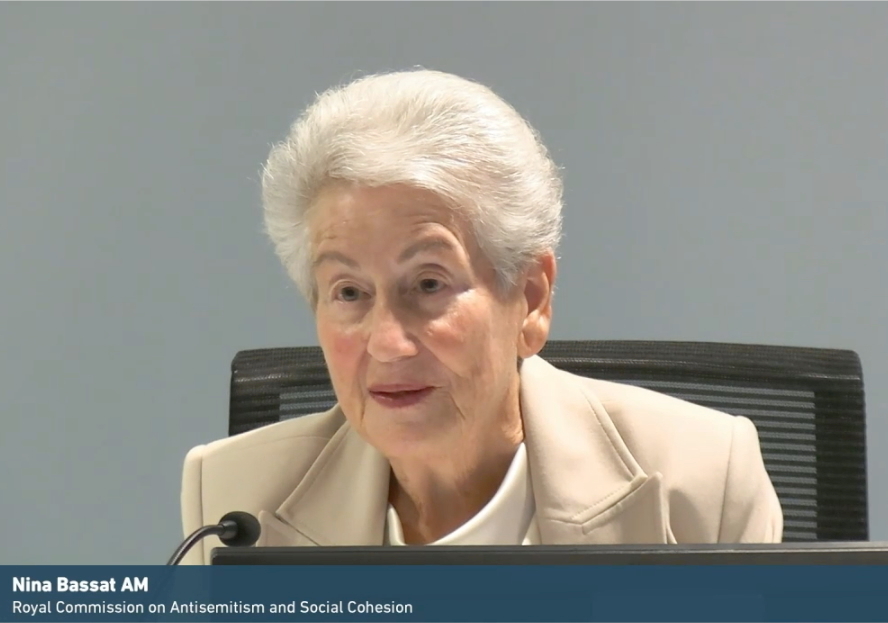
The most pointed section of her evidence concerned political leadership. Bassat told the Commission that many in the Jewish community felt “betrayed” by the near-total absence of federal, state and local government voices condemning antisemitism after October 7, 2023.
“There was a great silence,” she said. “I expect more from leaders. That is what leadership is. Leadership is noticing the vacuum, getting up there and saying what has to be said.”
She described hate speech as “corrosive,” saying it undermines “the fabric of what I thought was Australian life,” and said leaders should have made clear that such conduct would not be accepted — but did not.
Asked about the maxim that silence and inaction are “the best friends of evil,” she agreed, drawing a stark parallel to people who lived beside crematoria during the Holocaust and said nothing: “That is complicity. That is beyond silence.”
She noted, however, that speaking out then carried mortal risk — and that some people did speak, regardless. “So, it can be done.”
Reflecting on hope, Bassat said the Royal Commission’s very existence, the more than 20,000 public submissions it received, and the sensitivity shown toward witnesses had been sources of comfort and healing for her community.
The evidence that moved her most, she said, concerned paragraph 33 of her statement — the section that took her longest to write.
“Language has become perverted,” she told the Commission, warning that terms like “freedom of speech” and “the right to protest” were being invoked “with a disingenuity that I find alarming.”
She said such freedoms were not absolute: “You have to observe the freedom of other people when you use those freedoms for yourself. You do not have blank licence.”
She reserved her strongest words for the use of the term “genocide” in relation to the Gaza war, calling it “a very specific, defined United Nations accepted legal term” that cannot be used “with gay abandon.”
Citing Raphael Lemkin, who coined the word after the Holocaust, she said it applies only to the state-sanctioned, systematic destruction of a population with proven intent at the highest level — not to deaths in war, however tragic.
“The word genocide brings into sharp focus what it means to be one of 100,000 children who survived when one and a half million were murdered,” she said.
“That knowledge has guided my life. That is what genocide means.”
The last witness giving evidence at the Royal Commission on Antisemitism and Social Cohesion’s hearing sessions was Rabbi Yehoram Ulman from Chabad of Bondi, whose son-in-law, Rabbi Eli Schlanger, was one of the 15 people who died in the 2025 Bondi Chanukah terror attack.
Appearing this afternoon as the final witness, he read the following statement (included here in full):
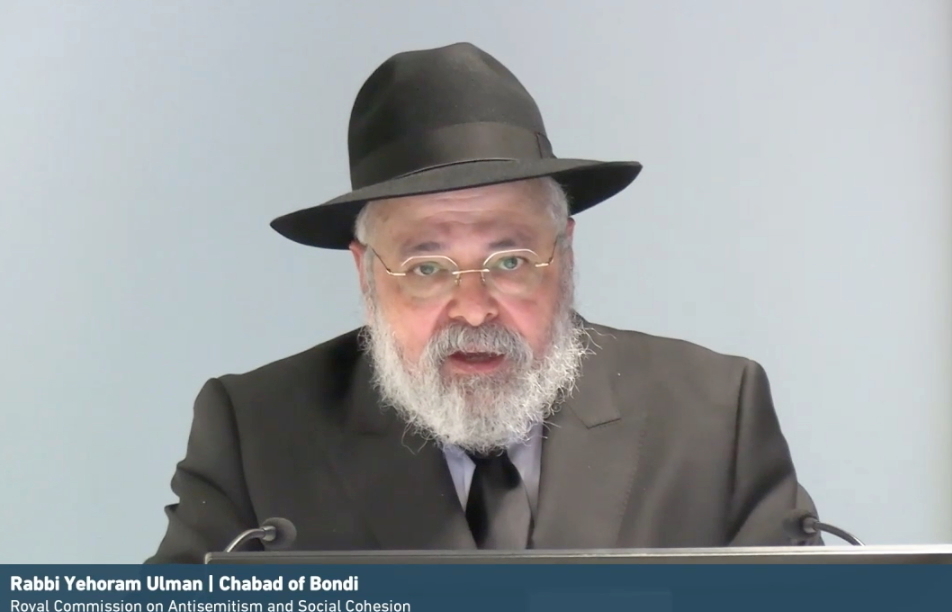
CLOSING STATEMENT BY RABBI YEHORAM ULMAN
Thank you Commissioner for allowing me the honour of providing a closing statement today. While Chabad of Bondi’s written submission provides our detailed reflections and recommendations, I stand before you this afternoon and speak from my heart, as a father, and as a rabbi of the Chabad of Bondi community for forty years.
At the heart of the Chanukah story is a decision to return. More than two thousand years ago, after a period when Jewish practice had been outlawed, the Jewish people returned to their Temple in Jerusalem (of which the Western Wall was a part) and found it desecrated. They cleared the Temple. They rebuilt the altar. And then they lit the Menorah – a symbol of the ‘Eternal Light’, being G-d’s unending presence.
The miracle of Chanukah is that only a single jar of pure oil could be found in the desecrated temple; only enough for one day and yet, it burned for eight days until more oil could be sourced. But before there was this miracle, there was a choice: to return, to rebuild, and to bring light back to a place that had known darkness.
Commissioner, as this Royal Commission draws to a close, Australia too, faces a moment of decision.
Over these past months, you have carried a solemn burden: listening to the pain of a community, examining the health of our society, and helping chart a path forward. I thank you for this.
On Sunday, 14 December last year, close to a thousand of us gathered at Bondi Beach for the first night of Chanukah. Families came with their children. Friends found one another in the crowd. And at the centre, stood the Menorah we had come to light. We were there to celebrate Jewish life openly, in a place that for generations of Australian Jewish families, had simply been our home.
We did not get to light the candle that night. We all know why. Fifteen innocent people so tragically lost their lives. May their memories be a blessing. Among them was a Holocaust survivor. Children lost parents. Parents lost children. Families were shattered, and the impact has rippled far beyond those who were there that night. More than 40 people were seriously injured, and countless others carry wounds that cannot be seen.
Among those who perished was my son-in-law, Rabbi Eli Schlanger. My daughter and their eight-week-old baby were wounded and hospitalised. Three days later I stood in Chabad of Bondi, our synagogue, preparing to bury Eli. The mourners overflowed into the street. I looked at the coffin of the man who had married my daughter, who had become my son, who had worked beside me for years, and who was the father of five of my grandchildren.
Eli’s was the first of 10 funerals that I presided over in three days. These funerals were for people I was deeply connected to. At the time of Eli’s funeral, Chanukah was not yet over. There were still five nights to come.
And that day, our community made a decision. On the final night of Chanukah, we would return to Bondi Beach, to where the attack had taken place, and we would light the Menorah there.
We could not undo what had happened. We could not bring back those we had lost or remove the grief from the families whose lives had been shattered. But we could decide what we would do next.
That is why the work of this Royal Commission matters so deeply. You have heard confronting evidence. People came forward and re-lived painful experiences because they believe it is important for the truth to be heard, and for Australia to learn from it. I thank them for their courage, and I thank this Commission for listening.
You have heard during these hearings about the reality of antisemitism and the consequences of hatred when it is allowed to grow. You have heard about intimidation and incitement of hatred. About institutions that responded well, institutions that failed to respond, and institutions in which antisemitism was at times tolerated, enabled, or even encouraged.
Our institutions need clear boundaries, firm standards and leadership that distinguishes between what is right and what is wrong. What is free speech and what is hate speech. What is a protest and what is intimidation and vilification. We must have the tools and the courage to confront hatred and radicalisation whenever and wherever it emerges.
You have heard of the fear felt by Jewish Australians and the measures that have been necessary to keep our community safe. I want to express my deep gratitude to The Police and all those who have worked and continue to work so hard to keep our community safe.
But security and safety are not the same thing. Security protects us from a threat. Safety is the absence of that threat. Security is the guard at the school gate, the police presence at a Jewish event. Safety is when you can walk home from synagogue without fear, and when Jewish Australians participate in public life without needing special protection. Our goal must be a society in which Jewish Australians are not merely protected, but genuinely safe.
The events that brought us before this Royal Commission are for us, not simply a statistic or headline. For us, this is an empty seat at a shabbat table. This is a child asking a parent whether it is safe to wear something identifying them as Jewish in public.
For many Australian Jews, something fundamental changed last December. At the conclusion of this Royal Commission, there is a significant question before us. What kind of Australia do we choose to be?
This is not only a question for Jewish Australians. A society in which hatred and extremism are allowed to grow is ultimately a threat to the character of the country itself.
Australia has a choice about what it is prepared to tolerate, what it is prepared to defend, and what values it is prepared to stand up for.
I know an Australia where survivors of the Holocaust came and rebuilt their lives. Where Jews built synagogues and schools, raised families and contributed to every part of national life, without having to choose between being proudly Jewish and proudly Australian.
That Australia has not gone. I believe it is still the Australia that the overwhelming majority of Australians want. But we should not assume it will preserve itself.
Tolerance cannot mean losing the ability to distinguish between disagreement and intimidation. Freedom of speech cannot require indifference to hatred. The right to protest does not require us to accept the dehumanisation of other Australians.
And antisemitism does not become acceptable because it comes from one side of politics rather than another, or because it is expressed in the language of justice, religion, resistance, or some other supposedly noble cause.
Antisemitism must be confronted wherever it comes from. And institutions entrusted with educating, protecting and leading Australians must have the courage to recognise it and act.
Australian Jews are not asking this country to adopt different values in order to protect us. We are asking Australia to have the courage to live by its own values: Freedom. Democracy. The rule of law. Mutual respect. The dignity of every human being. A fair go.
These values belong to all of us. And they are worth defending. A society must know not only what it stands against. It must know what it stands for.
You have just heard about Project NOAH, a project close to Eli’s heart. It grew from the Noahide principles, the Jewish teaching that there are fundamental moral responsibilities shared by all humanity, regardless of faith, and that people of different backgrounds can find common ground without sacrificing or compromising what makes us different.
Eli’s response to a complicated world was not withdrawal from it. It was engagement with it. He believed our Jewishness should make us more capable of contributing to the society around us, not less. That is social cohesion at its best. Not that we all become the same, but that we are confident enough in the values we share that our differences do not make us enemies.
I hope to honour Eli not by simply remembering how he died, but by carrying forward the values by which he lived. In moments of darkness, we still have a choice. Anger and division, or another path.
In the aftermath of the Bondi attack, I witnessed extraordinary acts of compassion and solidarity. Support came from people of all faiths and backgrounds. Community leaders, public officials and ordinary Australians reaching out with messages of support. To them, thank you.
On the final night of Chanukah, we returned to Bondi Beach. Under extra-ordinary security. We returned and we kindled light in a place that had known darkness. Not because we had stopped grieving. Not because the pain had disappeared. But because, as I said that night, we refuse to allow darkness to have the final word.
The Jews who returned to the ancient Temple in Jerusalem could not undo its desecration, nor the enormous loss of life. They could only decide what to do next. They cleared the Temple. They rebuilt. And then they brought back the light.
Perhaps that is the task before Australia now. There are things that must be confronted. There are boundaries that must be restored. There are institutions that must learn from what has happened. There is hatred that must no longer be rationalised, excused or ignored.
But we also have to build. We have to teach our children what freedom requires of them, not only what it gives them. We have to rediscover the confidence to say that some things are right and some things are wrong, while making room for Australians who profoundly disagree with one another’s views to share this country in peace.
Commissioner, my grandson was just two months old when his father Eli lost his life. He will come to know his father through his mother, brothers, sisters, his grandparents, aunts, uncles, through stories, and through the legacy Eli left behind. And one day, he will be old enough to understand what happened on 14 December 2025.
I wonder what Australia he will know by then. Will he learn that the warning signs were there, that hatred was allowed to grow, and that even after Bondi, Australia failed to change course?
Or will he learn that Bondi became a moment when Australia understood where unchecked hatred can lead, found the courage to confront it, and chose another path?
This Commission has listened. Australia has heard. Soon there will be findings and recommendations. Then the responsibility passes to governments, institutions, communities and every one of us.
Australia is at a crossroads. On the final night of Chanukah, the Jewish community made its choice. We returned. We rebuilt. And we lit the Menorah.
My prayer is that when my grandson is old enough to understand what happened to his father, he will also be able to understand what Australia chose to do about it. And that he will be proud of the choice we made.
Thank you.
The AJN is providing rolling coverage on the Royal Commission on Antisemitism and Social Cohesion.
For full coverage of the Hearing Blocks, visit the Royal Commission section of The AJN website.
Holocaust survivor and Melbourne Holocaust Museum Foundation board member Nina Bassat gave powerful evidence this afternoon at the Royal Commission on Antisemitism and Social Cohesion, telling the inquiry that Australian political leaders had failed the Jewish community since the Hamas attacks of 7 October 2023, and warning that the word “genocide” is being dangerously and harmfully misused in debate over the Gaza war.
Bassat, 87, arrived in Australia in 1949 after surviving the Holocaust in a ghetto and in hiding in Poland, followed by two years in a displaced persons camp in Germany. Only four members of her extended family survived.
She went on to a career as a lawyer and decades of Jewish communal leadership, including two terms as president of the Jewish Community Council of Victoria, and the presidency of the Executive Council of Australian Jewry.
Addressing the erosion of civility in Australian life, Bassat said the loss of empathy across the community was a source of real sorrow to her.
She said Australians had “lost the power to be kind and the power to interact with civility,” and warned that without relearning how to see one another as individuals rather than as opposing camps, the country would not recover the social cohesion it has lost.
She described Australia as having been, for 74 years, “a paradigm of multiculturalism” where background and religion did not matter — a country that, in her words, had allowed people to simply “get on” with one another.
That, she said, changed abruptly after October 2023.
“We’ve [Australian society] become very divisive. We’ve put labels on each other. We no longer treat each other as just another human being,” she said.
Bassat was in Israel when Hamas attacked on 7 October 2023, and she told the Commission she watched footage of the pro-Palestinian rally at the Sydney Opera House two days later with disbelief.
“I was shattered, and I couldn’t understand it,” she said. “I just cannot understand how it could have happened.”
She said the nation (Israel) had not even buried its dead, yet was met not with sympathy, but vilification. “I couldn’t understand that lack of empathy. I was shattered by the lack of humanity.”
That response led her, along with roughly 100 fellow Australian Holocaust survivors, to sign an open letter in November 2023 that urged Australians to denounce antisemitism and hatred.
Explaining her decision to do that, Bassat said the atmosphere was “so incredibly reminiscent of the rhetoric of Germany in the 1930s” — not something that frightened her personally, but something she feared for the country.
“We had never, ever envisaged that Australia … would become Europe of the 1930s,” she said. “It was to me incomprehensible.”
Asked about antisemitism as a broader social failure, she gave one of the hearing’s sharpest lines: while antisemitism is the Jewish community’s “individual pain and communal pain,” she said, “it is not a Jewish problem,” because a society that tolerates bullying and vilification “depraves itself” and undermines the values of the whole population.
“It’s our pain,” she said, “but it’s Australia’s shame.”
The most pointed section of her evidence concerned political leadership. Bassat told the Commission that many in the Jewish community felt “betrayed” by the near-total absence of federal, state and local government voices condemning antisemitism after October 7, 2023.
“There was a great silence,” she said. “I expect more from leaders. That is what leadership is. Leadership is noticing the vacuum, getting up there and saying what has to be said.”
She described hate speech as “corrosive,” saying it undermines “the fabric of what I thought was Australian life,” and said leaders should have made clear that such conduct would not be accepted — but did not.
Asked about the maxim that silence and inaction are “the best friends of evil,” she agreed, drawing a stark parallel to people who lived beside crematoria during the Holocaust and said nothing: “That is complicity. That is beyond silence.”
She noted, however, that speaking out then carried mortal risk — and that some people did speak, regardless. “So, it can be done.”
Reflecting on hope, Bassat said the Royal Commission’s very existence, the more than 20,000 public submissions it received, and the sensitivity shown toward witnesses had been sources of comfort and healing for her community.
The evidence that moved her most, she said, concerned paragraph 33 of her statement — the section that took her longest to write.
“Language has become perverted,” she told the Commission, warning that terms like “freedom of speech” and “the right to protest” were being invoked “with a disingenuity that I find alarming.”
She said such freedoms were not absolute: “You have to observe the freedom of other people when you use those freedoms for yourself. You do not have blank licence.”
She reserved her strongest words for the use of the term “genocide” in relation to the Gaza war, calling it “a very specific, defined United Nations accepted legal term” that cannot be used “with gay abandon.”
Citing Raphael Lemkin, who coined the word after the Holocaust, she said it applies only to the state-sanctioned, systematic destruction of a population with proven intent at the highest level — not to deaths in war, however tragic.
“The word genocide brings into sharp focus what it means to be one of 100,000 children who survived when one and a half million were murdered,” she said.
“That knowledge has guided my life. That is what genocide means.”
comments