Live updatesPublic hearings

Lived experiences from university campuses

Hearing Block 4 begins focusing on antisemitism on university campuses including lived experiences and responses by the university sector.

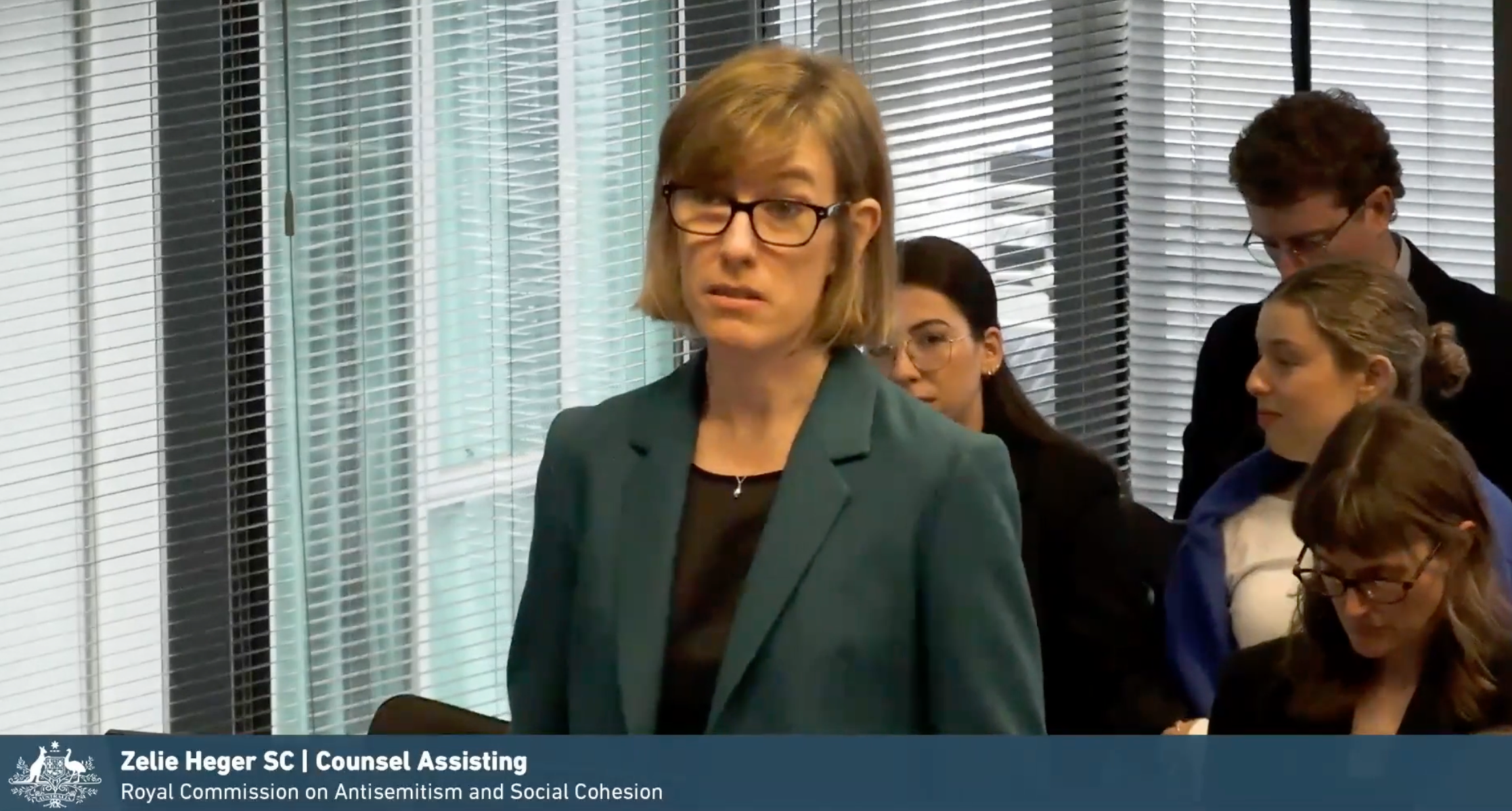
Counsel Assisting, Zelie Heger SC. Photo: screenshot

Jewish students among hardest hit by campus racism, commission hears

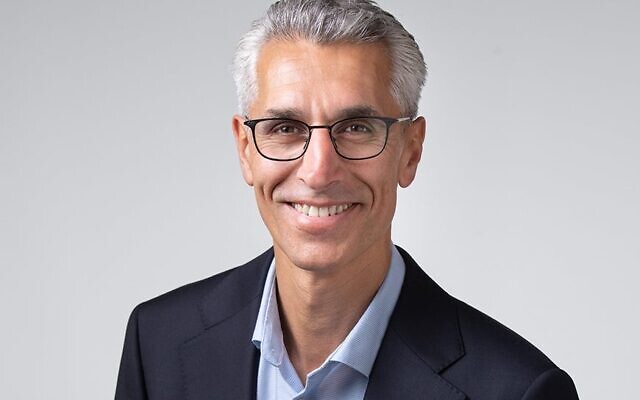
Australian Human Rights Commission (AHRC) president Hugh de Kretser has told the Royal Commission on Antisemitism and Social Cohesion that Jewish staff and students recorded some of the highest levels of racism of any group in a major national survey of universities, in evidence that also canvassed the AHRC’s decision not to endorse any particular definition of antisemitism.

Giving evidence via a remote link, De Kretser gave evidence about the AHRC’s “Respect at Uni” report, published in February 2026, which the federal government commissioned through the Department of Education in response to a recommendation of the Universities Accord.

The report drew on a national online survey sent to staff and students at 42 universities — some 1.6 million people — through unique email links intended to ensure only current staff and students took part. About 76,000 people responded, including 1324 Jewish respondents.

He said the survey deliberately did not impose rigid definitions of racism or its forms, instead inviting participants to describe their experiences in their own words. That meant the commission made no independent assessment of whether what was described was in fact racist, antisemitic or Islamophobic. De Kretser said the approach was adopted partly to avoid debates over definitions and to provide a trauma-informed focus on participants’ own experiences, and that it created a replicable baseline the commission had recommended be repeated in three years.

The report found that 14.9 per cent of respondents across the whole cohort reported experiencing direct interpersonal racism at university, and 69.9 per cent reported indirect racism — racism directed not at them personally but at a group with which they identified. Among the groups reporting the highest levels of racism, both direct and indirect, were First Peoples respondents at 81 per cent, Jewish respondents at 89.1 per cent, Middle Eastern respondents at 80.6 per cent and Palestinian respondents at 90.2 per cent.

De Kretser said a range of data sources pointed to a surge in racism affecting Jewish, Israeli, Palestinian, Muslim and Middle Eastern communities since October 7, 2023, including a spike in antisemitism complaints to the AHRC and surveys by the Scanlon Foundation, the Executive Council of Australian Jewry, the Islamophobia Register and the Australia Palestine Advocacy Network (APAN).

Australian Human Rights Commission (AHRC) president Hugh de Kretser. Photo: AHRC

The report broke Jewish responses down between religious and secular respondents, with 93.8 per cent of Jewish religious respondents reporting direct and indirect racism, compared with 81 per cent of Jewish secular respondents. The racism described ranged from inappropriate jokes and comments through to physical threats or assaults, affecting both students and staff. Almost three in four Jewish students, and four in five Jewish staff, reported a negative impact on their mental health.

Turning to complaints, de Kretser said only 6 per cent of those who experienced direct racism made a complaint, with respondents citing fear of consequences and a lack of confidence that reporting would lead to change. Of those who did complain, 80 per cent of academic staff, 68.9 per cent of domestic students and 62.3 per cent of international students were dissatisfied with how their complaint was handled.

He said the findings reflected what the AHRC had heard through its consultations and two parliamentary inquiries, and pointed to recommendations including a “no wrong door” approach to complaints, greater transparency in reporting outcomes and timelines, and tailored anti-racism training targeted at the specific forms of racism prevalent on each campus.

Under cross-examination by Rachel Doyle SC, senior counsel for APAN, de Kretser confirmed the AHRC did not recommend that universities adopt any particular definition of racism or antisemitism, and that neither the report nor his statement proposed inserting a specific definition of antisemitism into the Racial Discrimination Act. He agreed that most forms of racism documented in the report were “very clear-cut”, and that the particular area of public controversy was where to draw the line between legitimate criticism of Israel and antisemitism.

Doyle took de Kretser to his statement’s observation that participants across communities had reported “purposeful conflation” of antizionism with antisemitism, including in the media, intended to silence criticism of Israel. He agreed universities needed to be on guard against such conflation, remarking that the claim that all criticism of Israel was antisemitic was “patently wrong” and unhelpful to the cause of addressing antisemitism.

On the term “social cohesion”, he said it should be clearly defined and “never be used as a reason not to talk about injustice”.

Under cross-examination by Jim Hartley, counsel for the Jewish Council of Australia, de Kretser agreed that treating Jewishness and support for Israel as one and the same could lead to Jews being treated unfavourably simply for being Jewish, and that this was a form of antisemitism to be avoided. He agreed it was equally wrong to treat a Jewish person as “less of a Jew” because they did not support Israel, and that Jews critical of Israel were harmed by the same conflation.

He said the large majority of Australian Jews identified as Zionist and supported Israel’s existence, but that both Zionist and non-Zionist Jews could be highly critical of the Israeli government’s actions, and it was wrong to hold Australian Jews responsible for those actions.

De Kretser said the AHRC did not recommend adopting a specific definition such as the International Holocaust Remembrance Alliance (IHRA) definition, noting the debate around it, but that examples of how racism manifested could help institutions understand the unique dimensions of each form. He observed the IHRA definition itself required context to be taken into account and stated that criticism of Israel similar to that levelled at other governments could not be regarded as antisemitic.

Academic: Jewish staff and students disengaging from university life

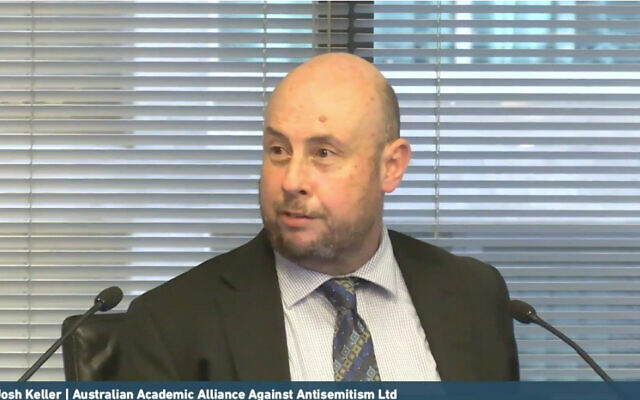
Representing the Australian Academic Alliance Against Antisemitism (5A), Professor Josh Keller told the Royal Commission on Monday afternoon that antisemitism on university campuses is a real and under-researched problem affecting Jewish staff and students across the sector.

5A was group founded shortly after October 7, 2023 by Jewish academics, allies and professional staff.

Keller, a professor in the School of Management and Governance at the University of NSW, said it had about 250 members from more than 30 universities, and that while members held diverse political views — disagreeing on Israeli policy and spanning Orthodox, progressive and secular streams — they shared a belief that antisemitism was a real problem, not confined to any part of the political spectrum.

The majority, he said, would identify as Zionist by their own varied definitions.

Keller said 5A had been collecting data for two and a half years, including direct reports from staff and students and a survey of 548 respondents led by demographer Andrew Markus. He drew a distinction between legitimate criticism of the Israeli government — noting he had himself protested against the Israeli government — and what he termed “antizionism”, which he described as a prejudicial manifestation of hostility toward Jewish people in their ancestral homeland.

He said the survey and other reports had captured experiences ranging from “ambient” prejudice, such as rallies, posters and professors describing Hamas’s actions as “resistance”, through to direct harassment and staff feeling ostracised for holding divergent views.

Recent research, he said, showed such exposure left Jewish staff and students disengaging from university life. Keller argued the effects were exacerbated by “asymmetric power relationships”, saying Jewish staff and students were a tiny minority who were nonetheless cast as powerful — “a classic issue with antisemitism”.

He described power dynamics between students and lecturers, citing cases where students who asked to bring in alternative material or speakers were refused on grounds of intellectual freedom. On imagery, he said a sticker depicting a Star of David alongside the words “we stand with baby killers” invoked a trope historically linked to violence against Jews, leaving Jewish people feeling unable to respond.

He said complaint processes at many universities were too slow, often lapsing before resolution, and that 5A’s action plan called for structural and cultural change, better education and recognition that Jewish people should be able to participate authentically on campus.

Professor Josh Keller giving evidence to the Royal Commission on Monday afternoon.

Under cross-examination by Rachel Doyle SC, senior counsel for the Australia Palestine Advocacy Network (APAN), Keller said he had not personally collected the survey data and did not know the size of the cohort who had received the questions, only that there were 548 respondents. He accepted the respondents were volunteers or self-selected, and that 5A’s own report did not claim the sample was representative of Jewish students and staff across the sector.

Doyle put to Keller that 5A had strongly criticised the Australian Human Rights Commission’s “Respect at Uni” study into antisemitism, Islamophobia, racism and the experience of First Nations people. Keller said he had not read the full report and had not written 5A’s February media release, but defended the value of a Jewish-specific study capturing distinct forms of prejudice.

Pressed on the survey’s approach to definitions, Keller confirmed respondents had not been given a definition of either antisemitism or antizionism, and were left to interpret the terms themselves — which he said was standard practice, since providing a definition would lead respondents.

Doyle questioned how the report had extrapolated from survey respondents to a recommendation that universities adopt “the definition of antisemitism as understood by the majority of Jewish people”, and Keller acknowledged he could not point to where in the report that method was explained.

Keller accepted that anti-Zionism/antizionism had a range of meanings. He agreed people used it to describe opposition to colonisation, apartheid or occupation, but said the more significant problem was the use of broad categories without nuance, which universities should be teaching students to unpack. Asked by Doyle and Commissioner Virginia Bell whether criticism of the continued occupation of the West Bank, Gaza and East Jerusalem was antisemitic, Keller said it depended on the context and whether Jewish and Israeli perspectives were also considered.

On the “baby killers” sticker, Doyle put to Keller that the Star of David was also the flag of Israel and that the poster might refer to the deaths of children in Gaza. Keller said that while possible, equating an entire nation with support for killing babies did not capture the difficult decisions involved in conflict, and that academics should be held to a higher standard than trafficking in tropes.

In re-examination, David Knoll, also appearing for 5A, drew Keller’s attention to the fuller wording of the recommendation on defining antisemitism, which stated that universities should adopt the definition understood by the majority of Jewish people “just as other minority groups are granted the right to define their own identities”. Keller said this reflected the principle that the group most affected by a prejudice should be central to defining it.

Witness: University sat on antisemitism complaint for months

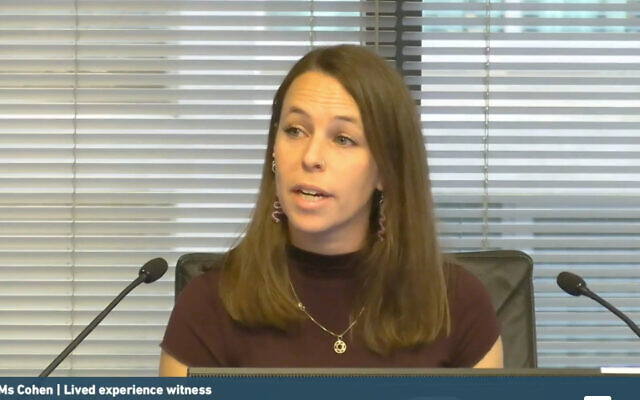
A woman who witnessed a man in a university library urging fellow students to watch Adolf Hitler’s speeches and claiming rabbis “eat non-Jewish babies” has told the Royal Commission on Antisemitism and Social Cohesion that the university took no meaningful action on her complaint for eight months, until she threatened to go to the media.

The witness, who gave evidence under the name Ms Cohen, was in an open study area of the library participating in a virtual meeting when she heard the words “the Jews, the Jews” nearby.

“It’s kind of like hearing your name across a room,” she said. “I immediately felt on edge. I didn’t know what the content was yet, but I could feel that it was hateful.”

When the meeting ended, she said, she heard a man two desk pods away telling several peers that Jews “have been kicked out of every country they’ve lived in, proving there is something wrong with them”, that Hitler’s speeches “make sense in today’s context, including the annihilation of Jews”, and that rabbis were willing to kill and eat non-Jewish babies. He was playing a video and encouraging the others to read Mein Kampf and watch Hitler as “inspiration”.

Ms Cohen, whose great-grandparents escaped Nazi Germany and the pogroms, said she was appalled and terrified but drew on the “never again” lesson instilled by her family. She approached the man and told him no rabbis were eating babies, before asking for his name so she could report him. He packed up and left. When she asked his three companions to identify him, they refused, telling her he had “a right to his opinion”.

A campus security guard helped her obtain the man’s first name and enrolled class, and said he would file a report. Two days later she lodged her own incident report, but found the university’s system had no category for racism or antisemitism, forcing her to select “discrimination” and “other”.

Ms Cohen gives evidence to the Royal Commission.

She heard nothing for months. She followed up in October 2025, and again on December 17 after the Bondi Beach attack, still without resolution. Only when she emailed the vice-chancellor that day warning she would contact the media was the incident acknowledged and an investigation opened. “Suddenly, heaven and earth was moved,” she said.

The university later told her it had been unable to identify the incident on CCTV, and that because its system had automatically linked her complaint to a defunct university email address from her time as a former student, correspondence had gone unanswered — and the investigation had simply not proceeded.

Ms Cohen was critical of the university’s culture, saying it had used “system failures as a justification” for inaction. She said the account she provided in December was sufficient to identify the student and progress the matter — as it eventually did — so there was no reason it could not have done so months earlier. She said the delay had likely left the man and his companions feeling “vindicated” that there were no repercussions for publicly calling for Jews to be killed.

She noted the university had since advised it would create a harmful-behaviours category covering racism and antisemitism, with such complaints triaged to senior staff. While she praised the pro vice-chancellor who eventually handled her case as polite and communicative, she said universities were a real-world space where social cohesion could be built, and an opportunity for institutions to “do something good”.

Students too afraid to report campus antisemitism, commission hears

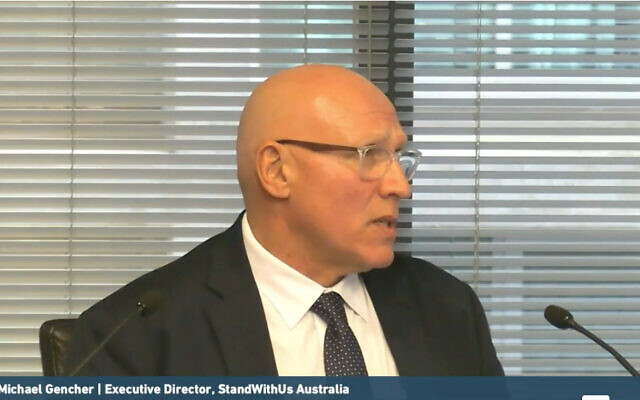
StandWithUs executive director Michael Gencher has told the Royal Commission on Antisemitism and Social Cohesion that Jewish university students are so fearful and disillusioned that many will not make formal complaints about antisemitism on campus, believing the process to be futile.

Gencher, whose education and advocacy organisation acts as an intermediary for students making complaints across some nine universities, said discomfort about coming forward was “far too common and far too frequent”. Students feared for their personal safety and wellbeing, worried about academic detriment, or had concluded there was no point because nothing would come of it.

“We’ve had students who have stopped attending campuses, simply feeling invisible, unheard, unhelped, and it is tragic,” he said. Faced with a complaint that might drag on for half their remaining time at university, he said, many simply chose to wait out their degree rather than pursue it.

Michael Gencher at the Royal Commission.

He illustrated the reluctance with the case of a student who sat through what he considered a highly unbalanced lecture on the conflict in southern Lebanon this past March, in which the lecturer referred to Hezbollah as a “resistance organisation” and to Israel’s actions as a “land grab” and “ethnic cleansing”. The student, who had made a complaint the previous year and felt it had harmed her relationship with that lecturer, was unwilling to complain again, and asked Gencher to act on her behalf. He understood three of five Jewish students in the class had since complained to the university, but two had heard nothing from the dean of students since March.

Gencher described several confronting incidents on Sydney campuses. In one, three Jewish students sitting in a campus cafe — none wearing anything visibly identifying them as Jewish — were approached by three students in keffiyehs and “absolutely berated” with cries of “apartheid”, “colonisation” and “baby killer”. He said he had been struck that in a crowded cafe no one came to the students’ defence, on a campus where “conversation, debate should be part of academic life”. A complaint made that day, in June 2024, had still not been answered.

At a StandWithUs panel event featuring Israeli speakers of various faiths, attendees were locked in by campus security until police arrived, and left “under horrendous abuse”, he said. Gencher himself was photographed returning to his car, with his numberplate circulated alongside a message that he should be identified if seen on campus.

He said the organisation had since stopped setting up information tables on campuses — which carried signs such as “I stand with Israel, come chat to me” — because the atmosphere had become too aggressive and students were being treated as targets.

Gencher said responsiveness from universities had improved since the December Bondi attack, but that greater urgency had not translated into outcomes. He called for universities to maintain proper oversight and accountability mechanisms, including regular reporting, so that students were kept informed of the progress of their complaints.

“Israel cannot continue to exist” says student leader

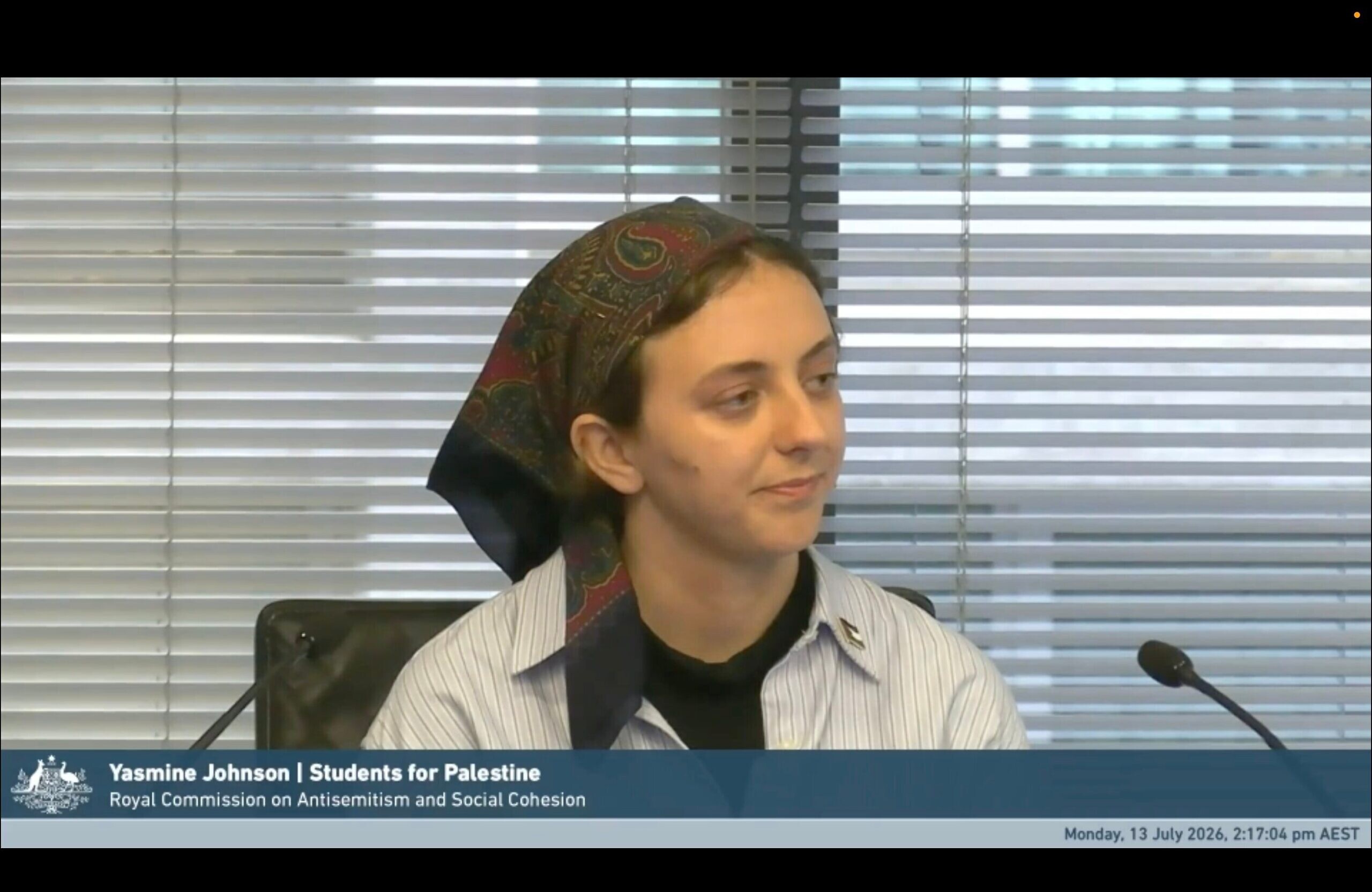
Yasmne Johnson, a co-convenor of Students for Palestine and education officer in the National Union of Students. Photo: screenshot

Israel “cannot continue to exist”, a national co-convener of Students for Palestine has told the Royal Commission on Antisemitism and Social Cohesion.

Yasmine Johnson, who has helped lead the group since 2019 and organised the Gaza Solidarity Encampment at the University of Sydney in 2024, gave evidence to the commission drawing on a witness statement dated 12 June 2026.

She was defending a speech in which she also argued for the right to use violence “in basically every single fight around the world”.

Under cross-examination, Johnson was taken to an address she delivered at the Socialism 2025 conference at the University of Sydney last August, titled “Socialist Strategy to Liberate Palestine”.

Asked whether she recalled telling that audience, “So to put that totally clearly, it means that Israel cannot continue to exist,” Johnson replied that she did, adding that she said it “in the context of also saying it is a state that is premised on the destruction, the systematic destruction, of Palestine”.

She confirmed she had also told the conference: “As socialists, we support the right of the oppressed to fight back against their oppressors, and that includes the right to use violence in basically every single fight around the world.”

Johnson, who is Jewish and told the commission she lost family in the Holocaust, said her background gave her “a sense that being Jewish should mean fighting for that to be the end of genocide forever”.

Pressed on whether Jewish people were entitled to believe Israel had a right to exist, Johnson said she accepted most Australian Jews held that view, but described the state’s creation as “a racist act”.

“The premise that Israel should exist is a racist premise because, at its foundation, the creation of Israel involved the expulsion of, by UN estimates, some 700,000 people in order to create a Jewish majority state,” she said.

Earlier, counsel assisting questioned Johnson about the chant “from the river to the sea”, which she said she had used herself and interpreted as “a call for freedom” for Palestinians.

Told that some members of the Jewish community experienced the phrase as a source of deep hurt and fear, and asked whether the movement should adopt different language, Johnson compared the objection to opposition faced by the American civil rights movement.

“I don’t think the legitimacy of social justice movements rests on them never offending anyone,” she said.

“To take the civil rights movement for example, I’m sure there were any number of racist white people who claimed that it was threatening to them to have black people in their communities when busing was going on, or who claimed that they were afraid for their children’s safety when they were being bused.”

Johnson said the primary concern in a democracy “cannot be simply whether somebody’s feelings will be hurt by something or not”.

She also defended the chant “globalise the intifada” and set out her reading of the phrase “there’s only one solution, intifada revolution”, which she said she had not personally used.

Told that some Jewish people heard in the words “one solution” an echo of the Nazi “final solution”, Johnson said this was “a deliberate misinterpretation”.

Johnson maintained that Students for Palestine opposed “all forms of discrimination and racism, Islamophobia, antisemitism”, and said she had never personally witnessed antisemitism at the University of Sydney encampment, which she said had hosted a Shabbat event and involved anti-Zionist Jewish groups including the Tzedek Collective and Jews Against the Occupation 48.

Gabi Crafti SC, appearing for seven mainstream Jewish communal organisations and the Australian Union of Jewish Students, put to Johnson that Jewish students and academics who believed Israel had a right to exist did not feel safe or welcome on campus, given her reach across at least 21 campuses and her advocacy of violent resistance.

Johnson responded that campuses “should be spaces of anti-racism” and that people holding “racist views, which involve support for apartheid states, which are carrying out genocide, should be challenged on those views”.

Re-examined, Johnson said she was “not a political supporter of Hamas”, but was not at the commission “to condemn the actions of people who have been placed in a concentration camp by Israel for decades”.

Jewish law student hid her identity; was told by lecturer of “good” and “bad” Jews

A Jewish law student known by the pseudonym ACL gave emotional evidence to the Royal Commission on Antisemitism and Social Cohesion today, telling of her experience as a Juris Doctor student at a Melbourne university following the October 2023 Hamas attacks, at one point shedding tears during her testimony.

The witness, who has Israeli heritage through her grandparents, told the Commission she had visited Israel throughout her childhood, including during the Second Intifada between 2001 and 2005, when even sitting at the front of a café carried the risk of a suicide bombing.

She said she included this history in her statement because she felt it was highly relevant to what she later experienced on campus.

Witness ACL said her undergraduate years at the same university had been entirely positive, but upon returning to study in 2024, she felt she had to make decisions about whether to disclose her Jewish and Israeli background at all.

Describing her decision to stop wearing her Magen David necklace, she told the Commission: “For basically the first time in my life, decided that I just felt like I couldn’t be Jewish on campus”.

She said she felt she had to “strip myself of my Jewish identity” before every class.

The witness gave evidence about an encampment established at her university in May 2024, including banners reading “Intifada” and “from the river to the sea”, and a further slogan referring to a “moral obligation to resist”.

She told the Commission that, drawing on her family’s experience of the Second Intifada, such language was “ultimately calls for violence” against Jewish people, regardless of how others might characterise it as a struggle.

She said a TikTok account associated with the protest meant the intimidation “followed me home”, including a post depicting a figure in a keffiyeh with a slingshot under the heading “Intifada”.

That post prompted her to email the university’s vice-chancellor. She described her disappointment at the response she eventually received six days later, which suggested her experience had not amounted to “overt” racism.

ACL told the Commission she was “shocked that a university could tell me, as a Jewish student, that my experience wasn’t overt enough”.

The Commission also heard of two incidents involving academic staff.

In one compulsory class, a lecturer would say “that person’s a Jew” whenever a Jewish scholar was mentioned, and later told her privately, “Don’t worry, he’s a good Jew, he’s not a Zionist” — a remark she said left her “shocked”.

In a mandatory international law class, she described how a lecturer who had previously endorsed comments online calling the October 7 attack “successful” – and who she said made sweeping, uncorroborated claims about Israel without allowing challenge – had assigned her to defend a state resembling Israel in a mock trial style tutorial on Middle East politics.

She told the Commission that after raising a formal complaint with her university’s law school, which happened to coincide with the days following the Bondi terror attack, she and another Jewish student were then told in January 2026 that the university would “make adjustments” by introducing training for staff on how to engage in difficult discussions, but these were apparently “already planned”.

“So it [their response] was quite disappointing – it feels like they pretty much ignored what we had to say.”

Concluding her evidence, the witness said: “I just think that the universities in Australia need to do more to address the Jewish students’ concerns,” adding that universities had repeatedly failed to recognise why Jewish students were struggling, and needed to respond to antisemitism “in all its forms,” not only its most overt expressions.

Former USYD academic’s Jewish son “was offered a security escort between classes”

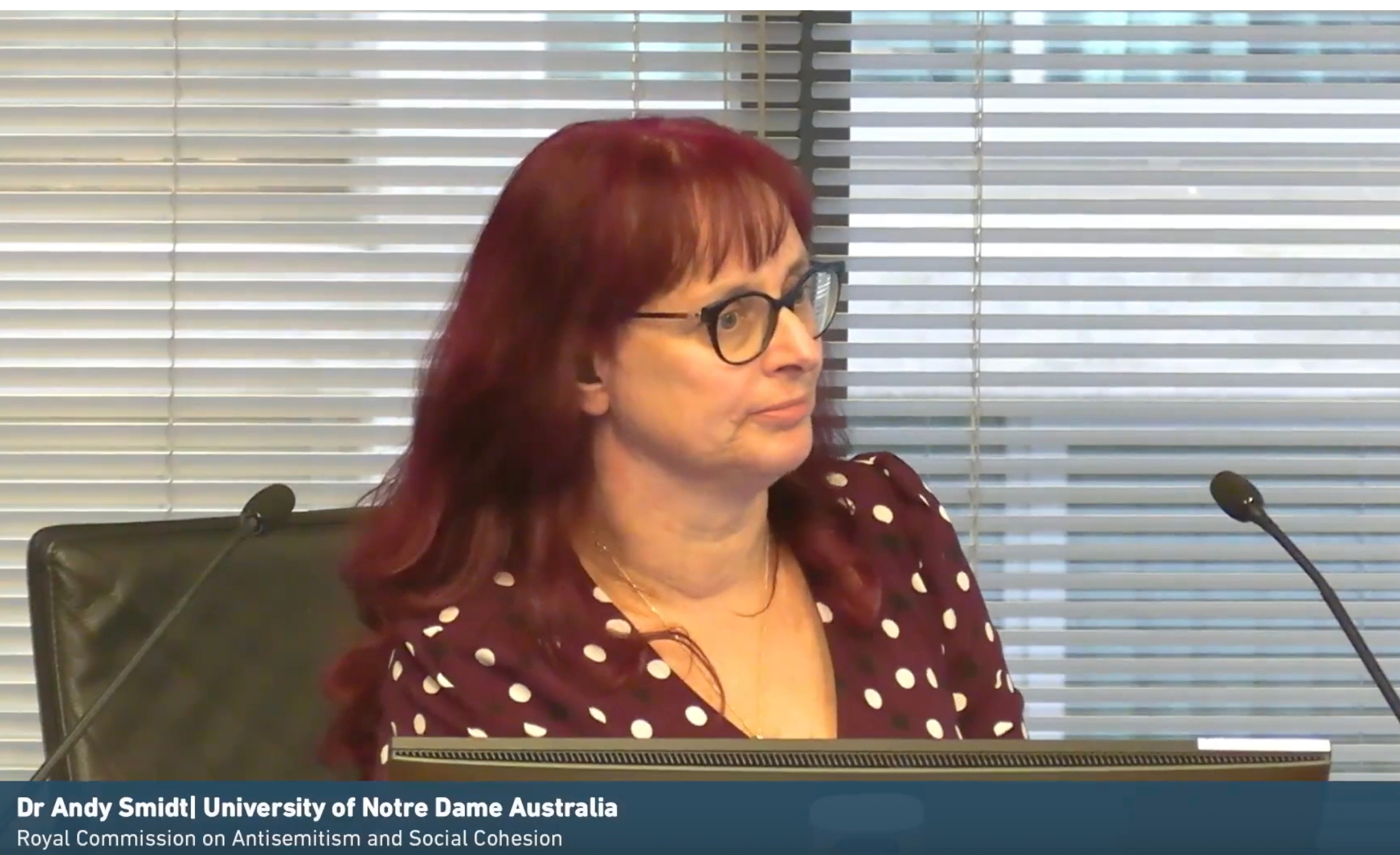
Dr Andy Smidt, a Jewish academic who worked at the University of Sydney for many years until recently joining the University of Notre Dame Australia, gave evidence at the Royal Commission today in which she described how the environment on campus changed for Jewish students after October 7, 2023, and how her youngest son, a student there, was offered a security escort between his classes due to an on-campus protest.

She said this was the point at which she broke down and wrote to the vice provost. She told the Commission that both she and her son simply wanted to do their jobs and studies well, but instead had to think constantly about which route to take across campus, with their safety foremost in mind.

Counsel Assisting Zelie Heger took the witness through photographs taken of graffiti in the university’s so-called “graffiti tunnel”, including the words “Israel does not have the right to exist”, and also an inverted red triangle – which Dr Smidt stressed is associated with terrorist organisation Hamas – and a swastika scrawled immediately beside a Star of David.

The Commission then heard more detail about an encampment incident at the University of Sydney, where her son had attended specifically in order to take footage of what was promoted in an invitation on social media as a “children’s excursion to the encampment’ run by a visiting academic from another university in Sydney.

When the Counsel Assisting asked how her son was impacted by a social media post that circulated afterwards and which included imagery that identified him, and a message that stated “And of course, we had a visit from a local Zio who tried to film the kids” and “Why are they so obsessed with children?”,  Dr Smidt answered that her son “was horrified”.

And he had told her that he felt he was” being accused of being a paedophile”.

Children at that particualar event at the encampment were reportedly being led in chants, including that Israel is a terrorist state, Dr Smidt said.

“So, who is behaving inappropriately to children?” she asked. “Certainly not my son, who was there trying to gather evidence of what was inappropriate to children. And if he hadn’t have been there, some of that content would have been missed.”

Evidence was given about black and white flags seen at on-campus marches, which Dr Smidt later understood — following media reporting — to be linked to Hizb ut-Tahrir. And about promotional posters displayed that named individuals that – she and her colleagues later identified after making inquiries – as Hamas members. She described the size of those posters as being more like ‘billboards” Those posters were taken down after the incident was reported to university staff.

The Commission heard that Dr Smidt was one of 23 staff and students at the university – mostly, but not all Jewish – who lodged a complaint with SafeWork NSW into incidents of antisemitism they’d reported on campus, which ultimately declined to pursue an investigation.

“Obviously I was upset [about that outcome],” Dr Smidt said, adding that the person the 23 staff members had liaised with regarding the SafeWork complaint review process had told her after its decision that he felt he had failed “you and the Jewish staff of the university”.

Reflecting on her decision to leave the University of Sydney, Dr Smidt said that events on campus “cemented” that, for her, the university “was no longer a place she could work, and that she had been ready to resign even without another job to go to.”

UNSW tutor reports Nazi salute in class, university fallout

Witness ACJ is a PhD candidate at the University of New South Wales (UNSW) and provided testimony to the Royal Commission in Melbourne on Monday.

He was previously employed as a sessional tutor at UNSW College between May 2023 and January 2025. ACJ said his grandparents were Holocaust survivors, and that he experienced antisemitism since 7 October 2023, which impacted his sense of belonging in Australia and his employment.

Discussing an incident on 30 April 2024 he said, “I was teaching a business class… four students stood up on two occasions inside the class and did a heil Hitler Nazi salute at me in the class, and then immediately outside again in the corridor, directed at me at all times.”

“I went and approached the students in the corridor after the class, and I told them that one, this is illegal in New South Wales, I’m going to be reporting it to the university, and that it was incredibly offensive. One of the students said to me, ‘Don’t report it. It’s my career,’” he said.

Following the incident, ACJ raised what had occurred with his direct supervisor, he also made a report and said it was a crime and should be discussed internally within UNSW.

“I raised the incident the day after with my supervisors, and I said it’s a crime in New South Wales, and I, with your support, I intend to go to the police, and I expected that they would support me with making a police report and so on, and I also said, could we please make all other teaching-facing staff aware of this incident so that we can make sure that antisemitism doesn’t spread anymore in in in the university,” he said.

He said the university response was that the only consequence for the students would be a verbal warning.

“They directed me to the student misconduct procedure and said that the contents of the student misconduct procedure was that this required a verbal warning to the students, which I felt didn’t match how threatened I felt by the Nazi salute at me in my class,” he said.

He said in one meeting his direct supervisor told him their role is “to educate, not to reprimand” and that a verbal warning would take place.

“And they also had assumed, without us communicating with the students, that the students weren’t doing it out of malice, but out of ignorance,” he said.

ACJ then reported the matter to NSW Police.

“After this series of emails, and about a week after the incident occurred, I went to the New South Wales Police and reported the incident and made a statement to the police. The police took the matter extremely seriously and immediately began an investigation into the students at the university, and they interviewed the students and carried out the investigation.”

Asked if UNSW College changed its approach after the police intervention, he said:

“Then UNSW College began acting on the incident, and they eventually decided to suspend the students for a period of two weeks. One of those weeks was… the mid-semester break. So, it was only one week that they were out of my classroom, and then also for them to attend the Sydney Jewish Museum, which I thought was an appropriate response, so that they could learn about the history of the Holocaust.”

ACJ also requested the students be removed from his class, but that request was denied due to time tabling issues, which made ACJ feel unsafe.

ACJ said he feels his report adversely impacted his employment. Asked the for his timetable of classes for the next semester he was told that he did not have classes to tutor due to “administrative changes within the university” which prioritised permanent staff.

He said he was told the university was under no obligation to give me any work because he was a casual.

ACJ lodged a complaint with the Fair Work Commission, alleging that UNSW College had taken adverse action against him, as a reprisal for reporting an antisemitic incident and reporting it to the police, and that complaint has since been resolved.

“It was a long and protracted, drawn-out process which really affected my wellbeing. I was self-represented at the Fair Work Commission. It affected my feeling of belonging at UNSW. It also really affected my studies because my PhD was my main thing that I was doing at the time, and it made it very difficult to work on my PhD,” he said.

Discussing the impact on his career, ACJ said, “I began working again at UNSW College for one more term, but my relationship with everyone there was strained because of the incident and because of the Fair Work case. So, I decided to stop working there.”

ACJ said he had experienced other antisemitic incidents but stopped reporting fearing it would impact his employment. He noted another incident when after a student wished him a ‘Chag Sameach’, another student said to him, “You know, we should really be more focused on children in Palestine than worrying about Jewish holidays.”

He said that since the Opera House protest on 9 October 2023 he feels he doesn’t belong in Australia, “I feel worried that Jews don’t have a future here in Australia, and I’ve taken out a second citizenship, and that gives me some comfort.”

Jewish student hid her identity and was called a ‘baby killer’ at ANU

A Jewish student has told the Royal Commission on Antisemitism and Social Cohesion she was regularly called a “baby killer” and “genocide supporter” as she walked past a 110-day protest encampment at the Australian National University, and described a tutor who told her it was “a shame” she was Israeli.

The witness, identified only as Liat under a non-publication order, gave evidence in Melbourne about her experience at ANU from 2022 to 2025. She described herself as the child of Israeli-born parents, proudly Jewish and proudly Zionist, and a grandchild and great-grandchild of Holocaust survivors.

Liat told the Commission she made daily calculations about whether to reveal her Jewish identity on campus.

“Every single day when I would make the walk into uni, I would have to pick: am I Jewish Liat today, or am I regular Leah?” she said. She stopped using her Hebrew name at coffee shops and tucked her Magen David necklace into her shirt to avoid confrontation.

In one classroom incident, Liat said she told a tutor during a discussion on civil disobedience that the encampment had an intimidating effect on Jewish students. The tutor responded by saying Israel was “dropping bombs on heads”. When Liat pushed back, the tutor asked if she was Israeli, and on learning she was Australian-Israeli, replied: “Well, that’s a shame.”

Liat said nobody in the class of about 25 students said a word.

Liat also described organising a peaceful counter-protest with about 50 Jewish students during the encampment period. Despite extensive coordination with university security, a person approached the group and performed a Nazi salute before shouting obscenities and fleeing. The university later reviewed security footage and determined the individual was not a member of the university community.

Liat described putting forward a motion at a student association AGM of 650 people titled “Jewish students have a right to belong to the ANU community”, which called for the association to condemn Hamas and support a two-state solution. Amendments proposed by other students stripped out those elements. Liat said the motion was withdrawn rather than passed in what she called its “butchered form”.

“If a room full of my peers couldn’t bring themselves to condemn a terrorist organisation or affirm in plain terms that Jewish students deserve to feel safe on their own campus, it was very hard to see what ground there was left to stand on as a Jew at the ANU,” she said.

Reflecting on her time at university, Liat said she should be able to look back on those years as a period of growth, intellectual discovery and fun. Instead, she said, she spent the majority of her university education in an environment where people justified and excused violence against Jewish people. She said she navigated the hostility while trying to study, build friendships and maintain her identity as a Jewish person in Australia, carrying a burden her non-Jewish peers did not.

“I shouldn’t have had to,” she said.

Evidence of abuse, assault and hidden identities on university campuses

Counsel assisting the Royal Commission on Antisemitism and Social Cohesion, Zelie Heger SC, has outlined a sweeping program of evidence for the commission’s universities hearing block, warning that Jewish staff and students have faced verbal abuse, intimidation and physical assault on campus.

Opening the hearing in Melbourne, Heger said the commission would examine antisemitism at universities across four categories: lived experience testimony from staff and students, surveys and research data, the responses of universities themselves, and the regulatory and legislative framework governing higher education.

Heger said witnesses have given submissions and will give evidence describing Nazi salutes being directed at a Jewish teacher in a classroom, Jewish people being called “baby killers” or “genocide supporters”, the use of the term “Zios” as a slur, and Jewish staff and students taking steps to conceal their identity on campus.

A recurring theme, she said, was Jewish staff and students being assumed to hold a particular position on the Middle East conflict simply because they were Jewish or Israeli. The Commission will hear from witnesses with diverse perspectives, including Professor Dennis Altman, who holds that the conflation of the Jewish people with the state of Israel is a key driver of antisemitism, and Yasmin Johnson, national coordinator of Students for Palestine.

Heger flagged evidence showing antisemitism at universities predated October 7 but had worsened since. The Commission will hear from the Australian Human Rights Commission president, vice chancellors of several universities, and authors of multiple reports and frameworks addressing campus antisemitism, including Dr Alan Finkel, who led the Group of Eight’s expert advisory committee on the issue.

On regulation, Heger said new higher education standards had recently been approved requiring universities to adopt definitions of specific forms of racism, including antisemitism. The Tertiary Education Quality and Standards Agency (TEQSA) and the Department of Education will give evidence on the regulatory response and whether existing powers were sufficient.

Heger concluded by noting the Commission had already received evidence of vilification and abuse directed at its witnesses, and that one matter had been referred to the AFP, with charges laid.

Royal commission opens Block 4 with warning over witness intimidation

The Royal Commission on Antisemitism and Social Cohesion has opened its fourth hearing block in Melbourne, with Commissioner Virginia Bell announcing the Commission will sit in the city for a fortnight spanning blocks four and five.

Bell told a packed bar table that Melbourne was home to Australia’s largest Jewish community, describing the community as small but one that “has always made an outsized contribution to our society”.

The Commissioner noted that while the Commission is based in Sydney and operating on a tight timetable, its legal and community engagement teams had visited Jewish communities in Western Australia, Queensland and South Australia to understand local concerns.

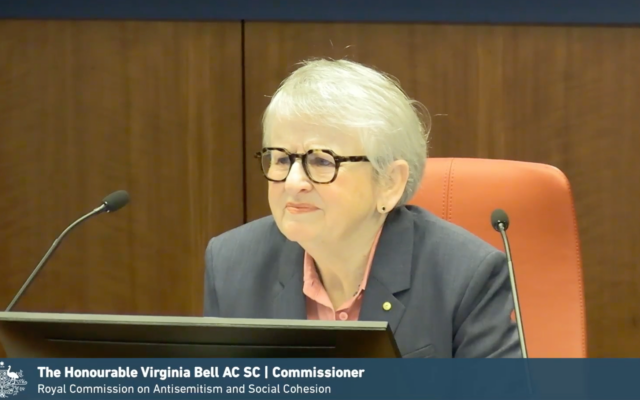
Commissioner Virginia Bell. Photo: screenshot

Bell said an important term of reference required the Commission to assess the impact of antisemitism on the daily lives of Jewish Australians, with lived-experience witnesses called to give personal testimony. Those witnesses have not been and will not be cross-examined, she said.

In a pointed warning, Bell revealed that several witnesses who gave evidence about their experiences of antisemitism had subsequently been targeted with antisemitic attacks, calling it “a sobering reflection on the level of civility of our society”.

To lessen the risk, some witnesses at the Melbourne hearings would give evidence under pseudonyms, she said. Bell reminded those present that the Royal Commissions Act makes it an indictable offence to cause damage or disadvantage to any person on account of their evidence.

The commissioner then called on counsel assisting to outline the evidence expected during the universities hearing block this week.

The AJN is providing rolling coverage on the Royal Commission on Antisemitism and Social Cohesion.

For full coverage of the Hearing Blocks, visit the Royal Commission section of The AJN website.

read more:
comments
Live updates Public hearings

“Israel cannot continue to exist” says student leader

Yasmne Johnson, a co-convenor of Students for Palestine and education officer in the National Union of Students. Photo: screenshot

Israel “cannot continue to exist”, a national co-convener of Students for Palestine has told the Royal Commission on Antisemitism and Social Cohesion.

Yasmine Johnson, who has helped lead the group since 2019 and organised the Gaza Solidarity Encampment at the University of Sydney in 2024, gave evidence to the commission drawing on a witness statement dated 12 June 2026.

She was defending a speech in which she also argued for the right to use violence “in basically every single fight around the world”.

Under cross-examination, Johnson was taken to an address she delivered at the Socialism 2025 conference at the University of Sydney last August, titled “Socialist Strategy to Liberate Palestine”.

Asked whether she recalled telling that audience, “So to put that totally clearly, it means that Israel cannot continue to exist,” Johnson replied that she did, adding that she said it “in the context of also saying it is a state that is premised on the destruction, the systematic destruction, of Palestine”.

She confirmed she had also told the conference: “As socialists, we support the right of the oppressed to fight back against their oppressors, and that includes the right to use violence in basically every single fight around the world.”

Johnson, who is Jewish and told the commission she lost family in the Holocaust, said her background gave her “a sense that being Jewish should mean fighting for that to be the end of genocide forever”.

Pressed on whether Jewish people were entitled to believe Israel had a right to exist, Johnson said she accepted most Australian Jews held that view, but described the state’s creation as “a racist act”.

“The premise that Israel should exist is a racist premise because, at its foundation, the creation of Israel involved the expulsion of, by UN estimates, some 700,000 people in order to create a Jewish majority state,” she said.

Earlier, counsel assisting questioned Johnson about the chant “from the river to the sea”, which she said she had used herself and interpreted as “a call for freedom” for Palestinians.

Told that some members of the Jewish community experienced the phrase as a source of deep hurt and fear, and asked whether the movement should adopt different language, Johnson compared the objection to opposition faced by the American civil rights movement.

“I don’t think the legitimacy of social justice movements rests on them never offending anyone,” she said.

“To take the civil rights movement for example, I’m sure there were any number of racist white people who claimed that it was threatening to them to have black people in their communities when busing was going on, or who claimed that they were afraid for their children’s safety when they were being bused.”

Johnson said the primary concern in a democracy “cannot be simply whether somebody’s feelings will be hurt by something or not”.

She also defended the chant “globalise the intifada” and set out her reading of the phrase “there’s only one solution, intifada revolution”, which she said she had not personally used.

Told that some Jewish people heard in the words “one solution” an echo of the Nazi “final solution”, Johnson said this was “a deliberate misinterpretation”.

Johnson maintained that Students for Palestine opposed “all forms of discrimination and racism, Islamophobia, antisemitism”, and said she had never personally witnessed antisemitism at the University of Sydney encampment, which she said had hosted a Shabbat event and involved anti-Zionist Jewish groups including the Tzedek Collective and Jews Against the Occupation 48.

Gabi Crafti SC, appearing for seven mainstream Jewish communal organisations and the Australian Union of Jewish Students, put to Johnson that Jewish students and academics who believed Israel had a right to exist did not feel safe or welcome on campus, given her reach across at least 21 campuses and her advocacy of violent resistance.

Johnson responded that campuses “should be spaces of anti-racism” and that people holding “racist views, which involve support for apartheid states, which are carrying out genocide, should be challenged on those views”.

Re-examined, Johnson said she was “not a political supporter of Hamas”, but was not at the commission “to condemn the actions of people who have been placed in a concentration camp by Israel for decades”.

Enjoy Unlimited Access To The Australian Jewish News Website And All Our Online Content For AUD$18/month Or Just AUD$120/year.

Subscribe Now