Live updatesPublic hearings

Social media platforms on the stand

Royal Commission hearings continue with Hearing Block 3 focusing on the dissemination of antisemitic content and other forms of hateful speech in the media.

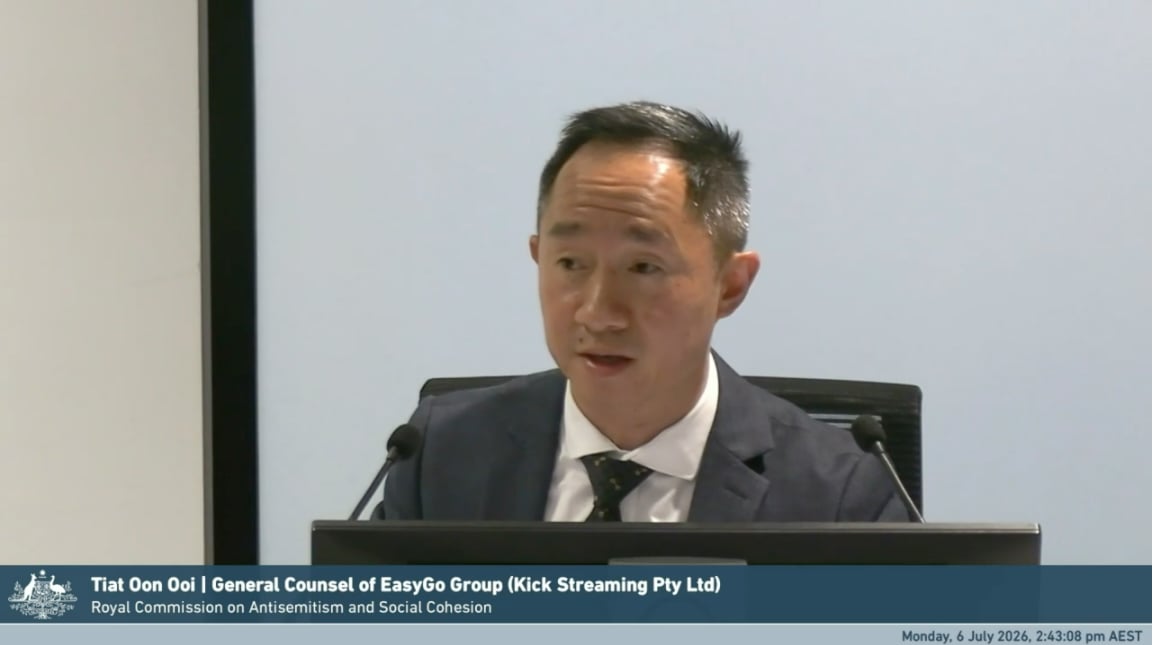
Tiat Oon Ooi, the General Counsel of EasyGo Group, the parent company of livestreaming platform KICK.

Read their stories

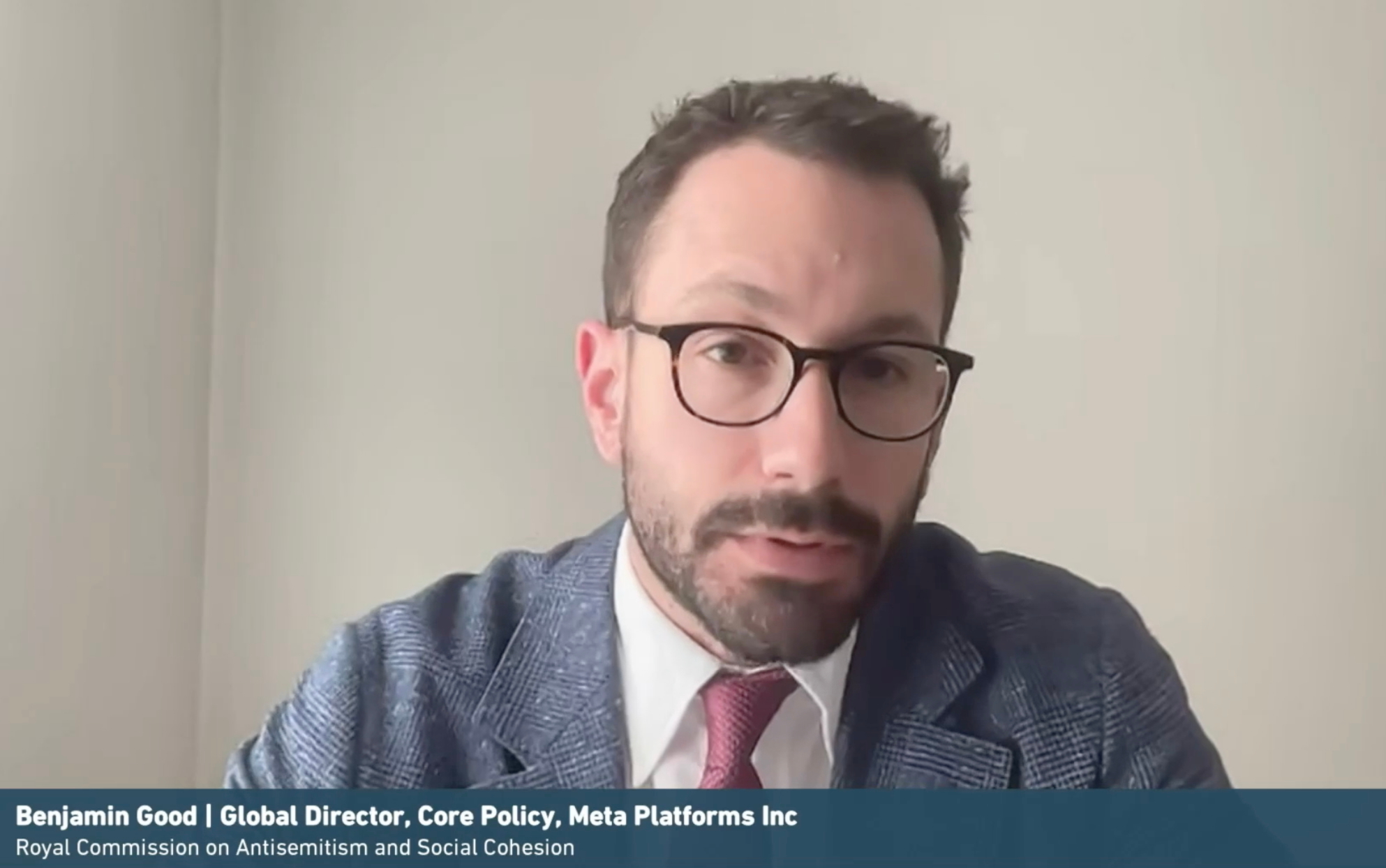
Benjamin Good, Meta’s global director of core policy, on the shift to reactive enforcement

Benjamin Good on lower enforcement against hate speech following policy shift

Benjamin Good on the ‘antisemitic failings’ of Meta

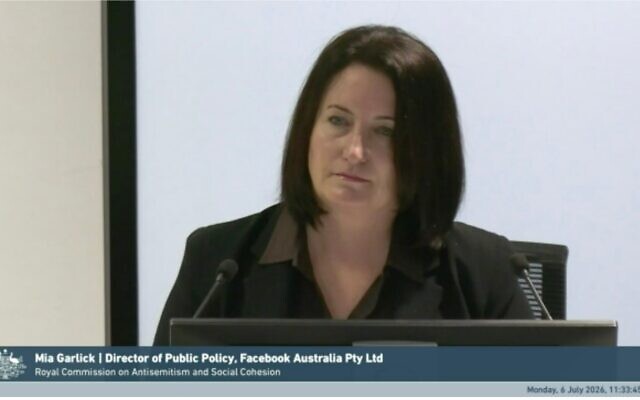
Mia Garlick, director of public policy at Facebook Australia, on the responsibility of content moderation or content removal or management

Tiat Oon Ooi, general counsel of EasyGo Group, Kick’s parent company, on the platform’s handling of reported content

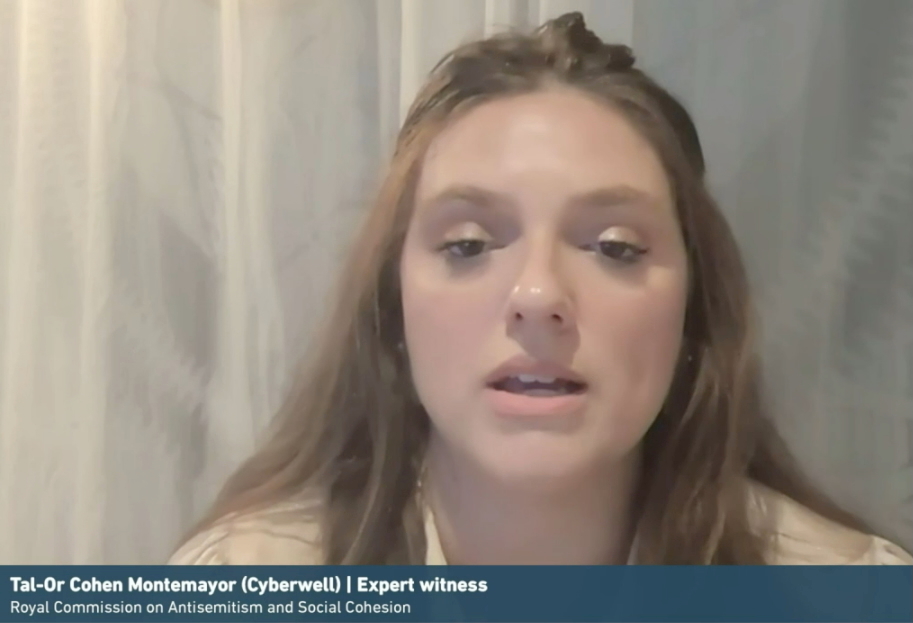
Tal-Or Cohen Montemayor, Cyberwell founder and CEO, on the urgent need for platforms to build dedicated, categorised data sets on antisemitism

Cyberwell founder urges platforms to build dedicated data sets on antisemitism

Cyberwell founder and CEO Tal-Or Cohen Montemayor told the Royal Commission on Antisemitism and Social Cohesion this afternoon that the most urgent step platforms and regulators should take is to build dedicated, categorised data sets on antisemitism.

She claimed that without that – and without involving trusted partners like Cyberwell in training AI moderation tools – enforcement will keep failing at scale.

Cyberwell is a fully independent, philanthropically-funded non-profit that holds “trusted partner” status with Meta, TikTok and YouTube, escalating verified reports of online antisemitism directly to platforms’ trust and safety teams.

It maintains the first open public database of antisemitic content, and established an Australian desk in August 2025 with the Dor Foundation.

The Royal Commission engaged Cyberwell to produce an expert report on the forms of antisemitism affecting the Australian digital space, platform responsiveness, and gaps in enforcement.

Cohen Montemayor said that report’s key findings included that classic tropes about Jewish power and institutional “infiltration”, Holocaust denial and mockery, “conspiratorial self-victimisation” (blaming Jews for attacks against their own community), and explicit calls to violence, were the most prevalent narratives affecting Australia.

She noted calls to violence had reached double digits in Cyberwell’s monitoring following October 7 and again after the Bondi Beach attack.

On AI-generated content, she said Cyberwell’s verified sample found antisemitic AI content was twice as likely to include justification of violence, rising from around 15 per cent to 33 per cent, and that a 300-post sample had drawn more than 30 million views, 65 per cent of them on Instagram.

Asked directly about the most urgent steps needed, Cohen Montemayor said platforms must first build “focused data sets” that categorise specific forms of hate speech, since without this they cannot measure prevalence or algorithmic amplification.

Secondly, she warned that as platforms shift to AI-based content moderation, “the trusted partners are not involved in that process” — meaning the experts who identify systemic failures are excluded from training the very systems replacing human moderators.

She urged that “conspiratorial self-victimisation” be explicitly recognised and rejected as a form of antisemitism by both platforms and governments.

And lastly, she said that any whole-of-society response “has to start with transparency as a baseline”, with clear platform-by-platform reporting on antisemitism feeding into education and public awareness efforts.

Cohen Montemayor also described examples of “coded” antisemitism, such as denialist references to “6 million muffins” or “271k”, including one example she said was traced to an Australian TikTok user targeting children through cartoon content.

Questioned about discrepancies in Cyberwell’s report between a 57.3 per cent and 76.6 per cent removal rate for Meta, she clarified that the higher figure reflected only “high integrity” reports known to clearly violate policy, while the lower figure averaged all antisemitic content reported, regardless of policy status.

Kick counsel unable to say if ‘evil rats’ slur breaches rules

Kick took action on fewer than one in 100 reports of hate, doxxing and terrorism this year, the Royal Commission on Antisemitism and Social Cohesion has heard, with the livestreaming platform’s general counsel unable to say with confidence whether a stream declaring “Jews are evil rats and subhumans” would breach its hate speech rules.

Tiat Oon Ooi, general counsel of EasyGo Group, Kick’s parent company, gave evidence about the platform’s handling of reported content. Data in his statement showed that of 179,914 report-function reports for doxxing, hate or terrorism between January 1 and May 27, 2026, just 1774 resulted in action being taken — a rate of less than one per cent. The pattern held across earlier periods: 847 of 126,746 reports in 2024, and about one per cent in 2025.

Counsel Assisting contrasted those figures with removal rates for antisemitic content on other platforms, cited to the commission the previous week by Online Hate Prevention Institute CEO Dr Andre Oboler — TikTok at 62 per cent, Facebook 54 per cent and YouTube 41 per cent — and asked why Kick’s action rates were so much lower.

Ooi attributed the disparity to a high volume of “false alarms”, telling the commission that any viewer could generate a report simply because they disliked a streamer or their opinions, and that a significant proportion of reports “have nothing to do and don’t actually flag the actual conduct”. Asked whether the low action rate might instead indicate the policies were not being rigorously enforced, he said that was “very unlikely”.

Tiat Oon Ooi, the General Counsel of EasyGo Group, the parent company of livestreaming platform KICK.

But under questioning from counsel for seven Jewish community bodies, Ooi conceded that Kick had not removed those supposed false reports from its totals. As counsel put it, without doing so, “we don’t know how many legitimate reports of doxxing, hate or terrorism Kick actioned this year”. Ooi said he could take the matter on notice and provide a more specific data set.

The reliability of Kick’s figures was further tested over its data on antisemitism-related reports, which the company revised sharply downward in a supplementary statement filed the night before Ooi gave evidence. The number of such reports for 2025 fell from 783 in his original statement to 88, while the 2023 and 2024 figures also dropped. Ooi said the original searches had captured a significant number of irrelevant emails, including bulk “spam” messages from the group Christians United for Israel, which had nothing to do with antisemitism.

Counsel also drew out that the categories Kick searched had narrowed between reporting periods — the term “or symbols” dropping out, and later “hate speech” — meaning the figures were not a like-for-like comparison. Ooi said that was how it appeared in the document, but he was unsure whether it made a difference in practice, and accepted that a conclusion in his statement that the risk of an Australian user encountering antisemitic content “appears to be very low” might need to be revisited.

Pressed on Kick’s hate speech guideline, Ooi acknowledged the definition offered little beyond prohibiting communications that incite or coordinate violence, and agreed hate speech was difficult to define and highly context-dependent. Asked whether a stream on the theme that “Jews are evil rats and subhumans” would contravene the guideline, Ooi said he believed so but could not say conclusively, explaining that he was familiar with the moderation guidelines only “at a high level” and relied on the company’s moderation team, based in Serbia.

Ooi confirmed Kick had no engagement with organisations representing communities affected by antisemitism, nor with trusted flaggers focused on antisemitism, and that its single trusted flagger was focused on illegal content. He said Kick had not received any report or notice relating to antisemitism from the eSafety Commissioner, and maintained that the platform took moderation seriously, with more than 130,000 streams a day moderated through a combination of AI and human review.

He repeatedly said the company was “open” to working with government bodies and organisations such as those represented at the hearing to improve its approach. “I think there’s always room for improvement,” he said.

Facebook Australia contends it is not responsible for content moderation

Mia Garlick, Director of Public Policy at Facebook Australia, provided testimony to the Royal Commission on Monday.

Counsel Assisting Richard Lancaster noted that in Facebook Australia’s submission, it said that it could not provide information on: trends in reports of antisemitism and other forms of racism or discrimination from Australian end users, Facebook Australia’s relationships and engagement with trusted flaggers and other groups working on antisemitism, and Facebook Australia’s understanding of the nature, prevalence, and visibility to Australian end users of antisemitic content on the services, because Facebook Australia contends by reason of the structure that’s been adopted by Meta and Facebook Australia, it is not responsible for content moderation or content removal or management.

Asked if she would agree it would be a useful data point for Australian regulators and other stakeholders in Australia to be able to identify the prevalence of antisemitism on Meta platforms, so far as they are published to Australian end users, Ms Garlick replied, “I can certainly understand that regulators and policy makers may wish to have that information.”

Screenshot

As to whether she was aware that the Meta Oversight Board made recommendations to Meta to put in place a system for tracking the prevalence of hateful conduct against specified protected groups, Ms Garlick said she was not aware of that recommendation from the Oversight Board.

Regarding the doxing of Jewish Australians in the creative arts in February 2024, Lancaster noted that the Commission asked Facebook Australia to comment on Meta’s investigation and response to that incident, and that in her statement she indicated that “some of the individuals affected by that conduct had sought assistance from Facebook Australia, and that Facebook Australia had escalated the matter to Meta platforms.”

Discussing the process, Ms Garlick said: “There’s a couple of ways that that can occur. So, firstly, any person can use the built-in reporting function on the platforms to report content directly to meta platforms. In a situation like this, often some of the people who are impacted will know one of us who works at Facebook Australia through the different partnerships that we have, and so in that instance, my recollection is that I did receive some text messages and emails alerting me to content that related to this WhatsApp group, which I then escalated through to Meta platforms with the additional context about what had occurred.”

As to what became of those referrals Ms Garlick said, “As I understand it, the content was removed. So, I think the specific ones that had been referred to me, people had taken screenshots from the WhatsApp group, and they had shared them on Instagram, and my understanding is that Meta Platforms Inc removed those for violating its bullying and harassment policies.”

On referrals from Facebook Australia to Meta, she said it was a “feature” of her experience working at Facebook Australia for the past 14 years — “It’s been a consistent, a consistent part of the job.” Adding around “a handful a week.”

Asked how many other occasions in the last two years antisemitic content had been the subject of referral from Facebook Australia to Meta, she said, “I think there have been a handful of incidents that sort of I can recall, so I think there was some after the budget, obviously there was concerns after the Bondi attacks, and after the October 7 attacks”.

Regarding the Online Hate Prevention Institute’s reporting to Facebook Australia, she said: “Where Andre [Oboler] flags issues of concern, we certainly want to take those seriously and make sure that we’re referring those to Meta Platforms Inc and identifying what the best response is, but I’m not sure that I’d necessarily characterise that as representative of Australians as a whole.”

Discussing policy changes since January 2025 in which Meta no longer uses third party fact checking in the United States – fact checking now occurs through crowd-sourced fact checking through the community notes, but not currently in Australia.

Asked if Meta will institute community notes in Australia, Ms Garlick said, “I don’t know that. I think when the announcement was made, there was a sort of the statement that it was happening first in the US, which would tend to suggest it may be deployed to other countries, but I don’t have precise information.”

She said some Jewish community organisations had expressed concern about the policy changes regarding antisemitic content.

Mr Lancaster raised the eSafety Commissioner’s concern about the number of strikes a user of Meta’s services was able to receive before their account was suspended.

“We will try to arrange a briefing from the teams that set those policies to answer any questions that the Office of the eSafety Commissioner has, because they’re often very – in my experience, they’re often very detailed reasons for that, that have been built up over the 20 years that Meta has been designing its content governance and integrity systems,” she said.

Meta grilled on antisemitism failings

Meta does not track whether antisemitic hate speech on its platforms has increased or decreased since October 7, 2023, and has not implemented its own Oversight Board’s recommendation to label enforcement data by target group, the Royal Commission on Antisemitism and Social Cohesion has heard.

Meta global director of core policy, Benjamin Good, told the Commission the company does not publish data broken down by the group targeted by hateful conduct policy violations.

“I do not have an exact prevalence number for content that would be considered antisemitic, because we do not have a definition of antisemitism, and again, that’s really unfortunate because it is a very dynamic and shape-shifting problem that we have to be prepared to address comprehensively, dynamically, including in crises on a truly day-by-day basis,” Good said.

Asked whether Meta had built systems to identify whether hate speech targets Jewish people, Muslim people, or other protected groups, Good said, “To my understanding, on a global system-wide level, it has not.”

The Commission heard that a Holocaust denial post on Instagram containing false and distorted claims about the number of victims and the existence of crematoria at Auschwitz remained on the platform for approximately three and a half years.

The post was uploaded in September 2020, one month before Meta explicitly prohibited Holocaust denial, and was reported six times and reviewed by two human reviewers before the Oversight Board intervened in January 2024. Good confirmed the post predated the policy change but acknowledged it should have been removed once the prohibition took effect.

Under questioning from Nicholas Bender SC, counsel for Australia’s mainstream Jewish communal organisations, Good acknowledged that Meta’s January 2025 shift to reactive enforcement placed greater reliance on users to identify and report violations.

“We are relying more on user reporting for enforcing that policy,” he said.

Bender put to Good that the system created a problem when the very communities expected to report hate speech were exhausted from doing so. He cited evidence before the Commission from Online Hate Prevention Institute founder Dr Andre Oboler that Jewish community members were experiencing significant fatigue after reports went unactioned.

Good acknowledged the evidence.

“If the Jewish community is experiencing the fatigue described in the evidence, that is a terrible thing for the Jewish community, and a bad thing for Meta as well,” he said.

Commissioner Virginia Bell tested Good’s assertion that user reporting “tends to work well” by noting that four antisemitic posts reported to Meta in association with the Royal Commission had initially been assessed as non-violating before being removed on review.

Good said he had personally reviewed all four instances and committed to learning from them.

Meta enforcement against hate plummeted after policy shift, commission hears

Action taken against hateful content on Facebook and Instagram fell dramatically after Meta shifted from proactively detecting such material to waiting for users to report it, the Royal Commission on Antisemitism and Social Cohesion has heard — with the company’s global director of core policy unable to explain the drop.

Benjamin Good, Meta’s global director of core policy, gave evidence about changes announced by chief executive Mark Zuckerberg on January 7, 2025, which moved the platform in some areas from proactive enforcement — where automated systems remove violating content before it is seen — to reactive enforcement, relying on user reports.

Counsel Assisting put to Good that action on hateful conduct on Facebook had fallen about 79 per cent, from 5.8 million items in the October–December 2024 quarter to 1.2 million in July–September 2025, with a comparable fall of about 73 per cent on Instagram, from 7.4 million items to two million over the same periods.

Asked whether the reductions were caused by the shift to reactive enforcement, Good said he could not say without greater expertise in Meta’s measurement processes. Pressed for a plausible alternative explanation for a drop of that magnitude, he said: “I truly don’t know, and I don’t want to speculate.” He emphasised the complexity of the enforcement system and said the company’s focus was on the “prevalence” of violating content that users actually view, which he said had remained consistently low.

The commission heard that antisemitic abuse directed at witnesses who had testified before it was reported to Meta by users, and in each case the company initially found the content did not violate its policies. The material was removed only after the commission itself wrote to Meta’s Australian lawyers.

Counsel put to Good that this “does not instil confidence in the system”. Good replied that he understood why affected people would feel that way, adding that his team had since reviewed the content, removed it and learned from it, but that Meta operated a system of more than three billion users that was “at times imperfect”.

Good defended the January 2025 changes as an attempt to reduce “over-enforcement”, telling the commission that automated systems had wrongly removed legitimate content — including, in the period after October 7, 2023, posts by Jewish users who were speaking out against antisemitism. He said he had personally heard from Jewish communities who had experienced content removals while engaging in counter-speech.

However, Good accepted he was not aware of any specific published Meta report quantifying that over-enforcement of affected groups, beyond a statistic cited by Zuckerberg that around one in 10 proactive removals had been over-enforcement.

Good also accepted that Meta already had the artificial intelligence and large language model tools capable of detecting and removing violating content at scale, but said the company wanted to deploy such systems “responsibly”, having historically seen its classifiers over-enforce.

Asked about the eSafety Commissioner’s proposal for a mandatory code on online hate, backed by civil penalties for non-compliance, Good stopped short of offering in-principle support, saying Meta would “welcome a discussion” about the best regulatory path but needed to examine the detail before taking a position.

Meta policy chief pressed on 2025 shift to ‘reactive’ enforcement

Meta Platforms’ global director of core policy, Benjamin Good, faced sustained questioning this morning at the Royal Commission on Antisemitism and Social Cohesion over the company’s January 2025 decision to wind back proactive enforcement of its community standards, in evidence that probed how the change has affected the removal of antisemitic content from Facebook, Instagram and Threads.

Mr Good said Meta had shifted “to a more reactive approach for community standards enforcement” across several policy areas, including its hateful conduct policy, after founder Mark Zuckerberg had said the company was making too many mistakes by removing content that did not actually violate its rules.

Under the changes, proactive, automated detection — removing content before any user sees it — is now reserved for what Mr Good called the paradigmatic high-severity categories: terrorism, organised hate, and child sexual abuse material.

For everything else, he said Meta now relies “primarily” on users reporting content before it is reviewed for removal.

Pressed on whether this meant a “plainly antisemitic post published about an identified individual” would now be treated as a lower priority, Mr Good agreed it would be “subject to different enforcement, reactive enforcement,” distinguishing it from terrorism or child exploitation material.

He maintained, however, that proactive tools still catch antisemitic content connected to groups such as Hamas and Hezbollah under Meta’s terrorism policy.
Counsel Assisting also pressed Mr Good on complaints from Jewish advocacy groups that the January 2025 changes had allowed more antisemitic content onto the platforms.

He rejected the characterisation, saying his engagement with those groups was “overwhelmingly productive and constructive,” and pointed to Meta’s transparency centre metrics, which he said showed “prevalence” of violating content “remains low” since the changes.

Commissioner Virginia Bell put to Mr Good that “the reactive approach necessarily can never achieve the gold standard,” since offending content remains visible until a user reports it.

Mr Good accepted that point, but argued the trade-off was deliberate, saying the reactive model is “less prone to over enforcement.”

He added that a “perfect enforcement” system, removing every violation while never over-enforcing, was not realistic “at the scale at which we operate,” given Meta’s roughly 3.5 billion users.

Commissioner Bell also asked whether machine-learning tools could be fine-tuned to catch “plainly hateful messages” without the same risk.

Mr Good said intent was often impossible to determine algorithmically, using the example of a Nazi rally image captioned only with “wow” — which could be either an endorsement or a condemnation.

He said removing genuine condemnation “can be very counterproductive,” and that both proactive and reactive tools, alongside more contextually aware artificial intelligence, remained necessary.

Mr Good also said during the hearing session that Meta continues to prohibit attacks based on protected characteristics, such as ethnicity, race, or religion.

When asked about the International Holocaust Remembrance Alliance’s (IHRA) definition of antisemitism, Mr Good confirmed that Meta uses it as a useful starting point, but Meta does not have a specific antisemitism policy in place.

“Our policy prohibiting claims that Jewish people control the government or the world or the media or financial institutions – that is a core component of the IHRA definition of antisemitism, and we have adapted it from that definition, and also based on consultation with many Jewish advocacy groups around the world,” Mr Good said.

“We prohibit that type of content, which is unique to antisemitism, because it is connected to these conspiracy theories that have historically had a close nexus to violence against Jewish people. They’re dangerous, and they’re therefore not allowed.”

“We do not have one definition of antisemitism under our policies – there isn’t an antisemitism policy.

“Instead, there’s a comprehensive suite of policies that have a multifaceted approach to antisemitism.

“The reason why we do it that way is because antisemitism is a nefarious and multifaceted problem – it evolves, it’s coded, it unfortunately crosses into different subject matter, and so we have to use different policies to enforce against antisemitism.

“I would describe the most relevant policy [Meta has] as the hateful conduct policy, because that prohibits attacks against people on the basis of protected characteristics, which include things like religion, race, and ethnicity.

“However, we don’t allow groups that proclaim a violent mission or a hateful mission to have a presence on our platform.

“These are groups that sometimes have an antisemitic goal or charter -they’re often designated by the United States government – and so our terrorism policy is very relevant to the problem of antisemitism, and of course, we also want to prohibit people from trying to threaten or incite violence against Jewish people.

“And there’s a mixture of proactive and reactive enforcement in that space.”

The AJN is providing rolling coverage on the Royal Commission on Antisemitism and Social Cohesion.

For full coverage of the Hearing Blocks, visit the Royal Commission section of The AJN website.

read more:
comments
Live updates Public hearings

Meta policy chief pressed on 2025 shift to ‘reactive’ enforcement

Meta Platforms’ global director of core policy, Benjamin Good, faced sustained questioning this morning at the Royal Commission on Antisemitism and Social Cohesion over the company’s January 2025 decision to wind back proactive enforcement of its community standards, in evidence that probed how the change has affected the removal of antisemitic content from Facebook, Instagram and Threads.

Mr Good said Meta had shifted “to a more reactive approach for community standards enforcement” across several policy areas, including its hateful conduct policy, after founder Mark Zuckerberg had said the company was making too many mistakes by removing content that did not actually violate its rules.

Under the changes, proactive, automated detection — removing content before any user sees it — is now reserved for what Mr Good called the paradigmatic high-severity categories: terrorism, organised hate, and child sexual abuse material.

For everything else, he said Meta now relies “primarily” on users reporting content before it is reviewed for removal.

Pressed on whether this meant a “plainly antisemitic post published about an identified individual” would now be treated as a lower priority, Mr Good agreed it would be “subject to different enforcement, reactive enforcement,” distinguishing it from terrorism or child exploitation material.

He maintained, however, that proactive tools still catch antisemitic content connected to groups such as Hamas and Hezbollah under Meta’s terrorism policy.

Counsel Assisting also pressed Mr Good on complaints from Jewish advocacy groups that the January 2025 changes had allowed more antisemitic content onto the platforms.

He rejected the characterisation, saying his engagement with those groups was “overwhelmingly productive and constructive,” and pointed to Meta’s transparency centre metrics, which he said showed “prevalence” of violating content “remains low” since the changes.

Commissioner Virginia Bell put to Mr Good that “the reactive approach necessarily can never achieve the gold standard,” since offending content remains visible until a user reports it.

Mr Good accepted that point, but argued the trade-off was deliberate, saying the reactive model is “less prone to over enforcement.”

He added that a “perfect enforcement” system, removing every violation while never over-enforcing, was not realistic “at the scale at which we operate,” given Meta’s roughly 3.5 billion users.

Commissioner Bell also asked whether machine-learning tools could be fine-tuned to catch “plainly hateful messages” without the same risk.

Mr Good said intent was often impossible to determine algorithmically, using the example of a Nazi rally image captioned only with “wow” — which could be either an endorsement or a condemnation.

He said removing genuine condemnation “can be very counterproductive,” and that both proactive and reactive tools, alongside more contextually aware artificial intelligence, remained necessary.

Mr Good also said during the hearing session that Meta continues to prohibit attacks based on protected characteristics, such as ethnicity, race, or religion.

When asked about the International Holocaust Remembrance Alliance’s (IHRA) definition of antisemitism, Mr Good confirmed that Meta uses it as a useful starting point, but Meta does not have a specific antisemitism policy in place.

“Our policy prohibiting claims that Jewish people control the government or the world or the media or financial institutions – that is a core component of the IHRA definition of antisemitism, and we have adapted it from that definition, and also based on consultation with many Jewish advocacy groups around the world,” Mr Good said.

“We prohibit that type of content, which is unique to antisemitism, because it is connected to these conspiracy theories that have historically had a close nexus to violence against Jewish people. They’re dangerous, and they’re therefore not allowed.”

“We do not have one definition of antisemitism under our policies – there isn’t an antisemitism policy.

“Instead, there’s a comprehensive suite of policies that have a multifaceted approach to antisemitism.

“The reason why we do it that way is because antisemitism is a nefarious and multifaceted problem – it evolves, it’s coded, it unfortunately crosses into different subject matter, and so we have to use different policies to enforce against antisemitism.

“I would describe the most relevant policy [Meta has] as the hateful conduct policy, because that prohibits attacks against people on the basis of protected characteristics, which include things like religion, race, and ethnicity.

“However, we don’t allow groups that proclaim a violent mission or a hateful mission to have a presence on our platform.

“These are groups that sometimes have an antisemitic goal or charter -they’re often designated by the United States government – and so our terrorism policy is very relevant to the problem of antisemitism, and of course, we also want to prohibit people from trying to threaten or incite violence against Jewish people.

“And there’s a mixture of proactive and reactive enforcement in that space.”

Enjoy Unlimited Access To The Australian Jewish News Website And All Our Online Content For AUD$18/month Or Just AUD$120/year.

Subscribe Now