Live updatesPublic hearings

Expert examines what drives radicalisation to violence in Australia

Hearing Block 8 concludes today looking at antisemitism and extremism in Australia, including religious, far-right and other ideologically motivated extremism and radicalisation.

Family of radicalising young man offered only a police program

A relative of a young man drifting into neo-Nazi and far-right extremism rang a national support hotline for help and was offered nothing beyond a police-run intervention program, the Royal Commission on Antisemitism and Social Cohesion has heard.

The evidence was given in a closed session by an anonymous witness known as ADE. Parts of it were later assessed as suitable for public release, and the recording, with the witness’s voice electronically disguised, was played to the commission on Friday.

ADE told the commission of watching a young relative become increasingly exposed to extremist material, and of looking for in-person help from people who understood far-right extremism and neo-Nazism.

“I was looking for people with expertise in the area of far right extremism, neo Nazism, and radicalisation,” the witness said.

Having learned of the Step Together service and Exit Australia through a television documentary, ADE rang the Step Together hotline and set out the young person’s circumstances, the observed changes in his beliefs and behaviour, and the factors that appeared to make him susceptible.

Step Together is run by the NSW Engagement and Support Unit and funded by the Commonwealth Department of Home Affairs, and has operated as a national service since July last year.

The response was not what the witness had hoped for.

“I left that interaction feeling that my needs are not being met, and that all I was being provided with was being directed to a police intervention program,” ADE said, adding that a police program was not an appropriate first step for the young person or his family.

When the witness said a police referral was not what was being sought, the hotline offered general counselling suggestions and material available on its website. ADE said a general counsellor was unlikely to help, because the young person had already had more than enough exposure to professionals who did not understand him.

What ADE had wanted was independent specialist support from a counsellor or psychologist in the family’s own city, unconnected to a police program, along with practical education material for the family and clear information about the groups influencing young people.

The witness described the Step Together website as poorly designed and hard to navigate, with vague information, broken links and little detail about the specific groups and behaviours associated with far-right extremism and neo-Nazi beliefs.

ADE also took issue with the way the site distinguishes radicalisation from violent extremism, saying it risked overlooking the harm caused by conduct short of physical violence. The site tells visitors that people with radical beliefs usually want drastic change in society but do not necessarily advocate violence.

“If they’re not blowing something up or somebody up, this website’s not for you,” the witness said. “So where do we go between something doesn’t feel right?”

The harm ADE had in mind was not confined to violence. “I’m talking verbal harm as well. I’m talking about excluding people. I’m talking about the serious harm that comes from the expression of some of these ideologies. That to me is equally as harmful as violent extremism.”

The witness also raised confidentiality, saying no confidentiality statement was read out during the first call. On ringing back more recently, ADE heard an automated message advising that the call would be recorded, and hung up.

“Had I received that notification when I first called, I would have hung up as well,” the witness said, adding that others might do the same if worried about incriminating themselves or someone else.

A follow-up call from the service was more helpful, but again ended at the same point. ADE asked whether the psychologists, counsellors and interventionists attached to the police program could be accessed independently in the community, and was told they could not.

The witness was careful not to condemn the police program itself. “I’m glad to know it’s there, and I’m glad to know it’s there for others, if that’s appropriate,” ADE said, but described it as a last port of call rather than a first.

“To suggest to a family who are just getting their head around what is actually happening… hey, let’s go to the police. I don’t think anyone would want to do that at all.”

Out of frustration, ADE contacted Exit Australia, a not-for-profit organisation specialising in disengagement from extremism, through a form on its website. The response came promptly and led to a long phone conversation.

The witness said it was a great relief to speak to someone who clearly knew what they were talking about.

Asked about others in the same position, ADE said the warning signs listed on the Step Together website could describe almost any young person who spends too much time online.

No formal check-up after extremists leave programs, commission hears

Australia has no formal framework for checking on people once they leave a countering violent extremism program, the Royal Commission on Antisemitism and Social Cohesion has heard, and the data needed to judge whether those programs work long term is not being collected.

Professor Adrian Cherney, of the University of Queensland, told the commission that the measures he considers most important are not recorded in the Profiles of Individual Radicalisation in Australia database, or, as far as he was aware, in the national intervention caseload system.

Those measures include sustained pro-social activity, an absence of recidivism, no return to extremist content, stable employment and interfaith engagement.

“We’re just simply looking at risk factors,” he said of the database. Capturing more would require access to closed source and intervention data.

Nicholas Bender SC, appearing for seven peak Jewish community bodies, asked about the categories of people he described as failures: those never referred, those who refuse to consent to a voluntary program, those who drop out, and those who complete a program while feigning compliance. Measuring that group, he suggested, was practically impossible.

Cherney disagreed. “I don’t think it’s impossible. I wouldn’t agree with that assertion,” he said, arguing that disguised compliance could still be detected through behaviour, and that contact alone might shift someone.

Bender asked whether he was aware that the United Kingdom has a statutory framework for following up people who complete its Channel program, or who refuse to enter it, after defined periods.

“I’m not aware of that. No, that’s new information,” Cherney said. Asked whether such a framework would be useful in Australia, he declined to endorse it without detail. “I would want to know if it’s effective. I want to know what the pros and cons are. I want to know about the consequences, unintended consequences.”

He accepted that follow-up after exit was desirable in principle. “Ideally, follow up would be good,” he said, before returning to resourcing. “It’s an easy recommendation to make. The next question is, is there the resourcing to do it?”

The Commissioner intervened to observe that the witness and counsel were not at odds, and that Bender’s point was the value of follow-up after a prescribed time. Cherney agreed, with a qualification.

“The period of time is critical, because you’ve got to let these people get on with their lives at some point,” he said. “You can’t expect this sort of follow up and monitoring to occur over a whole lifetime.”

On a suggested 12-month check-in, he said it could have utility but that any answer was speculative without knowing what the monitoring involved.

Bender also raised what should happen when someone is referred to a program, refuses to take part and is judged to present a risk of violence. Cherney resisted any blanket rule, saying it depended on the type of risk, though he accepted that a communicated threat, behavioural intent or a history of violence would warrant referral to police.

Asked whether written national guidance would help programs decide when to notify authorities, he said: “That sounds reasonable enough. I think those criteria would have to be fairly tight around the threshold.”

Deradicalisation programs do address antisemitic beliefs, commission told

Programs designed to pull Australians out of violent extremism are working on antisemitic beliefs even when they do not describe themselves that way, the Royal Commission on Antisemitism and Social Cohesion has heard.

Professor Adrian Cherney, of the University of Queensland, giving evidence on his review of intervention programs across the Commonwealth and the states, was pressed by Nicholas Bender SC, appearing for seven peak Jewish community bodies, on whether a program could effectively address someone whose belief system compelled them to attack or kill a Jewish person.

Cherney would not be drawn into a yes or no answer.

“It depends on how significant the belief system is to their sense of identity, their decision making,” he said. “It really depends on the individual itself.”

But he rejected any suggestion that ideology was being sidestepped.

“While programs may be described as focused on disengagement, in one way or another, they are going to address cognitive change around belief systems,” he said. “The extent to which they do that will vary by the individual.”

Asked why programs should be sensitive about explicitly targeting a belief that Jewish people should be harmed, Cherney said the reticence was about language rather than substance.

Victoria’s program, he noted, does not call itself a deradicalisation program. “That’s because the term de-radicalisation has a lot of negative connotations within the Muslim community. It’s just the language that’s employed.”

He added: “I don’t want to leave the impression, and nor is it true, that any of these interventions are ignoring ideological change. They’re not.”

Cherney said that where antisemitism was a client’s primary belief system, practitioners would deal with it. “They may not do it at the very start, but along the intervention journey, they’re likely to do so. How they do so will be a decision for the practitioners themselves.”

Bender put a summary to him: regardless of how a program is framed publicly, it is important that those inside it directly and squarely address antisemitic beliefs that might lead to violence against Jewish people.

“That is correct,” Cherney replied, “but it’s just not how it’s described.”

He then offered a caveat aimed at the commission itself.

“I know we’re here for a royal commission on antisemitism,” he said. “Antisemitism is only one type of belief in the mix here. I’m not discounting its importance. I’m not discounting how critical it is. It is, and there is a problem for sure. But in the context of the interventions themselves, for some individuals it’s one amongst a mix of belief systems.”

Cherney said the decision to describe programs one way while doing something else was defensible. “It’s about the outcome that matters.”

He also cautioned against judging the sector on individual failures. “These programs are not going to be foolproof,” he said. “I don’t think we should judge these countering violent extremism programs based upon one failed case.”

Prof Cherney: Progress in deradicalisation programs “is rarely linear”

Professor Cherney set out a detailed picture of what best practice looks like across the country’s de-radicalisation programs, and where the system still falls short.

A central theme was the vexed question of mandatory versus voluntary participation. Professor Cherney told the Commission that while voluntary engagement remains ideal – since it fosters genuine openness to change – mandatory intervention can still play a role for high-risk individuals otherwise unwilling to engage with services.

He noted Victoria’s Support and Engagement Order as the only such mechanism in Australia, though it has never been used.

Asked whether it should be available in every jurisdiction, he said “if those jurisdictions deemed it was useful” — but stressed that mandatory measures should be applied only selectively, tied to risk, rather than as a default tool.

Asked what happens when a high-risk individual declines to consent to a voluntary program, Professor Cherney said the answer depends on an individualised risk assessment made by practitioners using structured professional judgement, not a blanket policy.

He confirmed that all the programs he reviewed met his benchmark criteria for best practice, including clear referral pathways, robust risk and needs assessments, tailored intervention plans, ongoing case management, and — importantly — that access to programs must not be contingent on an individual’s ideological alignment.

Family involvement emerged as another key theme, particularly for young people.

Professor Cherney said family engagement, including support offered to relatives even when the young person themselves refuses to participate, is generally beneficial given the family’s role in socialisation and monitoring. Though he cautioned this must be assessed case by case, since family members can sometimes be the source of radicalisation.

Professor Cherney also addressed community organisations, arguing they should not be given a defined, ongoing role within CVE programs, but should be brought in only where relevant to a specific need — such as employment, sport or mental health support.

He warned that assigning community groups a formal role effectively lumps them with client-management risk they should not have to carry.

Asked whether police-led interventions deter participants, Professor Cherney said the evidence was mixed: some clients are comfortable with police involvement, and in some cases it can help repair negative attitudes towards law enforcement that may have fuelled a person’s grievances in the first place.

On the discussion point of ‘disguised compliance’ – the risk that clients simply tell caseworkers what they want to hear – Professor Cherney said practitioners need a “healthy amount of scepticism” and should verify progress using multiple, triangulated data sources, including client self-reports, direct observation, and reporting from partner services.

On measuring success, Professor Cherney was candid about the limits of evaluation.

He said progress in these interventions is rarely linear – clients can stagnate, regress or fluctuate for reasons entirely unconnected to the intervention itself, citing an example of a client’s engagement collapsing due to family dysfunction at home.

He also acknowledged that causation is extremely difficult to demonstrate scientifically, given the practical impossibility of running randomised controlled trials on convicted extremists.

Instead, he urged the Commission to understand interventions as playing a “facilitative” role in supporting an individual’s own motivation to change, tracked through indicators spanning cognitive, behavioural, social and longitudinal measures.

Victorian counter-extremism program the only one to meet all best practice criteria

Victoria’s Community Integration Support Program (CISP) was the only counter-extremism program across four states and the Commonwealth to meet all best practice criteria, Professor Adrain Cherney told the Royal Commission.

Cherney, who was commissioned to assess countering violent extremism (CVE) programs in New South Wales, Victoria, Western Australia, South Australia and at the Commonwealth level, gave evidence that the CISP stood apart for its comprehensive approach.

“Of all of the programs reviewed, it was the one that was consistent across all criteria,” Cherney said, noting his assessment was also informed by the comprehensiveness of the documentation Victoria provided.

Cherney said the CISP, which targets individuals radicalised into religiously motivated violent extremism, incorporates elements of ideological and religious reappraisal through a wraparound model that includes religious mentors, case managers, clinical psychologists, a reintegration officer and a family support officer.

Pointing to a recently published study on the program, Cherney said participants achieved “intrinsic ideological change” through being provided “more knowledge, more context, more guidance, more care and respect, and more time”.

He said the research showed participants did not abandon their religious beliefs but reinterpreted them, including developing a broader sense of obligation to family and community and redefining how to respond to grievances without recourse to violence.

“That finding also accords with research in the Indonesian context,” Cherney said. “They reinterpret their religious beliefs. It’s not that they’re abandoning them.”

Cherney said effective CVE programs needed to engage directly with ideological beliefs, particularly where those beliefs legitimised violence, and that this applied equally to religiously inspired extremism.

“It’s analytically reductive” to say extremism has nothing to do with religion, he said, explaining that religious beliefs could provide individuals with a moral identity and framing regardless of their level of theological understanding.

He noted that while some programs, including the Engagement and Support Program (ESP) in New South Wales, formally described themselves as disengagement rather than de-radicalisation initiatives, they still addressed cognitive and belief-related issues through their intervention activities.

“To get behavioural change, you have to get cognitive change,” Cherney said. “The interventions do by default focus on ideological change. Some may directly do it, like CISP. Others may indirectly do it, like ESP.”

On the question of mandatory participation, Cherney said CVE programs should ideally be voluntary but that a mandatory option, such as Victoria’s support and engagement order, should be available in all jurisdictions for high-risk individuals who refuse to engage with services.

“Some support is better than no support, even if it’s coerced,” he said, adding that the decision should be made on a case-by-case basis using structured professional judgment and appropriate risk assessment tools.

Antisemitism a ‘unifying element’ across all violent extremism

An expert in countering violent extremism has told the Royal Commission on Antisemitism and Social Cohesion that antisemitism is a “cross-cutting and unifying element” across all forms of violent extremist ideology.

University of Queensland professor Adrian Cherney, who has spent years researching radicalisation risk factors and evaluating counter-extremism programs, gave evidence before the commission drawing on his analysis of the Profiles of Individual Radicalisation in Australia (PIRA) database, which tracks cases from 1985 to 2024.

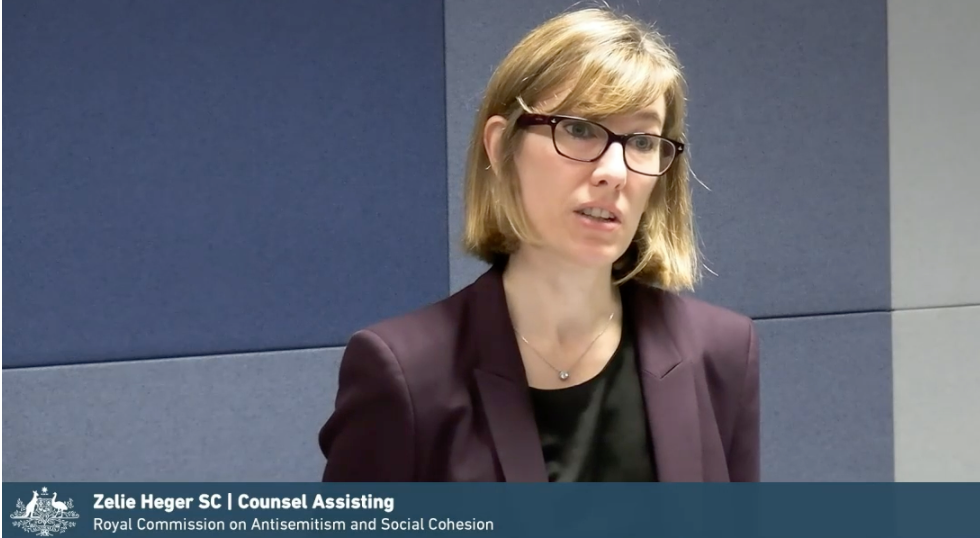
Asked by counsel assisting Zelie Heger about the role of antisemitism across different ideologies, Cherney said it was “one of the unifying characteristics of all forms of violent extremism or violent extremist ideology”.

Cherney’s analysis of the PIRA database identified risk factors present across both violent and non-violent radicalised individuals, including deep personal or group grievances, adult criminal records, mental illness, connections to radical peers or family members, and consumption of radical online content.

Factors that distinguished those who mobilised to violence included deep ideological commitment, anger, a minor or juvenile record, joining a formal extremist network or cell, and exposure to a triggering event.

Cherney said the triggering event itself was not the issue but rather the individual’s interpretation of it. He cited the example of passport cancellations, noting that while such actions may be legitimate from a law enforcement perspective, “it’s the interpretation of that event by the individual that matters here, that may create an emotional response of anger in reaction to that event itself”.

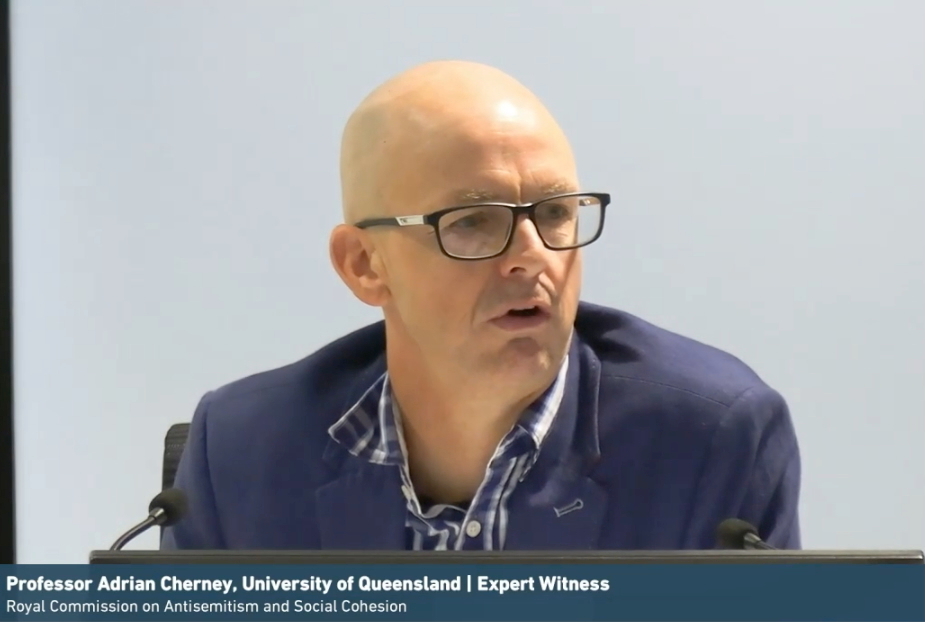
Adrian Cherney. Photo: Screenshot

He described grievances as “one of the most consistent findings from the research”, characterising them as a sense of injustice that drives an individual’s behaviour or beliefs, and said they were a uniform risk factor across both violent and non-violent individuals in the PIRA dataset.

The research also identified protective factors that mitigate the risk of radicalisation, including stable employment, higher education, strong family relationships and pro-social engagement such as participation in sports, school and other community activities that provide “a sense of belonging and purpose”.

Cherney described social media as a “universal accelerant” in the radicalisation process but said it was not a factor that distinguished between those who mobilised to violence and those who did not.

“It reinforces, for example, it might be group grievances or individual senses of grievances, or it might reinforce particular ideological beliefs where they are shared online,” he said.

He cautioned against viewing social media as a passive or deterministic influence, noting that an individual’s pre-existing vulnerabilities shaped how susceptible they were to online content.

“If you had a young person who had ASD, no friends, wasn’t engaging in school, had mental health issues, poor parental monitoring in the home, and was being bullied, his degree of emphasis from social media on him is very different to someone else who doesn’t have those sort of risk factors,” Cherney said.

He also highlighted the growing challenge of nihilistic violent extremism (NVE), which he said disproportionately involves young people and is characterised by engagement across a range of extreme content without clear ideological alignment, including gore material, animal cruelty and child sexual exploitation material.

“It’s more about performative violence and the consumption of that content that matters, less than it being aligned with a particular ideological belief or social political outcome,” Cherney said.

He warned that NVE involved significant intervention complexity, with young people often displaying overlapping issues including autism spectrum disorder, mental health concerns, family violence and disengagement from school, and raised serious questions about the long-term developmental impact of exposure to extreme content during formative years.

The AJN is providing rolling coverage on the Royal Commission on Antisemitism and Social Cohesion.

For full coverage of the Hearing Blocks, visit the Royal Commission section of The AJN website.

read more:
comments
Live updates Public hearings

No formal check-up after extremists leave programs, commission hears

Australia has no formal framework for checking on people once they leave a countering violent extremism program, the Royal Commission on Antisemitism and Social Cohesion has heard, and the data needed to judge whether those programs work long term is not being collected.

Professor Adrian Cherney, of the University of Queensland, told the commission that the measures he considers most important are not recorded in the Profiles of Individual Radicalisation in Australia database, or, as far as he was aware, in the national intervention caseload system.

Those measures include sustained pro-social activity, an absence of recidivism, no return to extremist content, stable employment and interfaith engagement.

“We’re just simply looking at risk factors,” he said of the database. Capturing more would require access to closed source and intervention data.

Nicholas Bender SC, appearing for seven peak Jewish community bodies, asked about the categories of people he described as failures: those never referred, those who refuse to consent to a voluntary program, those who drop out, and those who complete a program while feigning compliance. Measuring that group, he suggested, was practically impossible.

Cherney disagreed. “I don’t think it’s impossible. I wouldn’t agree with that assertion,” he said, arguing that disguised compliance could still be detected through behaviour, and that contact alone might shift someone.

Bender asked whether he was aware that the United Kingdom has a statutory framework for following up people who complete its Channel program, or who refuse to enter it, after defined periods.

“I’m not aware of that. No, that’s new information,” Cherney said. Asked whether such a framework would be useful in Australia, he declined to endorse it without detail. “I would want to know if it’s effective. I want to know what the pros and cons are. I want to know about the consequences, unintended consequences.”

He accepted that follow-up after exit was desirable in principle. “Ideally, follow up would be good,” he said, before returning to resourcing. “It’s an easy recommendation to make. The next question is, is there the resourcing to do it?”

The Commissioner intervened to observe that the witness and counsel were not at odds, and that Bender’s point was the value of follow-up after a prescribed time. Cherney agreed, with a qualification.

“The period of time is critical, because you’ve got to let these people get on with their lives at some point,” he said. “You can’t expect this sort of follow up and monitoring to occur over a whole lifetime.”

On a suggested 12-month check-in, he said it could have utility but that any answer was speculative without knowing what the monitoring involved.

Bender also raised what should happen when someone is referred to a program, refuses to take part and is judged to present a risk of violence. Cherney resisted any blanket rule, saying it depended on the type of risk, though he accepted that a communicated threat, behavioural intent or a history of violence would warrant referral to police.

Asked whether written national guidance would help programs decide when to notify authorities, he said: “That sounds reasonable enough. I think those criteria would have to be fairly tight around the threshold.”

Enjoy Unlimited Access To The Australian Jewish News Website And All Our Online Content For AUD$18/month Or Just AUD$120/year.

Subscribe Now