Live updatesPublic hearings

Commission examines pathways to hate

Hearing Block 8 continues looking at antisemitism and extremism in Australia, including religious, far-right and other ideologically motivated extremism and radicalisation.

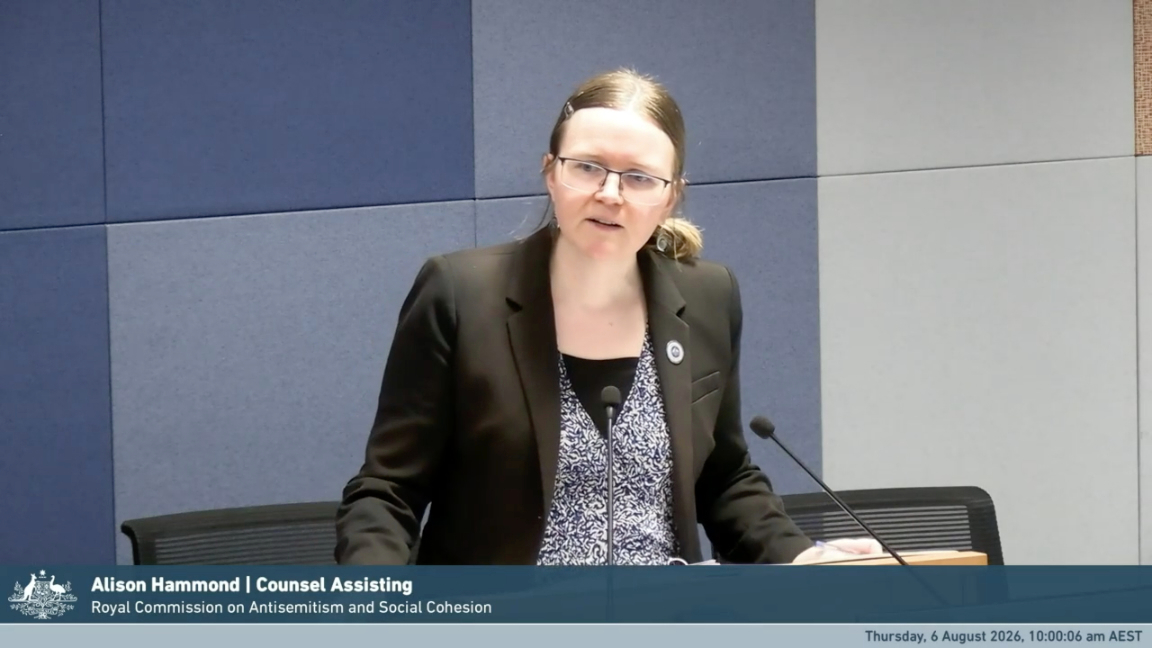
Counsel Assisting Alison Hammond at the Royal Commission on Thursday morning.

Misogyny a key predictor of violent extremism, inquiry hears

Hostile attitudes towards women are the single strongest predictor of support for violent extremism across the ideological spectrum, a researcher has told the Royal Commission on Antisemitism and Social Cohesion, warning the problem is concentrated among young people.

Dr Sara Meger, a senior lecturer in international relations at the University of Melbourne, gave evidence about a 2026 research report on misogyny, online radicalisation and youth extremism, which followed an earlier 2024 study she co-authored. The earlier work found that sexist attitudes and racist attitudes were statistically significant predictors of support for violent extremism among Australian adults.

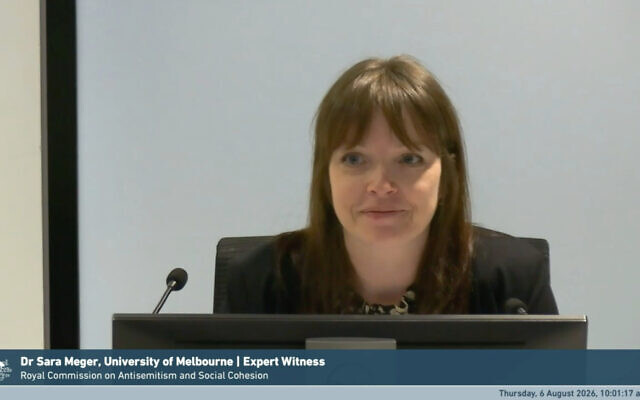
Dr Sara Meger, senior lecturer in international relations at the University of Melbourne.

Meger said the research examined several forms of extremism salient in Australia — religious, white supremacist, economic reactionary, economic revolutionary and incel — and found hostile gender attitudes predicted support for all of them. “What isn’t mixed or unclear is how, in spite of drawing different ideological beliefs from different political categories, what they seem to share is a pretty consistent idea about mistrust and hatred of women,” she said.

Her later study surveyed 11,122 Australians aged 13 to 17 and about 2300 adults, using a nearly 300-question survey drawing on validated psychological scales. It found harmful gender attitudes and extremist sentiments were concentrated in younger cohorts, with Gen Z males the most likely to express agreement with extremist views. Rates of agreement among Gen Z males ranged from about 14 to 26 per cent across the various ideologies, tapering with older generations.

Meger said a common assumption that such attitudes could be attributed to ethnicity or religion was not borne out by the data. When the responses were put into a regression model, she said, gender attitudes “by far outweighed” other factors in explaining who supported extremism, while ethnicity and religion did not have significant explanatory power.

She said misogyny correlated with extremist attitudes at around 50 to 60 per cent, and that a relative-weights analysis found hostile gender attitudes, combined with certain gendered online behaviours, accounted for between 90 and 97 per cent of the explained variance in support for violent extremism.

Commissioner Virginia Bell examined the finding that 24.2 per cent of Gen Z males exhibited left-wing violent extremist attitudes — slightly higher than the equivalent right-wing figure — noting the questions asked whether “organised violence” was the only way to make things fair, and whether capitalism should be “resisted with violence”. Meger said the overlap between those who agreed with both left- and right-wing violent positions had surprised the researchers.

On online influences, Meger said “manosphere” content, online dating and pornography most strongly correlated with harmful attitudes, while general social media use showed a null or even protective association once gendered content was controlled for. She said the influence of online behaviour operated largely through the gender attitudes it cultivated. “Online environments amplify, but do not alone create extremist orientations,” she said.

Meger recommended treating misogyny as a national security issue, greater interagency cooperation, mandatory respectful relationships education from the foundation year, and regulation of the algorithmic amplification of harmful gendered content, particularly for young people.

Teachers report students voicing antisemitism and praising Hitler, inquiry hears

Australian teachers have reported students expressing antisemitism, drawing swastikas and praising Hitler, according to research presented to the Royal Commission examining misogyny and youth extremism.

Dr Sara Meger, a senior lecturer in international relations at the University of Melbourne, told the inquiry that as part of her 2026 study she surveyed 511 teachers from around the country about misogynistic and extremist attitudes they had witnessed among students. She said most respondents tended to conflate the two, itself a finding she considered significant.

Meger said teachers had independently raised concerns about hateful attitudes, without being prompted to discuss particular ideologies. Roughly a quarter reported hearing students express the sentiment that violence to resist government authority was legitimate. Teachers also referenced racism, the celebration of overseas political violence, and instances of students drawing swastikas on notebooks or around campus.

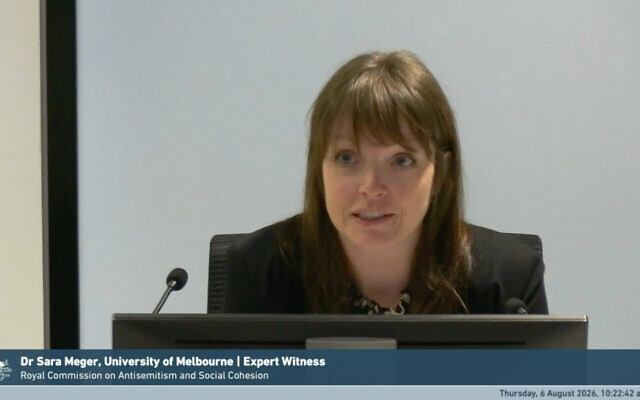
Dr Sara Meger, senior lecturer in international relations at the University of Melbourne.

Asked by Commissioner Virginia Bell whether teachers had referred to particular overseas events, Meger pointed to examples in her report of students talking about “Nazi symbolism or openly saying they hate Jews and to free Palestine”.

Bell read several of the teachers’ accounts into evidence. They included a group of Year 10 boys “making rape jokes and stating they wish that Hitler was still alive and had completed the job”; a Muslim student expressing the view that “those of Jewish descent deserved acts of terrorism”; Islamic students “exhibiting antisemitism about Jews and about non-Muslim people in general”; and students “openly saying that they hate Jews and to free Palestine”.

Meger said antisemitism had not appeared as politically salient when the study was designed, in the wake of the 2024 Bondi Junction stabbing, so the research had focused primarily on gender attitudes. But she said the voluntary accounts from teachers indicated that political polarisation was having a real-world impact on social cohesion at ages younger than anticipated, with teachers of students as young as Year 5 and 6 expressing concern about hateful attitudes.

She said the concerns extended to primary-aged children, noting that while the Department of Home Affairs had indicated extremist attitudes were appearing in children as young as 10, her teacher survey suggested misogynistic attitudes were surfacing as young as six or seven.

Meger said teachers had also reported that students were increasingly hostile towards female teachers, rejecting their authority and, in some cases, behaving with open defiance or hostility. Both male and female teachers described this as a growing problem rather than a longstanding one.

She said teachers had independently identified the influence of “manosphere” figure Andrew Tate, even though the survey had not named him, pointing to what she described as slippage between misogynistic and racist or white supremacist attitudes among young people.

Meger had earlier told the inquiry that when her preliminary findings were reported by the Herald Sun, the online response was “overwhelmingly misogynistic”, with the most common comment being that the rates of young men holding such attitudes were too low. She sought an ethics amendment to analyse those comments as further evidence of the problem her research sought to address.

She recommended mandatory respectful relationships education from the foundation year as an early-intervention measure.

Social media firms sitting on attack warnings, police tell inquiry

Social media platforms are not proactively telling police about users who discuss attack planning or build manifestos online, the commander of NSW Police’s Anti-Terrorism and Intelligence Group has told the Royal Commission on Antisemitism and Social Cohesion.

The officer, who gave evidence anonymously as “ADY”, has commanded the group since August 2024 and is responsible for the Terrorism Security Intelligence Unit, the High Risk Terrorist Offenders Unit and the Engagement and Hate Crimes Unit.

He said the burden is on police to go looking.

“We have to ask for the information,” he said. “There would certainly be an opportunity for platforms to be proactive in providing information, intelligence to law enforcement, particularly when you’ve got individuals that are talking about potential attack planning, building manifestos online.”

Such material, he said, would be “critically important for law enforcement to be able to at least disrupt”, and could also open an early intervention point.

Asked whether he was aware of cases where that activity had appeared online without any report to police, he answered: “Yes.”

Counsel assisting the Royal Commission put to him that it would be helpful to receive the material regularly and in real time. “In real time,” he agreed.

Since the unit began tracking online hate in August 2024, roughly 20 per cent of the incidents logged year on year have occurred online.

He described the internet as an amplifier, allowing individuals to “connect with other individuals and spread hate”, share violent extremist videos and assemble manifestos, with little moderation on some platforms. Previously, he said, people “would not have been able to share that material, particularly as widely as they can now globally”.

The unit records hate incidents in a spreadsheet that categorises them by protected attribute, including religion or faith, with subcategories covering Judaism, Christianity and Islam.

Incidents that fall short of a criminal charge are also recorded, which ADY said was “critically important” because it revealed what was happening in particular areas and informed where the unit directed its engagement work.

Overseas conflict, he said, registers quickly on those figures. “When those geopolitical events occur, we certainly see a spike in hate crime, in particular, towards different communities.”

The commission also heard the unit treats hate preachers as a significant risk of influencing individuals towards violence, whether they operate online, from a centre or from a lounge room. Material posted online is scrutinised closely and sermons are translated where necessary. “We look at every word,” ADY said.

Earlier investigations into such material had not produced sufficient evidence to charge anyone, he said, but those cases predated the new offence in the Crimes Act of intentionally and publicly inciting racial hatred.

Anecdotally, language has since softened, he said, pointing to a contrast between what was said after October 7, 2023 and the tone at the 2024 and 2025 anniversaries.

He rejected a suggestion put to the commission the previous day by Islamic extremism expert Dr Rodger Shanahan that closing a venue risks driving preachers underground, where they are harder to monitor.

“I’d probably disagree with that because I think what it does is it opens the door for a lot more other individuals to attend such a centre,” ADY said. Speech confined to a private home was more restricted in reach, he argued.

The unit has carried out 1,155 community engagements since January 2024, including work with religious leaders after the death of the Hezbollah leader, which fell close to the first anniversary of the October 7 attacks.

Concerned that supporters would display the proscribed organisation’s symbols, the unit worked with senior Shia leadership to explain the law and pushed out a message in Arabic on the day of a protest. The leadership, he said, was “absolutely” cooperative.

The unit also travelled to a regional NSW town in 2024 after a neo-Nazi group marched in and delivered a speech outside the war memorial, briefing council, business and community leaders on how such groups attempt to recruit young people.

Asked why the engagement mattered, ADY said it was about trust. “If we have that trust with community, then we know that when we have to ask them a hard question, that we’re going to get the response back that’s honest.”

Police point to early-intervention program to steer people from radicalisation

A NSW Police early-intervention program aimed at steering people away from radicalisation before they reach the point of violent extremism has been boosted with additional resources, the Royal Commission on Antisemitism and Social Cohesion has heard.

Assistant Commissioner Leanne McCusker gave evidence on Thursday about the Engagement and Support Program (ESP), a disengagement scheme that connects people at risk of radicalisation with government support before their views harden into what she described as a “very, very strong extreme ideology”.

McCusker said the program was first run by NSW Police as a pilot in 2015, prompted by a growing recognition of the risk of radicalisation and the need for early intervention. Delivery was transferred to the Department of Communities and Justice (DCJ) in 2019 following an independent review, which found the program was best run outside law enforcement and through a multi-agency approach, so that all relevant government agencies “would have a seat at the table”.

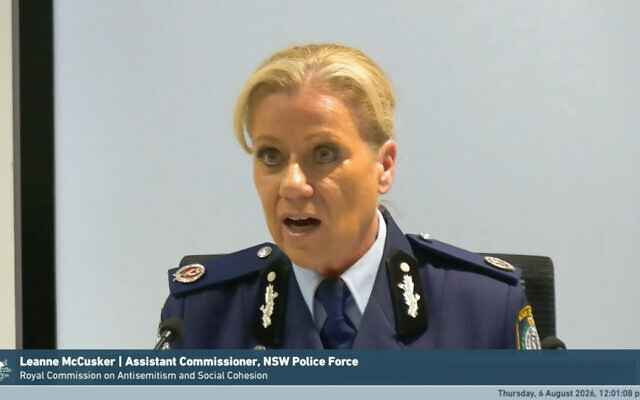
NSW Police Assistant Commissioner Leanne McCusker.

Referrals to the program can come from police, other agencies such as the Department of Education, or from family members through the Step Together hotline, McCusker said. Once a referral is received, an action plan is tailored to the individual, drawing on supports such as mental health services, education assistance and help building social connections. She gave the example of monitoring what a young person was encountering online, and addressing circumstances at school that might be leaving them without a social circle.

NSW Police contributes officers from its Engagement and Hate Crime team, including a sergeant-rank coordinator who helps assess referrals, contributes to case planning and engages with individuals and their families. McCusker stressed the police role was not a law enforcement one. “It’s certainly not around law enforcement or any criminality,” she said, and was not about investigating the individuals but putting supports in place for them.

She said the program was effective, pointing to a memorandum of understanding signed by both agencies in June that brought additional resourcing and an expanded engagement role. Asked whether further resources were needed, McCusker said a dedicated intelligence-analysis capability “would be incredibly beneficial”, particularly to strengthen understanding of the impact of online platforms.

McCusker also outlined “bystander awareness training” the force was exploring, drawing on international practice, to help relatives, colleagues and others recognise changes in a person’s behaviour and report concerns early. She said family and friends would be “far more comfortable” reporting concerns about behavioural change than reporting what they believed to be a criminal offence.

She described a further initiative, the Community Partnership Action Program (COMPACT), as a joint program aimed at social cohesion, helping communities understand and report hate crimes and identify rising trends, while “building that trust and confidence in community”.

Read the reports

Dr Sara Meger, a senior lecturer in international relations at the University of Melbourne, on misogyny, online radicalisation and youth extremism

Dr Sara Meger on reports from teachers from around the country about misogynistic and extremist attitudes they had witnessed among students

Witness ADY, commander of NSW Police’s Anti-Terrorism and Intelligence Group, on the way social media platforms are handling attack planning or manifestos online

Leanne McCusker, Assistant Commissioner NSW Police, on a disengagement scheme that connects people at risk of radicalisation with government support

The AJN is providing rolling coverage on the Royal Commission on Antisemitism and Social Cohesion.

For full coverage of the Hearing Blocks, visit the Royal Commission section of The AJN website.

read more:
comments
Live updates Public hearings

Police point to early-intervention program to steer people from radicalisation

A NSW Police early-intervention program aimed at steering people away from radicalisation before they reach the point of violent extremism has been boosted with additional resources, the Royal Commission on Antisemitism and Social Cohesion has heard.

Assistant Commissioner Leanne McCusker gave evidence on Thursday about the Engagement and Support Program (ESP), a disengagement scheme that connects people at risk of radicalisation with government support before their views harden into what she described as a “very, very strong extreme ideology”.

McCusker said the program was first run by NSW Police as a pilot in 2015, prompted by a growing recognition of the risk of radicalisation and the need for early intervention. Delivery was transferred to the Department of Communities and Justice (DCJ) in 2019 following an independent review, which found the program was best run outside law enforcement and through a multi-agency approach, so that all relevant government agencies “would have a seat at the table”.

NSW Police Assistant Commissioner Leanne McCusker.

Referrals to the program can come from police, other agencies such as the Department of Education, or from family members through the Step Together hotline, McCusker said. Once a referral is received, an action plan is tailored to the individual, drawing on supports such as mental health services, education assistance and help building social connections. She gave the example of monitoring what a young person was encountering online, and addressing circumstances at school that might be leaving them without a social circle.

NSW Police contributes officers from its Engagement and Hate Crime team, including a sergeant-rank coordinator who helps assess referrals, contributes to case planning and engages with individuals and their families. McCusker stressed the police role was not a law enforcement one. “It’s certainly not around law enforcement or any criminality,” she said, and was not about investigating the individuals but putting supports in place for them.

She said the program was effective, pointing to a memorandum of understanding signed by both agencies in June that brought additional resourcing and an expanded engagement role. Asked whether further resources were needed, McCusker said a dedicated intelligence-analysis capability “would be incredibly beneficial”, particularly to strengthen understanding of the impact of online platforms.

McCusker also outlined “bystander awareness training” the force was exploring, drawing on international practice, to help relatives, colleagues and others recognise changes in a person’s behaviour and report concerns early. She said family and friends would be “far more comfortable” reporting concerns about behavioural change than reporting what they believed to be a criminal offence.

She described a further initiative, the Community Partnership Action Program (COMPACT), as a joint program aimed at social cohesion, helping communities understand and report hate crimes and identify rising trends, while “building that trust and confidence in community”.

Enjoy Unlimited Access To The Australian Jewish News Website And All Our Online Content For AUD$18/month Or Just AUD$120/year.

Subscribe Now