Healthcare under the microscope at Royal Commission
The Royal Commission's sixth hearing block continues in Sydney, examining frameworks to counter antisemitism in government, healthcare, schools and the arts.
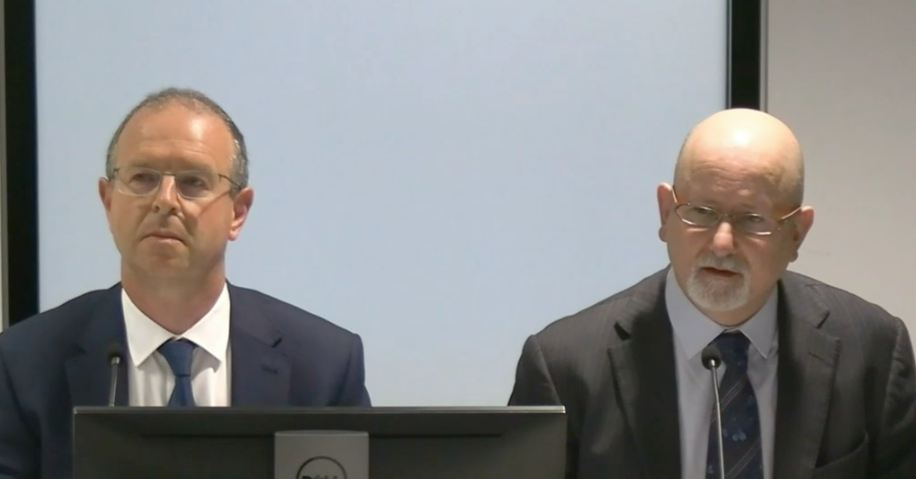
Dr Jack Green, president of the Australasian Jewish Medical Federation (AJMF) since 2019, and Dr Adam Gordon on calling for the extension on Victoria’s ban on political symbols in clinical settings nationally
JewishCare CEO Lawson Broad and president Ben Bolot on the surge of demand for JewishCare services since October 7, 2023 and particularly since the Bondi Beach terror attack in December 2025
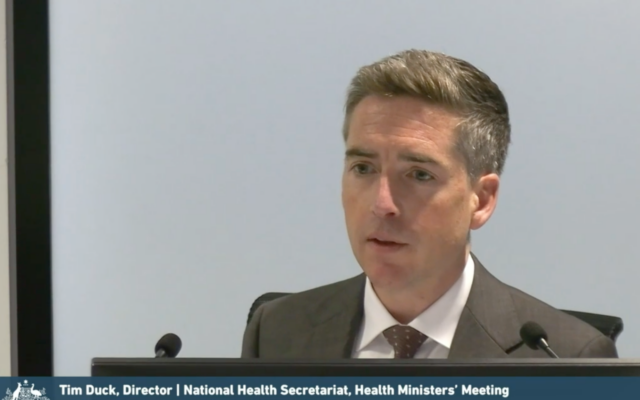
Tim Duck, director of the National Health Secretariat that supports the Health Ministers’ Meeting, on the fact that the national body representing Australia’s health ministers has not adopted a definition of antisemitism
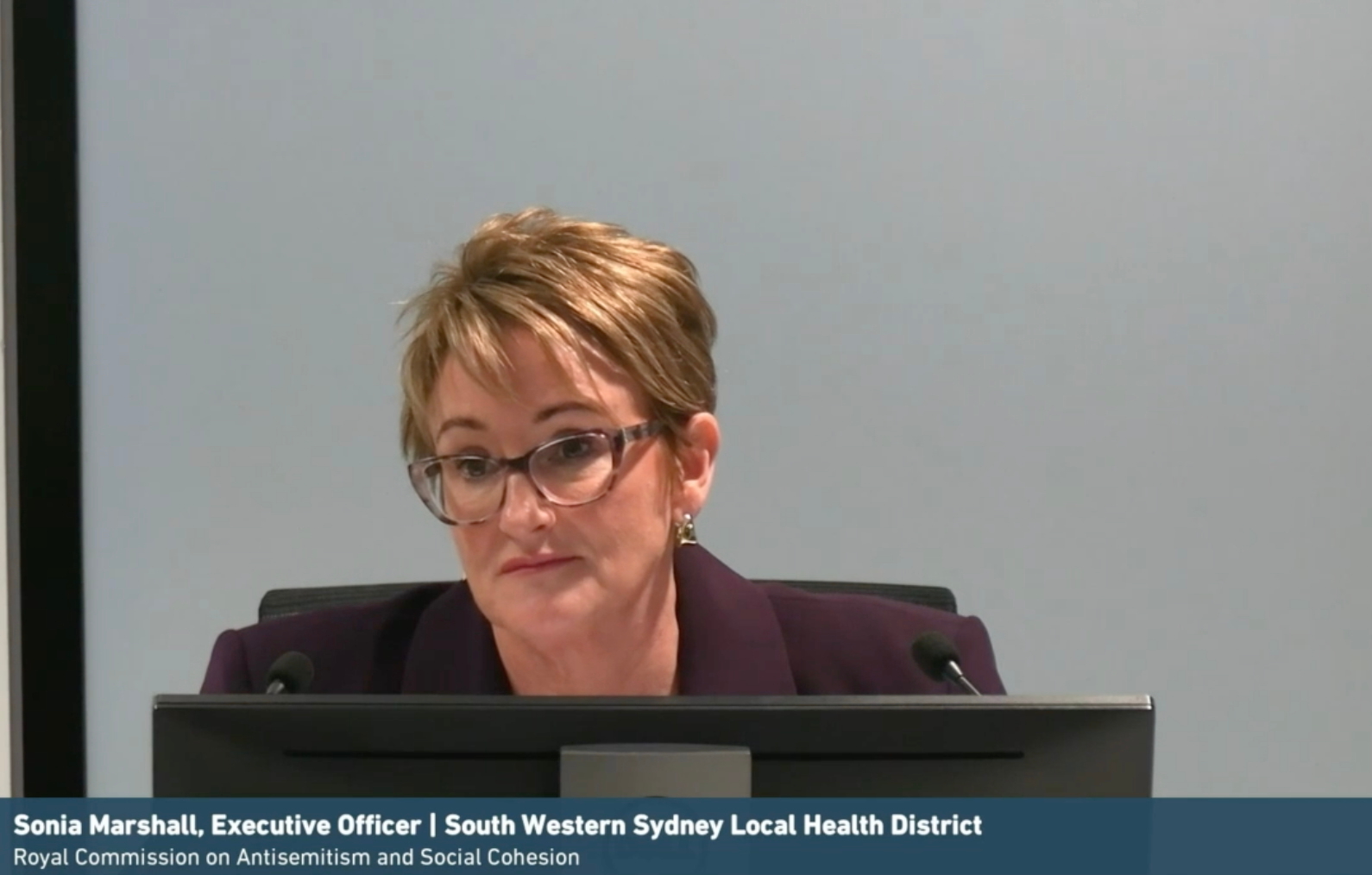
Sonia Marshall, Chief Executive of the South Western Sydney Local Health District on the district’s response to the February 2025 incident involving two Bankstown Hospital nurses and the broader policy framework governing staff conduct
Sonia Marshall, Chief Executive of the South Western Sydney Local Health District (SWSLHD), gave evidence to the Royal Commission this afternoon, detailing the district’s response to the February 2025 incident involving two Bankstown Hospital nurses — a matter she was not questioned on directly as it remains before the courts — and the broader policy framework governing staff conduct.
Marshall, who has led the district since January 2024 and worked there since 2016, told the Commission SWSLHD covers seven hospitals — including Bankstown, Liverpool, Fairfield, Campbelltown, Camden and Bowral — serving close to 1.2 million people, of whom 39 per cent were born overseas.
Roughly 500 residents in the district identified as Jewish by religion in the 2021 census, with a further couple of hundred identifying Jewish heritage. She affirmed her statement’s position that “although the LHD’s Jewish and Israeli population make up a small percentage of our diverse culture, it’s incredibly important to us that patients from all backgrounds and cultures… feel supported and cared for.”
Marshall said staff, particularly at Bankstown, “felt both embarrassed and ashamed in the workplace” and were “vilified in the community” following the February 2025 incident, prompting internal communications and wellbeing support to help them “continue to come to work and provide safe, quality healthcare.”
The local health district also produced a video featuring Rabbi Kastel and senior Muslim chaplain Mohammed El Shaffe, which she said was “received very well in the community,” though some social media comments had to be removed.
She outlined the statewide “We’re Here for You” campaign, launched in February and March 2025, featuring staff from diverse backgrounds reassuring the community that care would be provided “regardless of what race or culture or religious belief you might hold.”
A related “Raise It” initiative, relaunched in March this year, gives patients and families avenues — including a hotline and online portal — to raise concerns about their care, including access to pastoral care and quiet reflection spaces.
Much of the questioning focused on the NSW Health Code of Conduct, binding on all staff through their employment contracts, which prohibits discriminatory bullying and requires staff to remain politically neutral and avoid implying their personal views represent NSW Health.
Marshall confirmed antisemitism is not named specifically in the code but said “that would be my understanding” that it is captured under general discrimination provisions.
She acknowledged formal code of conduct training is mandatory only in a new employee’s first three months and isn’t automatically refreshed; further activities, such as webinars, are voluntary unless mandated by a misconduct or performance improvement process. She noted managers are separately obliged to reaffirm code of conduct obligations during staff members’ annual performance conversations.
On the local health district’s social media and uniform policies, Marshall confirmed staff must not post material that is “offensive, defamatory, threatening, or hateful,” must remain “apolitical and impartial,” and are barred from wearing clothing, jewellery, pins or displaying items carrying “inappropriate or controversial, commercial, religious, or political messages,” subject to an exception for items of genuine cultural or religious significance that pose no safety risk.
She revealed that since the February 2025 incident, SWSLHD had managed two separate complaints — one involving a staff member wearing a pin, another involving a staff member attending what could be a political event while in uniform.
Asked directly whether it was the district’s aim “to entirely remove political messages from the workplace” in terms of clothing and accessories, Marshall replied: “That is the aim.”
She said the policy also extends to items displayed on desks or workstations, adding the code of conduct would separately capture “some form of discriminatory or antisemitic displays” at a person’s desk.
She also said she was unaware that South Eastern Sydney LHD’s own policy explicitly names “political, ideological, or activist messages.”
Marshall described the “Better Together” cultural change program, running for nearly two years, aimed at breaking down professional and cultural “silos” so staff and services better include diverse communities in care planning.
And she pointed to the statewide Multi Faith Resource Hub and chaplaincy service, which allow patients to identify their religion on admission and access chaplaincy or reflective spaces accordingly.
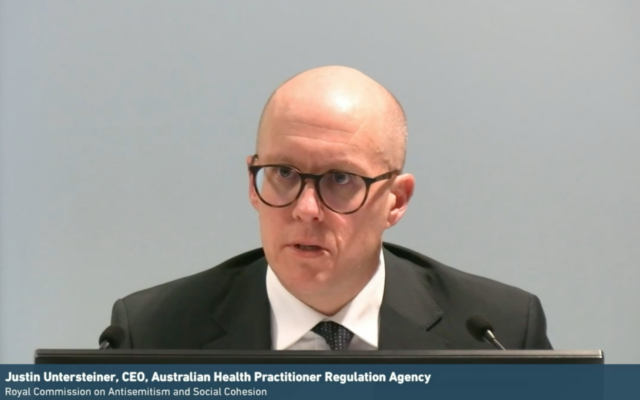
AHPRA CEO Justin Untersteiner faced cross-examination regarding a case study in the Special Envoy on Combatting Antisemitism’s published handbook, and also the practical effect of the IHRA definition on practitioners.
Kirsten Edwards, for far left fringe organisation the Jewish Council of Australia, took Untersteiner to an appendix in the handbook depicting a hypothetical WhatsApp exchange in which a member described a “genocidal racist Zionist project” that had repressed the Palestinians, done “through apartheid and ethnic cleansing” — an exchange the handbook’s analysis labels antisemitic.
Pressed on whether practitioners could read this as meaning any use of the terms genocide, apartheid or ethnic cleansing in relation to Israel would be found antisemitic, Untersteiner repeatedly declined to be drawn into a hypothetical finding, saying: “It’s very difficult to generalise about a term or several terms will be construed in a particular way. It all comes down to context.
“That’s why the role that we’re playing here, importantly, is to ensure that we are building the right public guidance as well, to ensure that we can support practitioners to know where that line is, and where that line might be crossed.
“And again, I want to reiterate that we, as a regulator, have no interest in interfering with expressions of political expressions, as long as they are, again, accurate, and they don’t discriminate, and that they don’t cause racism.”
He rejected a suggestion posed to him that the handbook created “a clear and present danger” that using those words could trigger a complaint, insisting the IHRA definition and handbook are reference tools only.
“It doesn’t mean that it binds us to any particular pathway,” Unterstainer said, adding AHPRA had published updated social media guidance and FAQs “to help clarify where we won’t be taking regulatory action”.
He agreed to consider explicit guidance that use of those terms would not automatically be deemed antisemitic, but that it depends on context.
Untersteiner accepted that the vexatious complaints framework existed partly in recognition the notification process can be “misused or weaponised” against practitioners.
He said AHPRA was considering not notifying practitioners of complaints that are, on their face, baseless.
Michael Borsky, counsel representing various Jewish bodies, asked the witness if he, AHPRA, and the Special Envoy, had been subjected to serious online abuse since the IHRA definition was adopted, including in the form of accusations made of him “supporting genocide” and being “bought out by the Israel lobby”.
Untersteiner agreed that this had happened, and confirmed correspondence had been received from several unions requesting to him that the IHRA definition’s use by AHPRA be paused.
Asked whether such behaviour and pressure would change AHPRA’s position, he said: “No, it won’t… we will not be changing that decision,” while pledging continued engagement with unions and community groups.
In answer to a question by Ben Jellis, counsel for Barry Nilsson, on whether context could differ between social media and clinical settings, Untersteiner agreed the forum mattered, and that using terms like genocide in a workplace, or with a patient, could be treated differently to a social media post.
He said training with the Australian Centre for Jewish Civilisation and the Islamophobia Register of Australia had reinforced that meaning “always comes down to contextual factors”, while noting some practitioners invoke free speech when their real intent is discrimination.
“And I’ve been listening to the Royal Commission and hearing real stories of people who are fearful to go and get the help that they need in the health system. And so I don’t apologise for the work that we do – I stand by it.
“We will not be interfering with free speech that is done accurately and safely. But again, when that draws into discrimination and hatred, we are likely to have a problem [with it].”
The final question asked was: Has the view been expressed to you that less than 100 years on from the Holocaust, and with Holocaust survivors still alive within the community, terms like genocide are words can be very harmful, depending on the context, to Jewish people?
The Australian Health Practitioner Regulation Agency (AHPRA) resisted adopting the International Holocaust Remembrance Alliance (IHRA) working definition of antisemitism before a handbook from the Australian Special Envoy Combating Antisemitism shifted its position, the Royal Commission on Antisemitism and Social Cohesion has heard.
AHPRA CEO Justin Untersteiner told the Commission that the agency adopted the IHRA definition in mid-June 2026 after a period of deliberation.
“We had resisted that for a period, and we had done that on the basis that we were certainly hearing some concerns about the risk of the IHRA definition stifling free speech, legitimate, safe free speech in the health system.”
He said the Special Envoy’s handbook, released in April 2026, provided “greater granularity and detail about the definition, about what it does mean and what it doesn’t mean”.
“It’s very clear that the criticism of the Israel government, for instance, would not constitute antisemitism, and that’s often where there has been criticism in the past.”
The definition is being built into AHPRA’s operational guidelines across triage, complaint categorisation, investigation and board recommendations, but Untersteiner said that work remained in draft.
National boards do not directly adopt reference tools such as the IHRA definition, but Untersteiner said it would flow through to board decision-making via AHPRA’s investigation reports and recommendations.
An internal review of all racism and discrimination complaints between July 2023 and February 2026 also identified gaps in AHPRA’s processes. Untersteiner said the agency’s framework for assessing vexatious complaints — those lacking merit and intended to cause harm — had not been consistently applied.
“We’re not convinced that in all cases the framework was applied as well as it could have been.”
Only one complaint across the entire cohort was found to meet the threshold for a vexatious notification.
The review also found inconsistencies in investigations, with some low-risk matters pursued further than necessary and others that warranted deeper examination not receiving it.
AHPRA is establishing a lived experience advisory panel, including Jewish and Muslim community members, to guide reforms to the vexatious complaints framework and the review of codes of conduct across all professions.
Untersteiner said there is currently no mandatory continuing professional development requirement for medical practitioners to undertake training on racism or discrimination. He said he would not want to preempt the outcome of a current consultation, noting the decision rests with the national boards.
Eighty-five per cent of complaints about antisemitism and Islamophobia received by Australia’s health practitioner regulator have been connected to social media, the Royal Commission on Antisemitism and Social Cohesion has heard.
Australian Health Practitioner Regulation Agency (AHPRA) chief executive Justin Untersteiner told the Commission that while social media was a factor in 40 to 45 per cent of all racism and discrimination complaints, the figure climbed dramatically for antisemitism and Islamophobia.
“When we focused on Islamophobia and antisemitism, that went up to 85 per cent,” Untersteiner said. “It just shows the role of social media playing in society at the moment.”
The finding was contained in a review into AHPRA’s management of racism and discrimination notifications released on July 23.
Untersteiner said AHPRA had seen a sharp rise in antisemitism complaints since October 2023. In the year prior to that date, the agency received just four complaints related to antisemitism out of more than 10,000 total.
In the 12 months from July 2025 to June 2026, AHPRA received 191 racism and discrimination complaints from approximately 13,000 total notifications. Of those, 40 related to antisemitism, 19 to Islamophobia, nine to racism against Aboriginal and Torres Strait Islander people, and 44 to other forms of racism.
Untersteiner cautioned that complaint data did not capture the full picture.
“This is what we have in terms of the number of complaints that we have, but it’s not always a true representation of the experience that people might be having in the system.”
He said underreporting could be driven by fear of identification, fear of retribution and cultural barriers to engaging with large institutions.
Counsel Assisting Richard Lancaster SC asked Untersteiner about the circumstances in which health practitioners could be considered to be acting in a private capacity on social media. Untersteiner said that was rare.
“I believe it becomes an artificial argument about whether someone is acting in a private or sort of their public capacity. The damage and the harm can be all the same.”
He said social media posts by practitioners that discriminated against individuals or groups could deter patients from accessing care.
“All Australians should have the right to feel safe in accessing healthcare, no matter what their religion, or race, or background is,” Untersteiner said. “When we have practitioners who post on social media in a way that is discriminating or causing harm to individuals, the effect of that is not just on the individual it’s targeting, but it can actually lead to patients who need care not getting the care that they need.”
AHPRA uses social media monitoring tools to identify emerging trends and individual cases of racism and discrimination by registered practitioners.
Untersteiner also pointed out that while people may not hear from AHPRA following a complaint, it does not indicate that nothing had been done.
The healthcare system’s response to racism and discrimination, including antisemitism, has seen measurable progress since a landmark directive last year, but ministerial engagement appears to have stalled, the Royal Commission on Antisemitism and Social Cohesion has heard.
According to Richard Lancaster SC, counsel assisting, the Australian Health Practitioner Regulation Agency (AHPRA) had reported 449 notifications relating to racism or discrimination between October 2023 and January this year, representing 1.6 per cent of all notifications received. The time to investigate such complaints has fallen sharply, from 132 days in 2024-25 to 54 days this year.
AHPRA also reported trialling a new antisemitism education program in February, designed by the Australian Centre for Jewish Civilisation at Monash University, as part of its response to the September 2025 direction from the Health Ministers’ Meeting.
A six-month progress report was presented to health ministers in May, with expert review delegated to the Health Workforce Task Force, scheduled to report to the Health Chief Executives Forum on August 14.
However, Duck confirmed that when AHPRA’s most recent quarterly update was sent to ministers on June 18, none responded with any comment. Under the meeting’s procedures, a default of no response is taken as noted.
Asked whether health ministers still regarded the issue as requiring prompt attention, Duck replied, “I definitely would not be talking on behalf of nine health ministers.”
Counsel Assisting Richard Lancaster SC also raised two specific concerns from Royal Commission submissions, namely the identification of Jewish religion on patients’ medical records, and calls for depoliticisation of the healthcare system. Duck said both matters fell under the remit of individual state and territory health ministers rather than the national forum, though he acknowledged the meeting was available for members to bring forward such issues.
“I’ve never seen this particular topic or a similar topic raised, but the forum is used for that reason,” he said.
Asked directly whether it was appropriate for healthcare professionals to express political views to patients, Duck stepped outside his institutional role. “I feel like everyone should feel safe and respected … while they’re in the healthcare setting,” he said.
Two further Health Ministers’ Meetings are scheduled before the end of the year.
The national body representing Australia’s health ministers has not adopted a definition of antisemitism, despite issuing a directive to address racism and discrimination in the healthcare system and having the legislative power to require its use, the Royal Commission on Antisemitism and Social Cohesion has heard.
Tim Duck, director of the National Health Secretariat that supports the Health Ministers’ Meeting, testified that the meeting issued a policy direction on September 28, 2025, under Section 11 of the Health Practitioner Regulation National Law.
The direction required the Australian Health Practitioner Regulation Agency (AHPRA) and the 15 national boards governing healthcare professions to review complaints processes on racism and discrimination, including antisemitism, and to ensure practitioners undergo appropriate education and training.
Asked whether a specific definition of antisemitism had been adopted for the purpose of the direction, Duck told the commission, “From my involvement in the health ministers’ meetings and the papers that I’m aware of, I’m not aware of a specific definition being used.”
AHPRA has since independently adopted the International Holocaust Remembrance Alliance (IHRA) working definition. “I’ve seen a joint media release that they’ve put on their website to say that they’ve adopted a particular definition, and they’ll use that definition to guide their practice,” Duck said.
However, the commission heard that national boards are not required to apply the IHRA definition when investigating antisemitic conduct by health practitioners, creating an inconsistency with AHPRA’s approach.
Counsel for the Jewish communal organisations, Michael Borsky KC, put to Duck that the Health Ministers’ Meeting should direct the national boards to apply or consider the IHRA definition, noting that the federal government has adopted it and state governments support it.
Duck said he could not comment on whether ministers should issue such a direction.
“I’d only be able to comment on how the process works in health ministers’ meetings, so I wouldn’t be able to comment on whether they should or shouldn’t do something,” he said.
However, he confirmed the ministers have the power to do so under the national law.
Asked whether any procedural barrier would prevent such a direction, Duck said, “I definitely wouldn’t be able to comment on that because I don’t know the national law to that degree.”
The Health Ministers’ Meeting convenes a minimum of four times a year and reports directly to national cabinet.
Antisemitism against Jewish patients and healthcare professionals is under-measured and under-recognised across the health system, an academic told the Royal Commission into Antisemitism and Social Cohesion.
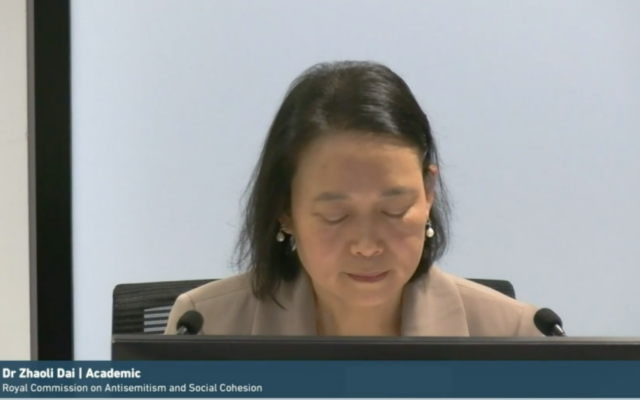
Dr Zhaoli Dai, an honorary senior lecturer at The University of Sydney affiliated with the School of Pharmacy and the Charles Perkins Centre, gave evidence on a submission she co-authored examining antisemitism as a social determinant of health.
Honorary senior lecturer at The University of Sydney, Dr Zhaoli Dai. Photo: Screenshot
Dai, a health services researcher and population health epidemiologist, told the commission she had led a systematic literature review following Cochrane guidelines, searching three databases for studies published between 2015 and February 2026. The review identified 12 eligible studies, including four from Australia, three from Canada, and others from the United States and the United Kingdom.
She said the review found evidence of harm to both Jewish patients and Jewish healthcare professionals, but that direct empirical evidence remained limited.
“There’s a gap in measurements and evidence within healthcare settings among patients as well as professionals … antisemitism is not routinely measured in patient experience or quality of care frameworks, so that creates a structural blind spot, limiting healthcare systems’ capacity to identify risks, monitor changes, and implement targeted interventions,” Dai said.
Asked about measures to improve safety for patients, Dai said initiatives such as displaying Jewish cultural symbols and providing kosher food in hospitals could help patients feel “inclusive, safe, and belong to the institution”.
She recommended healthcare organisations strengthen culturally safe environments, embed antisemitism training within anti-bias frameworks, and improve education for medical students.
Responding to a question from the commissioner, Dai said Holocaust survivors and their descendants carried historical trauma that could compound the impact of recent events, including the October 7 attacks and the Bondi attack, making them particularly vulnerable when seeking care.
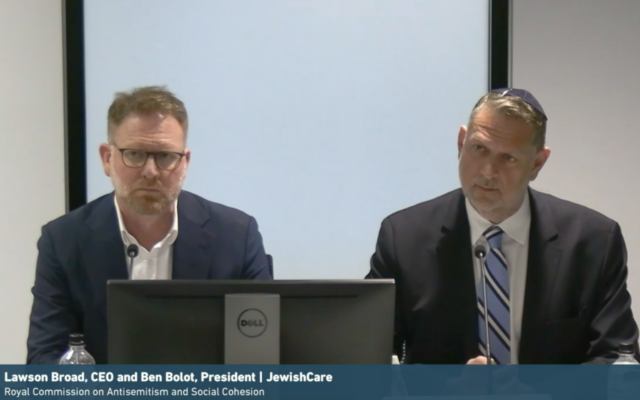
The CEO and President of JewishCare, have told the Royal Commission into Antisemitism and Social Cohesion that demand for its services has surged dramatically since 7 October 2023, with the organisation fielding more than 1,000 calls to its emergency triage line in the six weeks following the Bondi attack.
President of JewishCare, Ben Bolot, told the Commission that prior to 7 October 2023, the organisation supported about 1,200 members of the community on an ongoing basis, including 450 aged care clients and 283 Holocaust survivors. He added that the organisation had arranged close to 200 psychological first aid sessions in the aftermath of the Bondi attack and was continuing to support 39 family members of people who were killed or present at the scene.
Lawson Broad, CEO, and Ben Bolot, President, of JewishCare. Photo: Screenshot
CEO of JewishCare, Lawson Broad, said the organisation had funded or delivered more than 650 individual counselling sessions since the attack, describing a “massive increase in need” among clients presenting with mental health concerns, many of whom had never before required such support.
Broad said clients had adopted behaviours to reduce their visibility as Jewish, including giving false addresses to ride share drivers before attending Jewish events. He said one aged care client had raised concerns that JewishCare-branded cab charge cards identified them as Jewish.
Broad, who himself is not Jewish, said staff had removed the JewishCare name from lanyards and tote bags, and had changed their LinkedIn profiles, to avoid being identified with a Jewish organisation. He said the building was now equipped with a permanent security presence, something he had “never encountered” in more than 20 years working across the not-for-profit and government sectors.
Bolot told the Commission that stereotypes portraying Jews as wealthy and powerful made it harder for genuinely vulnerable members of the community to be recognised by mainstream service providers.
“Antisemitism is a distinct trauma context … Victims of antisemitism should not be required to educate the systems they turn to for support,” he said.
JewishCare recommended that antisemitism be formally recognised as a distinct trauma category, and that a single point of recognition be established for victims of events such as the Bondi attack, so they are not repeatedly required to retell their experiences to different agencies.
Two senior Melbourne doctors have urged the Royal Commission on Antisemitism and Social Cohesion to extend Victoria’s ban on political symbols in clinical settings nationally.
They said national medical boards were dismissing antisemitism complaints because they are under no obligation to apply the definition used by the national regulator.
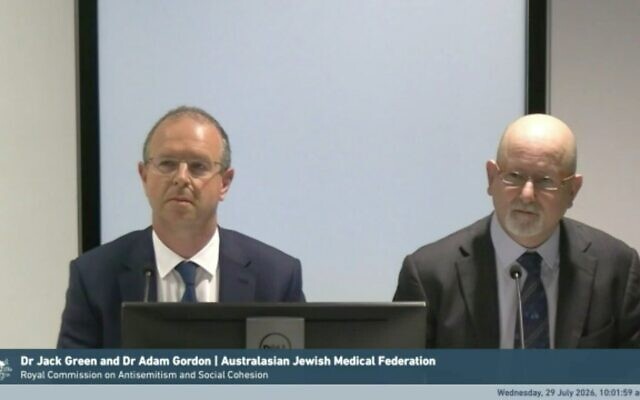
Dr Jack Green, president of the Australasian Jewish Medical Federation (AJMF) since 2019, and Dr Adam Gordon, vice president of the organisation’s Victorian branch from about February 2024 until December 2025, gave evidence together on Wednesday.
Dr Green, a dermatologist whose parents were Holocaust survivors, told the commission he does not display political symbols or raise politics with his own patients.
“It’s a trust relationship, and there is no place for politicisation in health practice,” he said.
He said the AJMF had almost never received reports of antisemitism in healthcare before 7 October 2023. Afterwards, a WhatsApp group he restarted grew quickly to a peak of 450 members, with doctors raising numerous examples of antisemitism and politicisation in the sector.
Dr Jack Green and Dr Adam Gordon, representing the Australasian Jewish Medical Federation. Photo: Screenshot
Dr Gordon, a gastroenterologist who spent more than 20 years in the Victorian public system before moving into private practice, said he had never experienced antisemitism in Melbourne before October 7.
He established an advocacy committee afterwards, later folded into the AJMF’s Victorian branch, because individual doctors were not getting fair outcomes alone. Junior staff were particularly exposed, he said, and many feared approaching management.
Colleagues were now concealing Magen David (Star of David) necklaces or leaving them at home, and avoiding any mention of being Jewish at work.
“That’s an invitation for discussion, confrontation about conflict and Jewish identity, and people are afraid,” he said.
Dr Green described a report from a community paediatrician whose patient’s father, unaware the doctor was Jewish, said he had dismissed an NDIS coordinator on learning the coordinator was Jewish and would “never trust a Jew to manage his money”. Dr Green called it an old antisemitic trope.
He also detailed an August 2025 incident in a Northern Territory hospital in which an obstetrician wore a keffiyeh-themed lanyard displaying a Palestinian flag while treating an Australian patient born in Israel.
The patient raised her concerns with the doctor and they were not acknowledged, leaving her feeling excluded and unsafe.
“It really fractures the doctor-patient relationship,” Dr Green said. Had regulations and a culture against wearing political symbols been in place, he added, the incident would have been prevented.
Much of the evidence concerned the complaints system. Dr Gordon said the Australian Health Practitioner Regulation Agency (Ahpra) had used the International Holocaust Remembrance Alliance working definition of antisemitism since January 2024, but the 15 national boards adjudicating referred matters were under no obligation to consider it. Practitioners were cleared, continued posting, and were reported again.
“There was this revolving door situation where people were being reported, Ahpra said there’s a case to answer, the national board would say they’ve done nothing wrong, they’d be dismissed, and then they’d be reported again,” he said.
Counsel assisting put to Dr Gordon that a disciplinary body could not isolate an example from the definition without weighing the conduct in context, including intent. “That’s true,” he said, adding that his concern was that the framework was not considered at all.
Dr Gordon said Jewish patients now regularly raise concerns before procedures, asking whether they will encounter antisemitic sentiment and what will happen while they are unconscious.
“I had never been asked a question along those lines before October 7, 2023, and I’ve been in private practice since 2006,” he said.
Removing political advocacy from healthcare was the clearest commitment public health services could make, he said, and the concern was not confined to the Jewish community. “Healthcare should be a sacred space.”
Dr Green closed by describing the environment he hopes to see: one in which no practitioner feels compelled to conceal their Jewish or Israeli identity, no patient doubts that care will be impartial, and no colleague is collectively blamed for the actions of a foreign government.
“I think a better future is possible.”
The AJN is providing rolling coverage on the Royal Commission on Antisemitism and Social Cohesion.
The CEO and President of JewishCare, have told the Royal Commission into Antisemitism and Social Cohesion that demand for its services has surged dramatically since 7 October 2023, with the organisation fielding more than 1,000 calls to its emergency triage line in the six weeks following the Bondi attack.
President of JewishCare, Ben Bolot, told the Commission that prior to 7 October 2023, the organisation supported about 1,200 members of the community on an ongoing basis, including 450 aged care clients and 283 Holocaust survivors. He added that the organisation had arranged close to 200 psychological first aid sessions in the aftermath of the Bondi attack and was continuing to support 39 family members of people who were killed or present at the scene.
Lawson Broad, CEO, and Ben Bolot, President, of JewishCare. Photo: Screenshot
CEO of JewishCare, Lawson Broad, said the organisation had funded or delivered more than 650 individual counselling sessions since the attack, describing a “massive increase in need” among clients presenting with mental health concerns, many of whom had never before required such support.
Broad said clients had adopted behaviours to reduce their visibility as Jewish, including giving false addresses to ride share drivers before attending Jewish events. He said one aged care client had raised concerns that JewishCare-branded cab charge cards identified them as Jewish.
Broad, who himself is not Jewish, said staff had removed the JewishCare name from lanyards and tote bags, and had changed their LinkedIn profiles, to avoid being identified with a Jewish organisation. He said the building was now equipped with a permanent security presence, something he had “never encountered” in more than 20 years working across the not-for-profit and government sectors.
Bolot told the Commission that stereotypes portraying Jews as wealthy and powerful made it harder for genuinely vulnerable members of the community to be recognised by mainstream service providers.
“Antisemitism is a distinct trauma context … Victims of antisemitism should not be required to educate the systems they turn to for support,” he said.
JewishCare recommended that antisemitism be formally recognised as a distinct trauma category, and that a single point of recognition be established for victims of events such as the Bondi attack, so they are not repeatedly required to retell their experiences to different agencies.
Enjoy Unlimited Access To The Australian Jewish News Website And All Our Online Content For AUD$18/month Or Just AUD$120/year.



comments