Live Now

Multicultural organisations address the Royal Commission

Hearing Block continues continues today focusing on strengthening social cohesion, including how it is understood and measured.

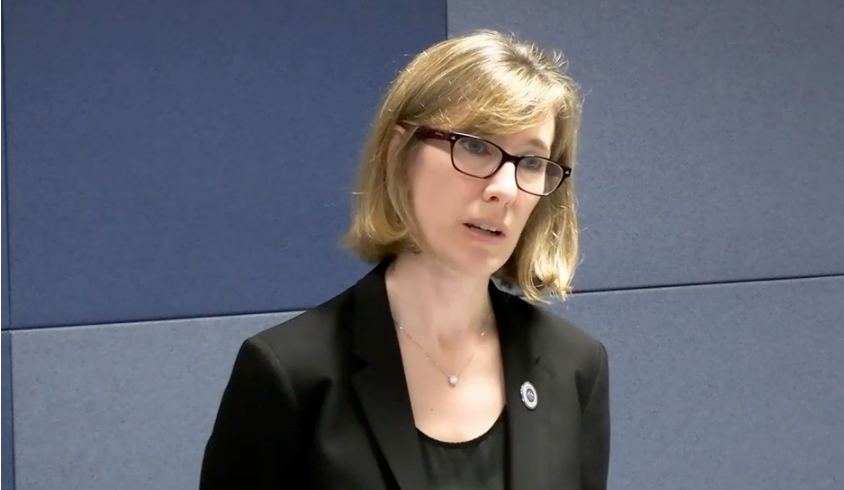
Zelie Heger SC, counsel assisting. Photo: screenshot

Sivaraman rejects claim framework does nothing specific on antisemitism

The Race Discrimination Commissioner has rejected a suggestion that the Australian Human Rights Commission has proposed nothing specific to address antisemitism, telling the Royal Commission on Antisemitism and Social Cohesion that the National Anti-Racism Framework is the bedrock on which tailored responses are built.

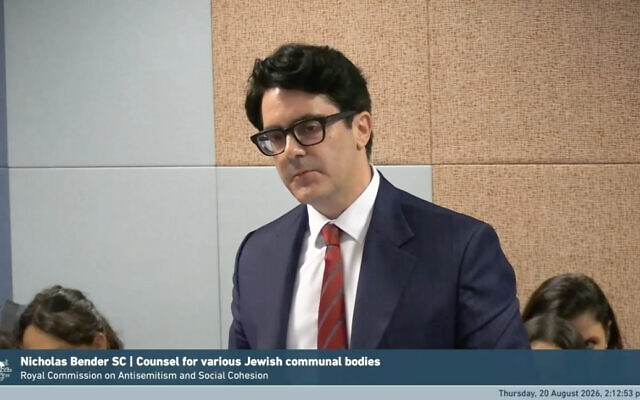
Nicholas Bender SC, appearing for seven peak Jewish community bodies, put to Giridharan Sivaraman that of the framework’s 63 recommendations only one names antisemitism, and that none of the commission’s recommendations proposed any measure specific to it.

“No, I don’t agree with that, because that misunderstands the way in which the national anti-racism framework would be implemented and operate,” Sivaraman said.

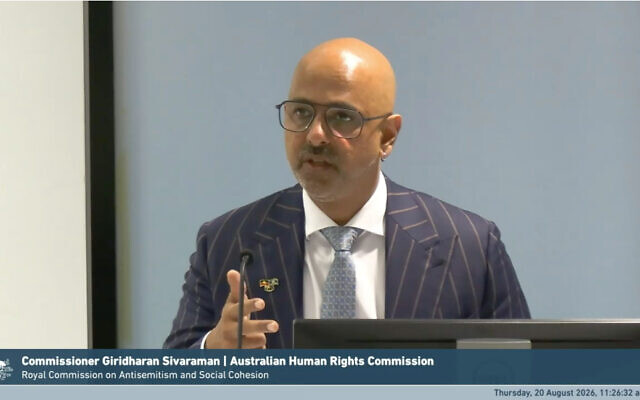
Race Discrimination Commissioner Giridharan Sivaraman.

He said no form of racism other than that directed at First Peoples was named, because the framework provided the basis for systemic change that could then be tailored to particular communities.

“We should never forget the highest ever award of damages under the Racial Discrimination Act was for six Jewish students who suffered the most horrific antisemitism and vilification at a public high school in Victoria,” Sivaraman said.

He confirmed the framework’s proposed task force was “not happening” because the government had not responded.

Bender earlier put a series of propositions about distinctive features of antisemitism.

He said the trope of attributing power to Jews rather than inferiority was “certainly one that I’ve been told is antisemitic in nature”, though he could not say whether it had ever been used against another community. He prefaced his answers by saying they were informed by consultations with the Jewish community rather than “just me pontificating from up on high”, and said that while identifying antisemitic tropes required literacy in their history, it was also necessary to ask Jewish people about their experience now.

He agreed Holocaust denial was distinctive given the scale and relative recency of the Holocaust, but declined to agree that antisemitism’s evolving nature was not present in other forms of racism, calling that “such a generalised statement”.

Asked whether antisemitism was growing in progressive spaces including universities, Sivaraman said the absence of consistent national data meant there was no baseline against which to measure an increase, though it was “clearly prevalent in universities” at alarmingly high rates. Bender noted the commission’s submission recorded that 93.8 per cent of religious and 81 per cent of secular Jewish respondents reported direct or indirect racism at university.

On Bender’s proposition that no other community’s schools and places of worship operate behind armed guards and bulletproof glass, Sivaraman said some Muslim institutions now also had armed security. He called it a terrible thing that Jewish schools and shules required armed guards, but said it reflected a distinct threat of violence not isolated to the Jewish community.

Asked whether there was an urgent need to address antisemitism in particular, Sivaraman said: “There is absolutely an urgent need to address antisemitism.”

He agreed antisemitism-specific content should be co-designed with the community’s representative organisations, and that the framework should sit alongside rather than displace whatever the royal commission recommends.

AHRC pushed to include Jewish community in racism study

The Australian Human Rights Commission (AHRC) insisted on including the Jewish community in a federally funded study of racism after October 7, after the Department of Home Affairs initially asked it to engage only with Muslim, Arab and Palestinian communities, the Royal Commission on Antisemitism and Social Cohesion has heard.

Race Discrimination Commissioner Giridharan Sivaraman told counsel assisting Zelie Heger the contract required the commission to develop a campaign addressing the rise in racism since October 7, 2023.

“Initially, the requirement was only to engage with Muslim, Arab and Palestinian communities, but we said that it has to be broadened and has to engage with the Jewish community as well, because we don’t want to be put into the position of having communities pitted against each other,” Sivaraman said.

The resulting Seen and Heard report was a qualitative study built on 27 community engagements across Australia. Sivaraman said the Queensland Jewish Board of Deputies arranged a consultation he attended at the Holocaust Museum in Brisbane, while the Australian Palestinian Advocacy Network organised one with Palestinian community members.

He said racism had increased significantly for all communities after October 7, rising “stratospherically” online, with some people saying they were no longer online at all because it had become so unsafe. Workplaces emerged as a consistent theme, with people reporting they felt isolated, unable to express their identity and in danger of losing their jobs.

The Change the System, Change the Story campaign, launched in July, was targeted at managers and executives, with the key message that racism often hides in plain sight within policies and processes that appear neutral. Videos used direct quotes from the consultations, including versions featuring specific communities, one for the Jewish community and one for the Palestinian and Muslim communities.

“When we initially put those up, the torrent of racism towards the respective communities and abuse to the commission for having done this was terrible, and it just kind of highlighted the point,” he said, adding much of the abuse argued the communities did not deserve the attention.

The campaign has recorded 2.5 million impressions and 1.6 million completed video views. Sivaraman said there were opportunities to expand it, but funding “comes to an absolute halt very shortly”.

Asked whether the commission should be able to bring its own applications under section 18C of the Racial Discrimination Act, Sivaraman said he was unsure it would assist, because its conciliation process had to be seen as impartial.

Heger noted the commission’s own submission refers to ECAJ v Wissam Haddad, and asked whether the commission should be able to bring its own applications under section 18C of the Racial Discrimination Act.

Sivaraman said he was unsure it would assist, because its conciliation process had to be seen as impartial, and a respondent could fear he would later bring proceedings on the same ground. He said the amicus role was the better mechanism, as it had been in Faruqi v Hanson, because it maintains impartiality while allowing the commission to assist the court on a question of law.

Race Discrimination Commissioner: “If you don’t fix the systemic problem, the racism will continue to manifest”

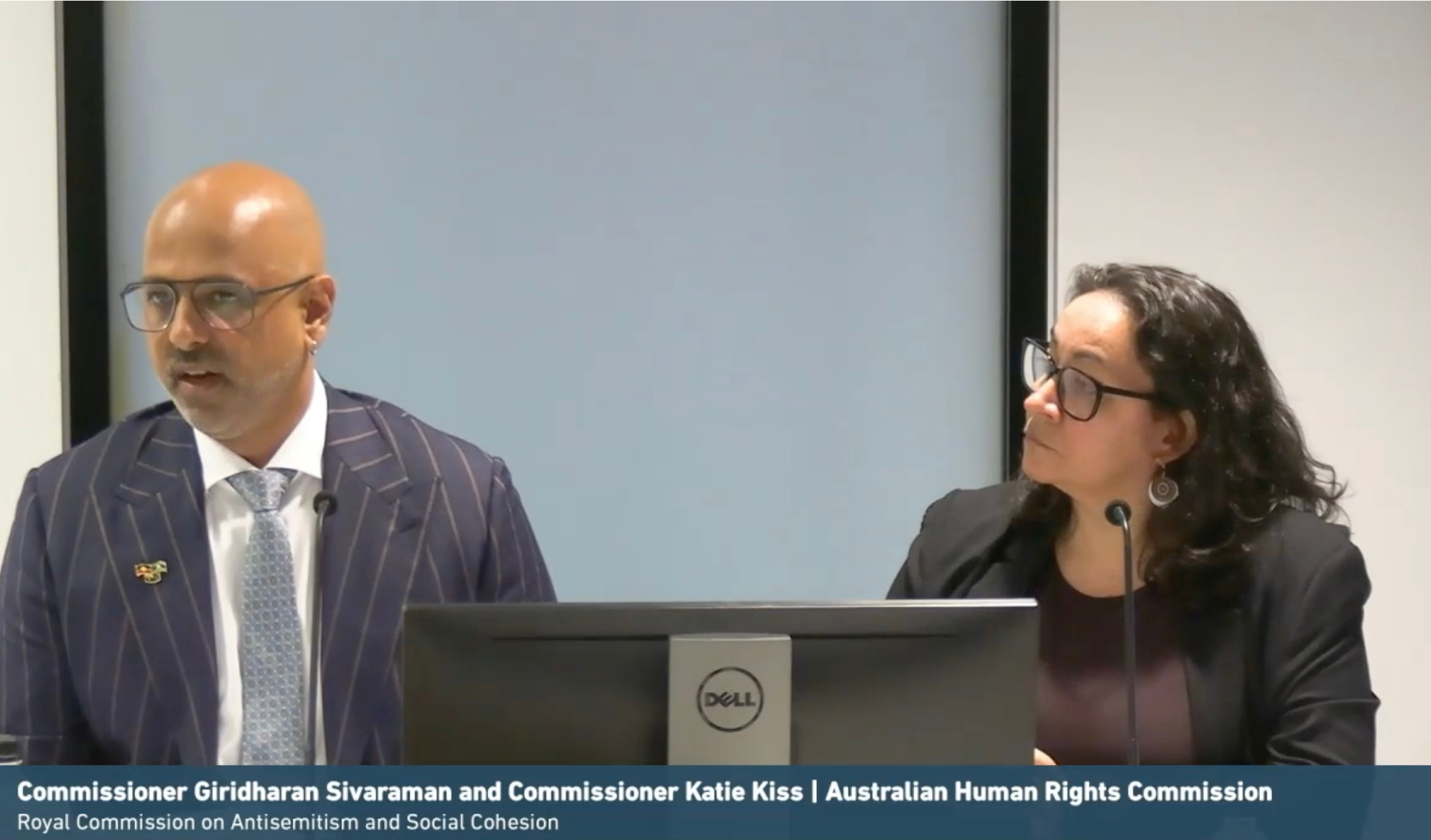
Giving evidence at the Royal Commission this morning alongside Aboriginal and Torres Strait Islander Social Justice Commissioner Katie Kiss, Race Discrimination Commissioner Giridharan Sivaraman – both from the Australian Human Rights Commission – said that every experience of racism is unique, but its source is usually systemic.

“If you don’t fix the systemic problem, the racism will continue to manifest,” he said.

“If you keep trying to attack it at that point where it manifests, you’re playing whack-a-mole, rather than actually trying to do the hard work of the systemic change.”

Photo: Screenshot

He walked the commission through the National Anti-Racism Framework, published in November 2024 with 63 recommendations across law, health, education, workplaces, media and data.

Asked whether government had responded, Sivaraman said: “The only response that I’ve received is that they’re considering the framework as of today.”

Sivaraman illustrated systemic change with workplace and social media examples: counselling one perpetrator of an anti-Semitic slur “isn’t going to stop all anti-Semitic slurs,” he said, just as removing one user’s post won’t stop online antisemitism, without tackling the “nexus between profit and racism” on [the social media] platforms.

A central recommendation he provided more information about is a “positive duty” on medium and large employers to eliminate racial discrimination, modelled on the positive duty created under the Sex Discrimination Act.

Currently, Sivaraman said, a victim “must have suffered harm… to seek recourse”; the duty would shift the onus onto organisations to survey staff, review policies and monitor progress.

He said consultation with employers had been “pretty good,” with businesses valuing a single national standard over inconsistent state and territory obligations.

On data, Sivaraman noted Australia’s census asks about ancestry but not ethnicity, and there is no national mechanism recording racism incidents — meaning reports to bodies like the Islamophobia Register or Call It Out register are “only ever going to be a fraction of what’s actually happening.”

He backed a national hate crimes database but said only a national prevalence survey, similar to the Commission’s university survey of 76,000 respondents, could capture the full picture, warning it “requires courage because nobody’s going to be happy when they see the results.”

He also proposed mandatory employer reporting on racism incidents, akin to gender equality reporting, saying public accountability would be “probably the single biggest impetus for change.”

On education, Sivaraman described the Commission’s carefully designed, place-based anti-racism pilot in primary schools, developed with principals, parents, teachers, unions and elders, which the Commission now hopes to expand.

He welcomed the broadening of the Gonski-led curriculum review beyond antisemitism to all forms of racism, saying reform “should be done in a way that’s significant” rather than “piecemeal.”

Kiss described the framework as “a milestone in terms of addressing racism in Australia” that “looks at the structural and systemic response required,” rather than treating racism as isolated incidents, and said its proposed National Task Force for First Peoples provides “a practical roadmap” that reflects the “colonial foundations of Australia.”

On data, she said the lack of reporting “doesn’t give us a full perspective on the reasons… why we’re not seeing growth” in closing the gap targets.

She stressed the importance of providing adequate civics education in schools, noting most Australians don’t understand parliamentary processes or Australia’s endorsement of the Declaration on the Rights of Indigenous Peoples, and recalled Human Rights Commission work a decade ago to embed Indigenous knowledge in the curriculum with ACARA that “didn’t get very far.”

Closing the session, Sivaraman returned to the Bondi Chanukah terror attack that prompted the Royal Commission, and emphasised that “education and workplaces were absolutely the two areas that we thought should be the matters of priority”.

The AJN is providing rolling coverage on the Royal Commission on Antisemitism and Social Cohesion.

For full coverage of the Hearing Blocks, visit the Royal Commission section of The AJN website.

read more:
comments

Enjoy Unlimited Access To The Australian Jewish News Website And All Our Online Content For AUD$18/month Or Just AUD$120/year.

Subscribe Now