



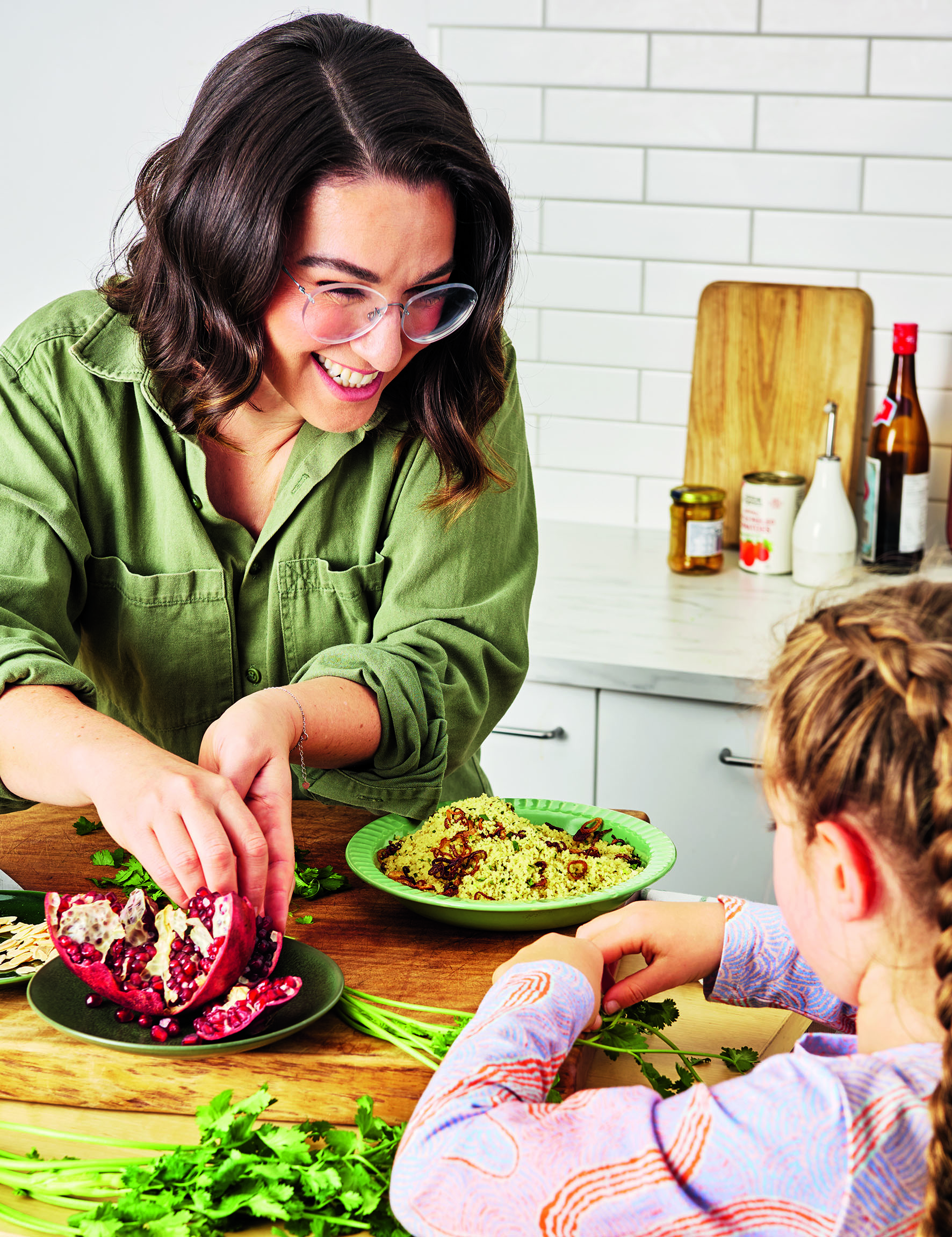
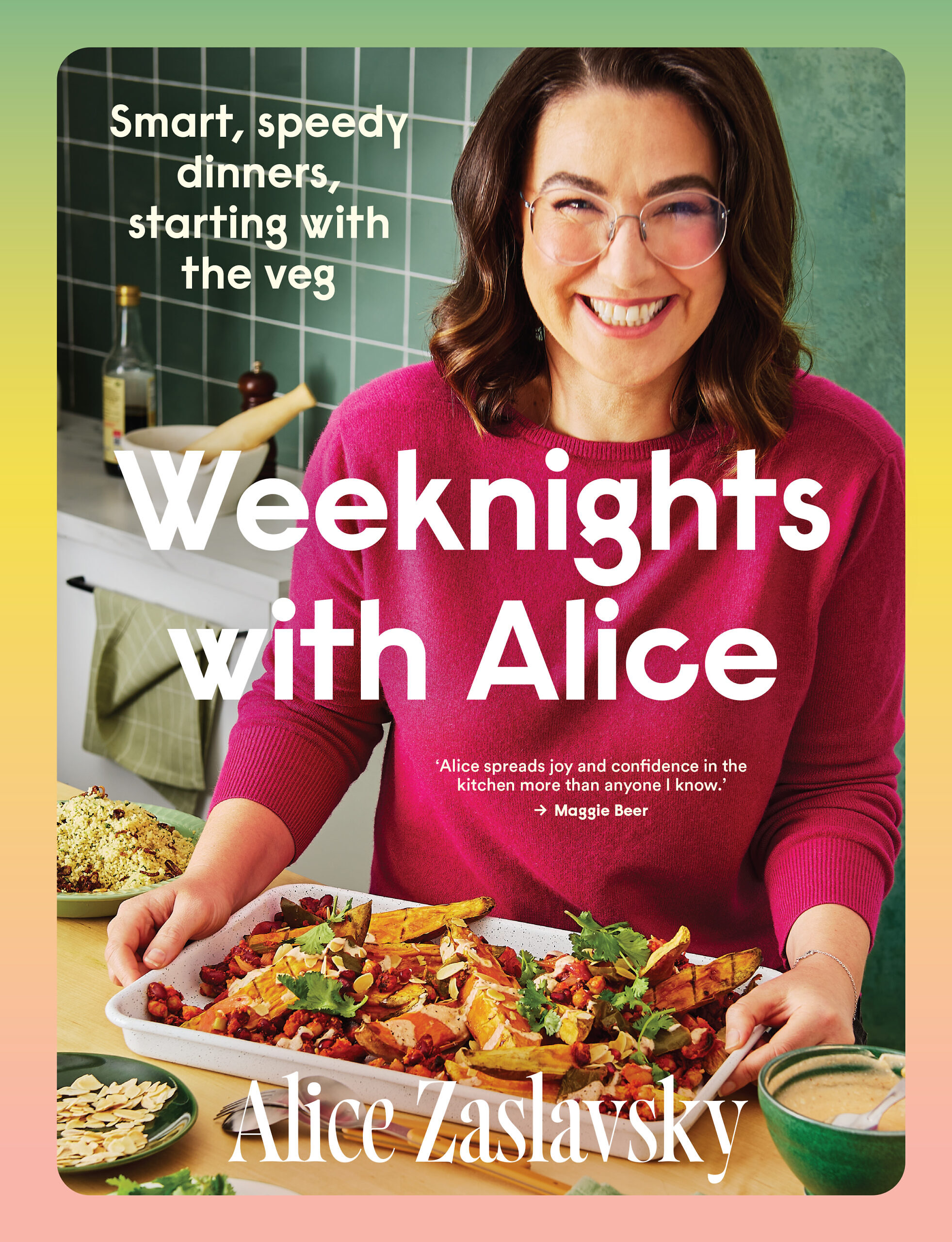
For Alice Zaslavsky, a good weeknight dinner starts with the vegetable and works backwards from there. It’s a philosophy she says is baked into her latest cookbook, Weeknights with Alice.
“The modes of thinking in this book are very Jewish,” Zaslavsky told The AJN. “There’s lots of shortcut taking, there’s lots of loophole finding. There are lots of leftover makeovers which, coming from the former Soviet Union, that’s the only way we learnt how to cook and had to cook out of necessity. But now it’s something that really brings me a lot of joy, to find ways to use up every part of a vegetable and every part of everything that I use in my fridge and freezer.”
It’s this emphasis on vegetables – the colours, tastes, textures and beauty of them all – that underpins everything Zaslavsky does in her cooking. To her, they’re the star of the show. And there’s something uniquely Jewish about this concept.
“‘Jewish mysticism teaches us that food starts out full of holy sparks and that we have the opportunity to transform it and elevate it further. How? By applying our humanness to it, by preparing it with care,’” Zaslavsky read from Wendy Mogel’s The Blessing of a Skinned Knee, saying this concept of ‘holy sparks’ is how she feels about cooking.
“That idea of holy sparks and bringing them together into dishes, that is such an encapsulation of how I feel about vegetables in particular, because that’s the purest, right? It’s from Mother Earth. It’s right there for us. And so the fact that I get to glorify it in really joyful ways through my books is really freaking cool,” she said, before also turning to the economic aspect of emphasising the vegetables first.
“All of these recipes have been tested on a seven-year-old. And if she doesn’t give me a full thumbs up, then it doesn’t make the book…”
“When you start with the veg and then build on top of that, you’re going to eat more widely, you’re going to eat more economically.”
Meat, she said, is there to support the vegetables rather than the other way around, even for the carnivores at the table.
“Think of the meat as the accompaniment or the accoutrement, rather than the main event,” she suggested.
In a beautiful nod to the colourful rainbow of vegetables, like the books that have come before, Weeknights with Alice is colour coded, making it not only exciting and visually appealing but also exceptionally easy to find the recipe you’re after.
She is unapologetic about the visual pull.
“When I’m putting together a book, I’m thinking about the logic of it in the context of how the user’s going to use it. It’s the UX of a website translated into a book,” she said, explaining that she knows she is competing with Google. “Somebody can Google a brussels sprout dish, or they can choose to go into my cookbook because it’s the prettiest flower in the garden.”
When asked if she could choose a favourite recipe in the book, Zaslavsky hesitated only slightly before declaring the sabich sheet-pan dinner.
“The story of that tray bake is really important to me. And the flavours are insane,” she said, explaining that before it was the sabich sandwich we all know and love today, it was a “choose-your-own-adventure” meal. “I’m bringing it back to its original first origins,” she said.
The recipe’s headnote traces sabich back to its origins as a Shabbat breakfast spread traditionally served by Iraqi Jews, of boiled eggs, cold fried eggplant, chopped salad, hummus, soft laffa and amba, before Iraqi-born Israeli Sabich Zvi Halabi turned it into the sandwich sold by street vendors today.
“This is our moment to crack our hearts open and to reinforce and galvanise ourselves and our community, and the way in which I can do that is just to continue to be in the room and continue to be publicly and proudly Jewish…”
Zaslavsky said that it’s these headnotes throughout the book, not just for the sabich, that do the real storytelling work.
“Recipes in cookbooks are almost like mini memoirs. The preamble is an opportunity to write some historical context or some personal story that enriches or contextualises the recipe more deeply,” she said.
“At this time where there’s so much mis- and disinformation about our community, those little micro-assertions are more than important to me. They’re integral to who I am as a person, who I have been raised to be as the child of Soviet migrants who continue to choose to practice their faith and culture under circumstances not unlike some of the ones that we face now.”
Over and above all the work that went into Weeknights with Alice, Zaslavsky shared that every single recipe had to clear one final hurdle before inclusion.
“All of these recipes have been tested on a seven-year-old. And if she doesn’t give me a full thumbs up, then it doesn’t make the book,” Zaslavsky laughed.
The conversation moved beyond the recipes too. Zaslavsky reflected on how her relationship to community has changed saying she is a different person now to when she started writing the book.
“I used to glance at the Jewish News, now I read it cover to cover,” she said, explaining that she has been called back to her roots. “The people that I spend the most time with are fellow Jewish writers and people within the creative fields.
“This is our moment to crack our hearts open and to reinforce and galvanise ourselves and our community, and the way in which I can do that is just to continue to be in the room and continue to be publicly and proudly Jewish. That hasn’t always been easy, but my sacrifices are nothing compared to what others have faced. So I’m fortunate and grateful to have this beautiful framework and this beautiful community who support me and who I can support.”
Weeknights with Alice by Alice Zaslavsky is published by Murdoch Books, $49.99 rrp
comments