Talmudic guidance to 21st century research
WHAT guidance does the Talmud have for ethical decisions on space travel or human cloning? Plenty, according to visiting American Professor Laurie Zoloth.
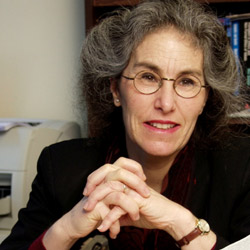
AJN STAFF
WHAT guidance does the Talmud have for ethical decisions on space travel or human cloning? Plenty, according to Professor Laurie Zoloth.
Prof Zoloth is professor of religion and Jewish studies at Chicago’s Northwestern University and is also the director of the university’s Centre for Bioethics, Science and Society.
She will be in Australia next week to take part in Hadassah Australia’s stem-cell awareness week of activities, together with her colleagues in science, Professor Alan Trounson and Professor Ben Reubinoff.
A secular ethicist, Prof Zoloth served for two-and-a-half terms as the sole philosopher on NASA’s National Advisory Council, one of the highest positions a civilian can hold.
Today she chairs the Howard Hughes Medical Institute’s Bioethics Advisory Board, and serves on NASA’s planetary protection advisory committee and the International Society for Stem Cell Research.
Like a lawyer, Prof Zoloth draws precedents from classical texts, including Jewish ones.
“It is one of many traditions that I use. If there’s a really good argument that emerges from the Orthodox or halachic texts, I bring it in,” she said.
Indeed, much of talmudic teaching is highly resonant with the aspirations of science. “The rabbinical position is that much is permitted in order to learn,” she explained.
Prof Zoloth is renowned by her peers for her rigorous intellect.
“She is very demanding and articulate,” said Prof Trounson, the Australian scientist who since 2008 has been president of the California Institute of Regenerative Medicine (CIRM), and a guest speaker at Hadassah Australia’s dinner next week.
“If you say something that requires a better philosophical or scientific underpinning, she’ll challenge you,” he said. “I don’t always agree with her, but it’s always intellectually satisfying,” Prof Trounson added.
Prof Zoloth’s visit is timely, with a review of Australia’s human embryos and cloning legislation imminent.
Her visit also coincides with a major shift in the scientific and ethical landscape of stem-cell research.
Since 2007, researchers have learnt how to avoid the use of embryos altogether in the making of embryonic stem cells. Skin cells can be turned directly into embryonic stem cells – cells that could provide a patient with a limitless supply of matched tissue to treat diabetes, blindness, bone-marrow disease, skin diseases and neurodegenerative disease.
According to Prof Trounson, CIRM is now funding translational studies in these areas — meaning in the next four years stem cells will be making their way out of the lab and into the clinic.
Another guest speaker at the dinner, Hadassah University Hospital’s Prof Reubinoff, is one of the pioneers of that journey.
Working together with neurologist Tamir Ben Hur at Jerusalem’s Hadassah, Prof Reubinoff — who worked with Prof Trounson at Monash University — is using embryonic stem cells to treat macular degeneration and multiple sclerosis.
Professors Zoloth, Trounson and Reubinoff will address Hadassah’s 2009 AUSiMED conference in Melbourne on Tuesday, November 17 at Monash University, and will also address Hadassah Australia’s dinner in Sydney on Wednesday, November 18 at the Four Seasons Hotel. Enquiries: www.hadassahaustralia.org.