War of words over terrorism
THE Executive Council of Australian Jewry has issued a warning against being overly politically correct when talking about terrorism.
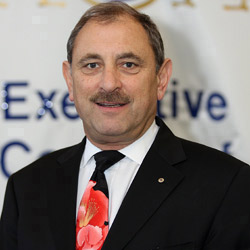
NAOMI LEVIN
THE Executive Council of Australian Jewry (ECAJ) has issued a warning against being overly politically correct when talking about terrorism.
Last month Attorney-General Robert McClelland welcomed the decision by law enforcement agencies and multicultural bodies to create a Lexicon of Terrorism.
“Experience has shown that the language used to describe terrorism can be counter-productive,” McClelland said. “Certain words have the potential to glorify terrorism and terrorists, while others can cause anxiety among Australians and create divisions within and between communities.”
He said the project would consider words such as “war” when used to describe the idea of combating terrorism, and the word “jihad” when talking about a struggle between religions and values.
He said the lexicon would come up with “strategies to reduce counter-productive language”.
“This project will help governments frame effective public information messages on national security issues by strengthening community harmony and disempowering potential violent extremists,” McClelland said.
But ECAJ president Robert Goot issued a warning last week saying it was important to be upfront when talking about terrorism.
His warning was timely, coming just before a joint operation by Victoria Police, Australian Federal Police and ASIO that led to the arrest of four men. The men have been charged with terrorism-related offences over an alleged plan to undertake a suicide attack on an Australian Army base.
While the men have African and Islamic background, leaders from those communities have been outspoken in their calls for people to avoid making assumptions about ethnic or religious groups based on the arrests.
Islamic Council of Victoria spokesperson Sherene Hassan told The Age that the Muslim community was “more in shock, more concerned than the rest of Australia” at the prospect of a local terrorist attack.
Roland Jabour, from the Australian Arabic Council, also told The Age that the whole Australian-Lebanese community suffered when there was negative publicity.
However, speaking before these arrests were made, Goot explained that in some cases it is “relevant and necessary” to publicise the ethnic or religious background of terrorism suspects.
“We accept that such cases would constitute a minority, but where there is a direct link between religious or racial belief and a criminal act — such as the terrorist acts recently perpetrated in Jakarta, where the perpetrator believes that he or she has a religious obligation to commit the act — the ECAJ submits that it would be a disservice to the larger Australian community if such motivation was not mentioned as relevant,” Goot said.
Identifying these details and examining the motivations of terrorists would help counter violent extremism, and ECAJ would be happy to make a formal submission to the team putting together the lexicon, he added.
The Lexicon of Terrorism is being developed by Victoria Police in conjunction with the Department of Premier and Cabinet in Victoria, the Attorney-General’s Department in Canberra and the Australian Multicultural Foundation.